Week #47 {13 December '21}
- The Bulletin Buzz

- Dec 13, 2021
- 11 min read
Articles by Ananya Nayar & Misaki Tomiyama

Articles:
Kids' Articles
Other Articles:
Ethiopia’s Tigray Crisis
By Ananya Nayar

Last year, conflict emerged between the Ethiopian government and non-conformist Tigray forces. Just this week, the United Nations released a statement saying that the situation could ‘escalate to a civil war if the fighting in North Ethiopia doesn’t cease. This dissension initially started when Abiy Ahmed (Ethiopian Prime Minister) ordered a rebel offensive against disorientated forces in Tigray who were against the reforms being placed by the government. This initial quarrel was domestic, but violence started spreading outside the border and now many people have been displaced from their families and homes.
On top of this, there is famine, with millions in dire need of food, and reports have seen food stocks and stocks being looted. The WFO said no aid trucks had reached Tigray’s capital since October 2021. Currently, there’s a mere 10% of supplies going through. The United States also alleged that Tigray troops were responsible for restricting and intercepting the flow of aid, as many trucks failed to return or had blocked routes. The escalating conflict has if anything made it even more difficult to supply nourishment and necessities to the many facing scarcities.

The BBC reported shocking statistics, saying 400,000 people are facing famine-like conditions in the North, 80% have no access to essential medicines and over 2 million people have been forced from their homes.
For many, the major concern is when the fighting is going to stop. It’s supposed that the dispute has ‘entered a new phase’ which will prolong the duration of this and make it more difficult to come to resolutions. Olusegun Obasanjo, former Nigerian President, did talk about a small ‘window of opportunity where ‘time is short for any intervention.’

The origins of this crisis go back centuries to political uncertainty there. Originally the roots go back to the TPLF (Tigray People’s Liberation Front) and Prime Minister Abiy. This first dominated all of Ethiopia for over 25 years. In 2018, the Oromos, a larger ethnic group, had felt discriminated against for a long time, and when Prime Minister Abiy (also an Oromo) came to power, he set out to resolve the issue. However, this cost overlooks the TPLF. Simply a year later, tension let out when Tigrayan forces were accused of attacking army bases.
US Diplomats Boycott of Winter Olympics
By Misaki Tomiyama

The US government has recently announced that no US official delegation will be sent to Beijing in next year’s Winter Olympics. Although they mentioned that they will show full support to the athletes participating in the event, a US diplomatic boycott will take place as concerns are rising regarding China’s human rights records.

The US is concerned about the "ongoing genocide and crimes against humanity in Xinjiang." This refers to the allegations of human right abuses in China against the Uyghur Muslims and other minority groups. (Visit out information post on Instagram to find more about the Uyghur muslims)
A little about the Uyghur Muslims- they are an ethnic group residing in Xinjiang, China, and the Chinese government holds extremist views on them that the Uyghurs are a threat to their country. China has been accused of commiting crimes against this ethnic group, and possibly even genocides.

Jen Psaki, White House Press Secretary mentioned that this boycott "could send a clear message" regarding the concerns of the abuses in Xinjiang. However, as she believed it was unfair "to penalize athletes who had been training for this moment" the government had decided that Athletes should and can attend the Olympics.
Airlines On Meeting Climate Change Pledges
By Ananya Nayar

The Aviation sector is one of the most polluting industries, and its contributions to climate change are extensive. They add carbon, harmful nitrogen oxides and contrail cirrus clouds to our atmosphere. Contrails are streak-like water vapour trails that also play a role in ‘trapping’ the heat in the atmosphere.
IATA’s Net-Zero Carbon Emissions pledge hopes to achieve zero carbon emissions from the aviation industry by 2050. Willie Walsh, IATA’s Director General said this “momentous decision” will “ensure that flying is sustainable.” He continued to say the “post-COVID-19 reconnect will be on a clear path towards net zero. This will ensure the freedom of future generations to sustainably explore, learn, trade… and connect with people the world over.”
“With the collective efforts of the entire value chain and supportive government policies, aviation will achieve net-zero emissions by 2050.”

It’s estimated that this industry will have to accommodate over 9 billion people eager to fly in 2050, by seeing population growth and industry advancement.
They plan to develop new infrastructure in aircraft, make them more efficient, switch to sustainable fuels, and develop new energy sources with zero emissions like hydrogen and electric power. IATA said that governments will also need to play an active role in this huge transition, and liked how they supported conversions with cars, public transport and more, they will need to all find a cost-effective, holistic government policy.
Boeing, for example, is focused on developing an aircraft that can fly 100% SAF (sustainable aviation fuel) by just 2030. By 2050, they would like to work on hydrogen propulsion, which is also a big step. Other companies like Alaska Airlines and ZeroAvia are engaged in constructing all-electric and electric hybrid small commercial planes.
Overall, sustainable aviation fuels seem to be the best option for many in terms of drastically reducing carbon emissions, however finding dependable supplies/suppliers may become a slight issue due to the huge amounts they will require. SAF today typically costs 4 times the amount of jet fuel, Boeing and other companies said increasing production will lower the price. They agreed governments need to assist in sustainable fuels regulation and supply to get the cost closer or equivalent to conventional fuel.
Favourite Christmas Treats
Tested and loved by Ananya Nayar
Christmas is just around the corner, and we’re all trying to build that festive spirit. If you’re staying at home this season or even travelling, we’ve compiled a list of our favourite (super easy) festive dishes for you to try!

Hot chocolate
The best warm, comforting, sweet drink is hot chocolate. Creamy, tasty and filled with chocolate greatness.
Recipe:
In a pan, heat 2 cups of milk of choice, 1 tbsp cocoa powder, and a few drops of vanilla extract. Heat and stir for 5-10 minutes on medium-low heat.
Make sure the mixture is still warm and quickly add some cooking dark chocolate chips to the saucepan and stir/whisk until fully dissolved and thick chocolate milk has formed.
Serve immediately, topping with fresh whipped cream, chocolate thins, peppermint pieces or marshmallows.
If you prefer it to be thicker, add cream or half-and-half, if you prefer it less sweet then utilize darker chocolate or less/no extra sugar.
Caramel sauce, cinnamon, espresso shots can add an extra something delicious!
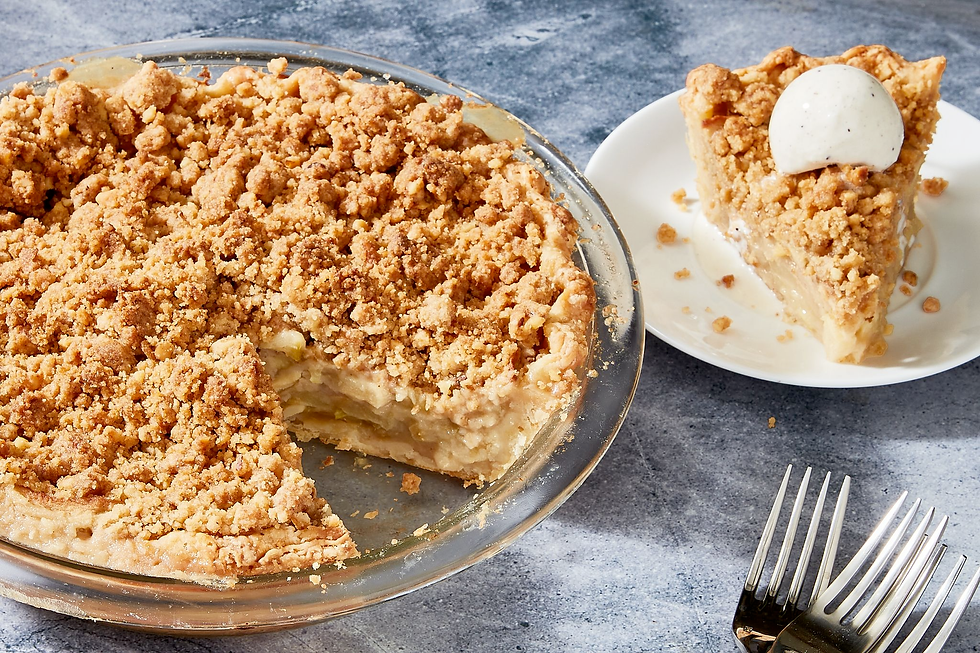
Apple crisp/crumble
This is an all-time favourite for me! Crispy, oozy, sweet and even better when served warm with cool vanilla ice cream!
Recipe:
In one bowl, mix 1kg diced, peeled apples (granny smith are preferable,) and add 1tbsp lemon juice, 1tbsp white flour, half a cup of white sugar and about half a teaspoon of cinnamon.
In another large bowl, add 1 cup loosely packed granulated brown sugar, 1 cup of thick rolled oats (uncooked,) ½ tsp baking powder, 1 cup white flour, ½ cup unsalted melted butter (slightly browned is great too,) 1 tsp of cinnamon and a pinch of salt.
In a cooking dish where you’ll bake the crumble, layer the apple mixture and add the crumble dry mixture on top. Don’t pat it down, rather crumble with your fingers.
Bake the dish at 180 degrees celsius for 30 to 40 minutes until it’s golden brown. To cool, place a layer of tin foil on it and leave aside for 15 minutes before serving.

Reese’s snowballs
We love our Reese’s peanut butter cups, and these tasty little bites are amazing and festive too!
Recipe:
Double boil and melt the cooking dark chocolate and white chocolate in two separate bowls.
Next, take natural, thick peanut butter (you can make it at home by finely grinding roasted peanuts into a thick paste) and mix them with slightly crushed cornflakes or pretzels in a ratio of 1 part cornflakes 4 parts peanut butter. Mould this mixture into balls.
Next, refrigerate the balls until they’re slightly hardened and then dip them in the dark chocolate, fully coating and covering them in a thick layer.
Once cooled slightly, coat in a thinner layer of white chocolate. Sprinkle a little sea salt or coconut flakes on top and refrigerate, eat whenever but keep refrigerated.

White Choc Cranberry Walnut Cookies
These chewy, delectable, fruity cookies are a crowd-pleaser. They’re the perfect amount of everything and irresistible.
Recipe:
In a bowl, mix the dry ingredients- 1 cup all-purpose flour, ¼ tsp salt and a little less than ½ tsp baking soda.
In a KitchenAid or separate bowl, beat (with a paddle) ⅜ cup dark brown sugar, ¼ cup granulated sugar, ⅜ cup melted (not warm) unsalted sugar. Next, add half an egg white + 1 egg yolk and 1 tsp vanilla extract and mix well. Then, add the dry ingredients at a slow pace, but be careful not to over mix here.
Fold in the ½ cup chopped walnuts, ½ cup dried cranberries and ½ cup white chocolate chips/chunks. The batter is over, so we place a scoop of cookie dough onto a baking tray lined with parchment paper, making sure each ball is at least 2 inches away from the next.
Place them in an oven for 15-20 minutes and let them bake at 325 degrees Fahrenheit.
Upon removing, let them first cool for 10 minutes outside before transferring them to a cooling rack.

Maple Pecan/Walnut Bars
An addictive blend of sweet, salt, caramel, crunch and chew, these are a must make for the holidays. And, they’re super simple to make!
Recipe:
The crumbly shortbread crust consists of ½ cup softened unsalted butter, ⅓ cup firm brown sugar, 1 ⅓ cup all-purpose flour (white) and a nice pinch of salt. Beat the butter and brown sugar separately first.
Then, press this crust mixture into a pan that’s lined with tin foil or parchment paper and lightly buttered. Place it so there is a 1-2 cm thickness and bake at 350 degrees Fahrenheit for fifteen minutes.
For the filling, take a saucepan and combine 6 tbsp diced butter, ¾ cup brown sugar, ⅓ cup maple syrup, ⅓ cup milk, ¼ tsp flaked sea salt and 2 cups of chopped pecans or walnuts.
Add the wetter ingredients to the saucepan first and simmer while stirring it occasionally. After a minute of this, remove it from heat and stir in the chopped pecans.
The crust should be fresh out of the oven by now, so you can pour the filling over the buttery crust until evenly spread. Cook for another 15 minutes, until bubbling and still slightly soft.
Let them first cool completely, then cut into bars or whichever preferred shape. Storing them in a fridge is preferred, but a freezer will do, too. They are better consumed at room temperature, though, but always more long-lasting when slightly chilled.
The Science behind Wrinkling Hands When Wet
By Misaki Tomiyama

After swimming for a long time, or taking a long bath, you might have realised that your fingers wrinkle. For a long time, scientists thought this wrinkling of the fingers was the result of osmosis (the diffusion of water molecules from a region of high concentration of water molecules to a region of low concentration of water molecules) from the water to the dry layer of skin. Since the water entered the upper layer and not the tissues below, the skin would wrinkle.
However, later scientists found out that this didn't happen to people who had nerve damage. This led the scientists to understand that the wrinkling was the result of an active response of the nervous system to prolonged moisture. The nervous system causes the finger to wrinkle because it makes the blood vessels narrower, and this causes the skin above to fold.
Why Do We… Produce Saliva?
By Ananya Nayar
Saliva is a clear liquid produced by the glands in our mouth. It’s composed of mucus, proteins, mineral salts, amylase and 60% water. We produce a lot of this substance- almost 1-2 litres a day! It helps us digest food, keep our teeth strong, fights germs in our mouth, regulates the water content in our bodies, acts as a solvent for food to dissolve and taste and lubricates and protects oral tissues. It helps us with so much in our bodies, more than we realise.

Saliva is produced in our salivary glands near/behind our mouths.
Who Was Anne Frank?
By Misaki Tomiyama

Anne Frank, born in Frankfurt, Germany in 1929, is a world-famous writer of the book “Diary of a Young girl.” She had an elder sister Margot, and she lived in a time when Adolf Hitler was ruling, and blamed the Jews for all the problems in the country. The term “anti-Semitism” is used to describe the discrimination against the Jews during this time. Because of anti-Semitism, a lot of the Jews during this time were living in poor conditions with little money, and Anne’s family was no exception too.
Anne used to live in her house in the Netherlands, where she had friends and was comfortable with the culture. However, on September 1, 1939, the Nazis invaded Poland as a result of the outbreak of World War 1. Jews were not allowed to leave their house after a certain time, visit parks and non-Jewish shops. Jewish students had to go to Jewish schools as well. After some time, Jews had to begin wearing the Star of David when they were going out.

Since situations became worse, Anne and her family, decided to go into hiding. The family, along with other people had to go into hiding in the annexe of Otto’s (Anne’s father) business. When she turned 15, Anne receives a diary, and for two years, she writes about her thoughts and feelings about the situation and her life in hiding. Since they were hiding in the annexe, no one was allowed to know so everyone had to be extremely quiet, and fear was something always present in the atmosphere.
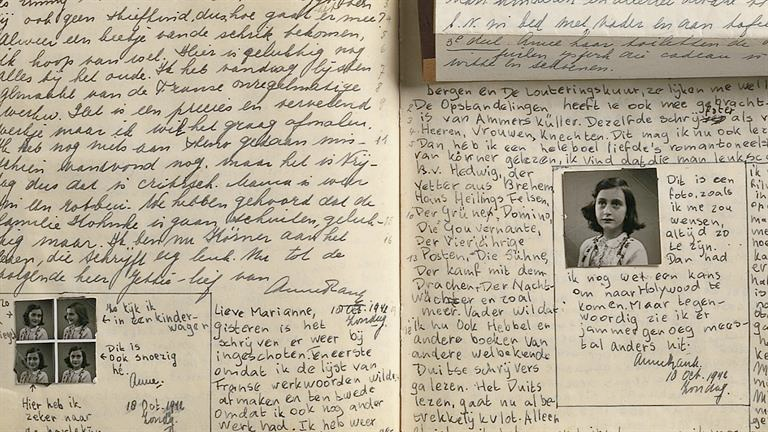
The annexe was discovered, and Anne’s family and others were arrested on August 4, 1944. Anne is deported to Auschwitz and was sent to a labour camp with her sister and mother. Unfortunately, Anne dies in February 1945 as a result of the poor living conditions in the concentration camp. Anne’s father Otto is the only person from the family that survived the war, and he found Anne’s diary which was secretly preserved by two helpers before the Nazis emptied the annexe. Otto published Anne’s diary, which later got translated into 70 languages, and became world-famous. To this day, Anne’s diary, The Diary of a Young Girl, is read by millions of people around the world. It is very important for historians as well, as it gives them an understanding of what life was like for ordinary Jewish teenagers during the war.
Book and Movie Reviews
By Anaya Nayar

Movie/Series of The Week: The Queen’s Gambit on Netflix
This one-season Netflix miniseries is life-changing. The story follows troubled orphan Beth Harmon, who struggles with an addiction whilst moving her way up to be the best chess player in the world. Living with past conflicts, growing up, confusion, she learns many important lessons along the way.
The episodes are well-paced, intense and gripping. There’s a complex story following each unique and enjoyable character, and the acting is so good that you understand the characters so well. Beth, for example, was played with perfect poise, strength yet she had a vulnerability to her. In some aspects, the show could even be relatable as it was so realistic and intriguing throughout the whole journey.
Rating out of 5 Stars: 4.5/5
Age Recommendation: 15+

Book of the Week: The Tattooist Of Auschwitz
The novel is based on a true story, and I had high expectations for it after the many recommendations. Although it was a true story, it seemed too fast-paced to be true, probably as a result of the writing.
I think that the story was moving and filled with so much potential. Yet the writing style didn’t carry it out to be what this story could’ve been. The plot was very detailed and filled with romance, genocide, pain, fear and so many emotions, themes and elements. Much of the story turned out to be boring, almost, because of the uninspired language choices and rushed sentences. Overall, it was a moving story, despite the un-enjoyability.
Rating out of 5 Stars: ⅗
Age Recommendation: 14+


Comments