Week #46 {29 November '21}
- The Bulletin Buzz

- Nov 29, 2021
- 10 min read
Articles by Ananya Nayar & Misaki Tomiyama

Articles:
Other Articles
The Omicron Variant
Article by Ananya Nayar
Another multiplying COVID-19 variant called the ‘Omicron’ by the World Health Organisation has prompted many countries to re-impose restrictions.
On Thursday, scientists announced the arrival of this mutant in South Africa, and shortly after, it was identified in Hong Kong, Botswana, Israel & Belgium.
What’s most concerning is that most patients infected were fully vaccinated, and some people even had a third booster shot but managed to catch it. Scientists believe this variation may be deadlier and more infectious than the Delta variant, which hit India and killed many earlier this year around April.

Photo via: https://www.voanews.com/a/world-reacts-to-new-covid-variant/6330039.html
Not to worry, although many world leaders woke up and were faced with this frightening situation, they reacted fast and are closing borders or screening travellers more vigorously in aims to subside any upcoming waves, at least until more information and data about this mutant is revealed.
Scientists expect it’ll take another few weeks to determine how transmissible the Omicron is and how infectious or how much it's already spread.
Scientists expect it’ll take another few weeks to determine how transmissible the Omicron is and how infectious or how much it's already spread.

Authorities, however, have continued to stress how important it is to receive inoculations. Without vaccines, the chances of transmissibility increase, and it's important to protect groups vulnerable to hospitalisation and death.
Evolution Made Us Lazy
Opinion piece/article by Ananya Nayar
Exercise has been around since the beginning of time- if you mean physical activity like climbing stairs and picking up groceries. The exercise we are more familiar with differs from physical activity, it’s been picked up and become ‘trendy’ only in the past few decades as a means to improve health.
Throughout the 1970s, working out and participating in Aerobics for example became desirable, and now we see FAD diets and workout routines everywhere we look because of this (very recent) craze.
We see it as a necessary part of life, since we apparently get little physical activity, having created elevators to ‘skip the stairs’ etc. We embrace the mechanism of a sedentary lifestyle, but worry and crave exercise for our physical health.

On the other hand, our ancestors, needed physical exertion to survive as there was no modern technology. They also were careful to never exert when it wasn’t required, as it was challenging to get food. You could say they didn’t waste any valuable energy. There’s a natural tendency to minimise unnecessary effort, even if our work is to simply push buttons on a laptop, so we turn to escalators, cars and other machines.
In fact, new studies show that human skeletons today are much more fragile than those of our ancestors who hunted for food because the level of physical activity has dropped, most people nowadays struggle to do the minimum amount of physical activity as well.
In the words of Daniel Lieberman, we have to “choose to be active and we never evolved to do that.”
Sources:
International Day for the Elimination of Violence Against Women
By Misaki Tomiyama
Disclaimer- Please note that we are not aiming to criticise any person in particular, and say that violence against men do not exist or have not been talked about. This article is aimed to spread awareness of the kind of violence women face in our society. T.W. - mentions of sexual violence and abuse.

This year's theme of the International Day for the Elimination Against Women is "Orange the World: End Violence against Women Now!" This day was celebrated on the 25th of this month. The term 'violence against women' refers to the violence such as domestic abuse, sexual harassment, child marriage and more, that women around the world face.
Violence against women has been a pressing concern that we as a society face for a long time now, and ever since the pandemic broke out, the cases of domestic abuse against women has increased drastically.
Statistics show that at least 2 in 3 women know someone who has experienced violence in the household. However, only a small percentage of women who experience this violence, report it to the police.
It is extremely difficult to completely stop violence women around the world, but it is possible to prevent it in many ways, and the first step to doing so is spreading awareness and helping those who experience this kind of violence.
Around 150 countries across the globe have laws against domestic violence, and 140 have laws on sexual harassment in the workplace. There are 195 countries in the world, so 45 countries do not have laws on domestic violence, and 55 do not have laws regarding sexual harassment.

Intimate partner abuse (physical, sexual or emotional abuse from a current or former partner), femicide (homicide of a female), trafficking, forced child marriages and sexual violence are all pressing concerns in our society.
Why are Humans Bad at Thinking about Climate Change?
By Misaki Tomiyama
Climate change is becoming a more concerning issue by the day, yet it never seems to be becoming any better. Theoretically, it is possible to stop climate change, or even reverse it. However, it is the mindset that is stopping our society from progressing in terms of climate change, but why are us humans so bad at thinking about climate change?

Firstly, climate change is not something that is positive. The idea of our earth’s climate becoming uncontrollable is something most of us are guilty and scared about. From a psychological perspective, this guilt does not cause encouragement, and makes it difficult for us to try to be enthusiastic about stopping climate change and taking serious action. When one feels scared or guilty of something, we do not want to take action. The same is for climate change. So, instead of being encouraged about the issue and trying to deal with it, we try to ignore it, and pretend that it's not there.

Another issue is that many people think of climate change as a distant problem, and something that will not directly impact our world in our current generation. Although climate change is becoming a pressing issue in many developing countries and in the north poles, people in developed nations, like places in the U.S. do not drastically and directly see the impacts of climate change in their everyday lives. People see the news about climate change becoming a pressing concern, but many still believe it is not an issue that will directly impact them.
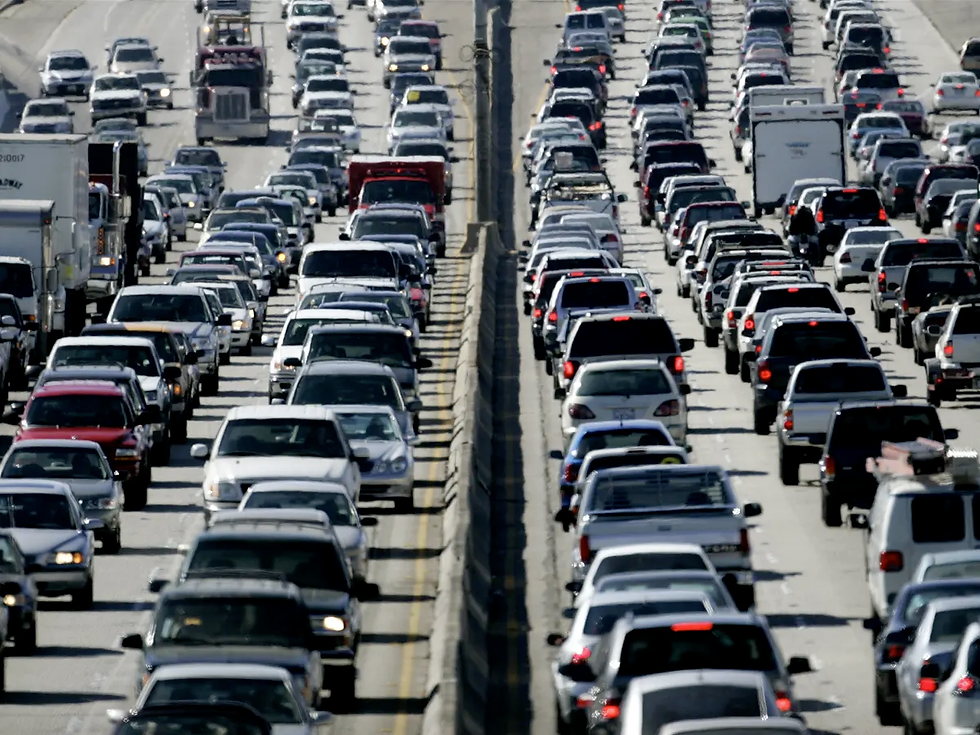
Another issue with climate change that makes us so bad at thinking about it, is its factors being so invisible. Carbon dioxide is one of the major contributors towards climate change, and although it is visible to a certain extent, it's not a striking colour, and we do not see so much carbon dioxide when we ride our cars etc. If carbon dioxide was black in colour, humans would have been taking this issue on climate change more seriously.
Finally, humans are social creatures, so they care about actions other people are taking. If one thinks of climate change as an issue that is not important, and does not take action, it will reflect on others and the society as a whole will become one that does not have much encouragement in protecting our environment and society. We often think there will be somebody else that will be there to deal with the issue, but if everyone thinks this way, in the end, there is no one who is going to deal with the issue. So, behaviour science has a large impact on the actions we take, and is definitely something that affects our attitude towards climate change.
Source- TedED
Untold Thanksgiving Controversies
Article by Ananya Nayar
Thanksgiving, on the 25th of November, is a national holiday in the US. It’s a secular holiday about gratitude and about blessing the harvest. It originated in the 16th century when the Plymouth colonists and Wampanoag shared a large harvest feast that lasted for three days. 93 Native American Wampanoag people and 53 Pilgrims (survivors of the Mayflower) attended the grand celebration. Thanksgiving is usually a holiday to spend time with family and close friends around a big meal with pumpkin pies, stuffed turkey and more delicious things, however, many Americans choose to not celebrate this huge feast day and would prefer to ‘cancel’ Thanksgiving altogether because of the many controversies surrounding Thanksgivings history.

In school, American children are taught that the tradition dates back to the 16th century, as we said, to the Pilgrims who helped establish what is now Massachusetts. This ‘story’ recounts that Indian Americans helped teach struggling colonists the ways of the ‘New World’ and then there was a feast to celebrate.
However, the real, covered story tells us about racial injustice, a permanent balance in power in favour of the European arrivals and Wampanoags today remember the Pilgrim’s entry into their home as a day of mourning, rather than an occasion with giving thanks. Yet upon the entry of the arrivals, the disease was spread and there were brutal transgressions and violence.
Initially, the Wampanoag leader- Massasoit negotiated a treaty between the tribe and Plymouth settlers in 1620. The pact agreed that nobody from either group could harm another from the other group, they accepted and also affirmed to leave weapons aside when trading, just to ensure peaceful commerce. In fact, for the first few years, the two remained allies and continued to steadily trade goods for natural resources and land.
In reality, the European Pilgrims celebrated Thanksgiving as a feast to applaud their conquering of Native American land. The story we’re taught is tied with white supremacy, and although schools refuse to teach the real story, it seems like it’s time to.
Other:
Book & Movie Reviews
Reviewed by Ananya Nayar
Book of the Week: Where The Crawdads Sing by Delia Owens

‘Where The Crawdads Sing’ is everything you could ask for in a book, literally. There’s a range of characters and personalities, wide history and backstory behind each and an exciting, active plot.
I feel that anybody can read this- if they like the genres of murder mystery, romance, coming-of-age, survival of the fittest and classism.
There are also themes of abandonment, the damage, the impact of trauma on people, nature’s dependability.
What I loved the most was the vivid imagery, the scenes described were so colourful and impressive. The writing style was really nice and interesting, and I liked the little original poetic works implanted here and there through the book. The culture, accents of North Carolina’s coastal areas were brought out well, too.
The whole journey Kya had to endure was intriguing and in some aspects, relatable. Bear in mind some areas of the novel were a little mature as well.
Age Recommendation: 16+
Rating out of 5 Stars: 5/5
Movie of the Week: The Boy in the Striped Pyjamas

This must be one of the saddest movies, if you haven’t read the children’s book yet, I recommend that first. The story follows Bruno- an innocent eight-year-old who wants to be an explorer, he’s the sun of the commandant at a Nazi concentration camp in WW2. All he wants is to play with his friends, so when stumbling and exploring around, he comes across Shmuel. He and Shmuel, a Jewish child on the other side of the fence for the camps develop a friendship without anybody knowing, but this seemingly harmless thing leads to startling consequences.
From all the media I’ve seen, this brings out the disgusting acts of the Holocaust the most, and depict the cruel behaviour- starting with the youth of the children to appeal to non-cognitive senses.
It shows the sweetness of youth, and how the two boys weren’t impacted or even aware of the horrid reality in some areas. With the genocide in the concentration camps, it’s a very moving movie. I already knew what was going to happen, having read the book, but it was still so shocking that this was a real event.
The overall contrast between Bruno and Shmuel was portrayed incredibly, not only from the makeup and costume but also with the positions they sit, they both think their father is good and are proud of him, they have such different clothes and hair but build a steady friendship.
I liked the production a lot because the scenes were so well shot and beautiful. The soundtrack at the back really played to the scenes and tension.
From the perspective of an innocent child- Bruno, this may be one of the most thought-provoking films that insights into the realities of life under the Nazi regime. It’s especially scary because it was real.
Age Recommendation: 11+
Rating out of 5 Stars: 5/5
Why Do We… Hiccup?
By Ananya Nayar

Hiccups or hiccoughs are involuntary contractions by your diaphragm. The diaphragm is a dome-shaped respiratory muscle located under the lungs, when we inhale, the diaphragm contracts and flattens so the chest cavity expands to hold the air.
Sometimes, the diaphragm spasms and becomes irritated or tense, this can be when we have eaten too much or too quickly, felt overly nervous or excited or had a bowel issue.
Upon this cramp, the diaphragm suddenly twitches and pulls down which makes us suck air into our throat too quickly. The air jerking in hits the vocal cords and we hiccup.
Who was Martin Luther King, Jr.?
By Misaki Tomiyama

Martin Luther King Jr, born on January 15, 1929 in Atlanta, is one of the most prominent figures in the civil rights movement. He was a civil rights activist who fought for the rights of American citizens, especially of African American citizens.
Martin Luther King Jr grew up in Atlanta, and was a very bright student, and enrolled in the Morehouse College in Atlanta at the age of 15. Over here, he learnt about sociology, and later got his doctor’s degree at Boston University.
1950s and 1060s was a time when there was a lot of social injustice- there was great discrimination in America at this time, and a movement called the civil rights movement occurred to gain equal rights under the law in America.

Martin Luther’s first experience as a civil rights activist began in the Montgomery Bus Boycott, in 1955 and 1956. This was a civil rights movement where African Americans refused to ride busses in Montgomery to fight against the seating segregation between them and the other Americans. This boycott was initiated by Rosa Parks, when she refused to offer her seat to a white man. During the boycott, Martin Luther King Jr was arrested and his house was bombed.

Martin Luther King Jr is very famous for this speech, and you might have heard this famous quote- ‘I have a Dream.’ He gave a speech and raised his voice against the discrimination at this time in a march, which was attended by around 250000 people. This speech is one of the most famous speeches in history.
Unfortunately, Martin Luther King Jr was shot while he was standing on a balcony in Memphis. He was inspired by Mahatma Gandhi’s idea of nonviolence, and greatly incorporated in his fight for equality.


Comments