Week #45 {22 November '21}
- The Bulletin Buzz

- Nov 22, 2021
- 11 min read
Articles written by Ananya Nayar & Misaki Tomiyama.

Articles
Kid's Articles
Other Articles
The Bully-Victim Cycle
By Ananya Nayar
In light of anti-bullying week, which was from the 15th to 19th November (Monday to Friday,) we’ll address the bully-victim cycle.

To be a bully-victim is complicated, it represents adolescents and children who are both bullies and victims or have been targets of abuse in the past. It's a different situation with bully-victims because they aren’t competing or showing their ego like a stereotypical bully. Instead, they usually struggle with self-esteem problems from where they’ve been bullied in the past or have psychological disorders due to being a victim at home or elsewhere.
When targeting someone, it's to gain a sense of power or satisfaction by bringing someone else down to put yourself on a pedestal. The bully-victims may have experienced abuse, internalised it and repeated it on someone or a group they’ve deemed ‘weaker’ than themselves.

Operating from a place of low confidence and assurance, they feel beneath others and usually extremely self conscious and insecure. Upon criticism, they may lash out, but tend to be introverted.
The cycle rotates around this type of person. Teenagers who face psychological or mental health disorders may tend to bully someone, and an innocent victim may face similar disorders or conditions like anxiety and depression from this degrading impact and the cycle repeats when they target someone ‘inferior.’

How can we stop this continuous pattern? Well, it’s important to talk to children and understand them, connect and make them feel secure when they have little confidence. Many times, the bully cycle starts at home with reproachful or abusive family members. The cycle of abuse in families has been going on for a long time, and if we want to stop one, we have to stop the other. It’s extremely hard to stop patterns like this and takes dedication by therapists and professionals too. Positive peer and social support groups help children go through their stages of self-loathing too.
Shohei Ohtani gets voted Unanimously as MVP
By Misaki Tomiyama

Shohei Ohtani, from the Major League Baseball Angels, is famous for his ability to both pitch and hit extremely well- and he scored 46 home runs as a batter this season. He was voted MVP, Most Valuable Player this season with a unanimous vote. This is the second time a Japanese player has received the MVP since Ichiro 20 years ago.
So, how do they decide the MVP you may ask?
Well, to decide the MVP, 30 reporters from the Baseball Writers' Association of America, will choose the top 10 players who they think is suitable as an MVP candidate. The reporters will cast a vote for who they think should be given the 1st place, 2nd place, third place and so on. For every 1st place vote, the candidate receives 14 points, and for every 2nd place vote, they receive 9 points. After the voting, the player with the most points gets awarded as the MVP. This season, Ohtani Shohei was voted 1st place by all 30 reporters, and got a unanimous vote.

Ohtani Shohei is not only famous as a two-way star, but for his personality as well. He is famous for his kindness and humble attitude, and even cleans up after himself in the Angels dugout. He is also a figure who brought a lot of national pride in Japan, and is becoming even more popular by the minute.
Can Fast Fashion Be Sustainable Without Greenwashing?
Article by Ananya Nayar

The Fast Fashion industry is responsible for 10% of global greenhouse gas emissions and only seems to be increasing. This polluting industry thrives off trends that are quick to come and go.

In most brands, more than 60% of items produced is discarded within a year and ends up in landfill or incineration. The Clean Clothes Campaign said in 2019 that “three out of five fast fashion items end up in a landfill.”
The fast fashion industry is extremely damaging for our planet because it promotes extreme consumerism of products unethically produced with harmful substances and textiles. Furthermore, these businesses have a reputation for violating workers rights, not maintaining equality in the workplace and underpaying employees.
Since brands have been being called out more often recently, items (whether it's food or clothes) have started to be labelled as ‘sustainable,’ ‘eco friendly’ and ‘natural.’ However, it's necessary to question whether businesses that claim to be going sustainable are genuinely encouraging better practices or are misleading customers. Greenwashing in fashion is on the rise, so customers have little idea of whether they’re consuming responsibly.
Terms like ‘eco friendly,’ when not backed with sufficient evidence, allows brands to ‘get away’ with deceptive practices.

However, companies like Zara and H&M (Hennes & Mauritz) have recently introduced their ‘sustainable’ collections. H&M for example introduced the ‘conscious collection’ which has products made from orange peelings and pineapple leaves. Yet the legitimacy is questionable since agents that are plastic and petrol-based are involved in the production, and these components nullify any eco-friendly impacts.
Brands like such have promoted recycling old clothes when they are no longer required by customers, but also contradicting remove products from their websites within simply weeks even if the stock is full.

Even the types of materials can vary in efficiency. There are differences between organic and inorganic, or regular cotton. The idea of sustainable material doesn’t equal organic, H&M, for one, says that sustainable cotton can also be recycled or produced with fewer pesticides. Zara’s claim to be ‘eco-friendly cotton is ecologically grown rather than organically and uses natural fertilizers and pesticides. On top of this, terms like ‘conscious’ can be confusing and difficult to verify.
Contrary to all ideas of a sustainable approach to fast fashion by brands, the literal meaning of fast fashion is ‘fast.’ It's inherently unsustainable because its main focus is being fast, which is necessarily wasteful. Another argument is if a piece of clothing is sustainable if it's made of a safe biodegradable fabric, but made by a person who’s being overworked and not being paid a fair wage? One of the biggest issues with this industry is ethics, and it's all based on low prices.
It can be said that for fast fashion to be sustainable on a corporation or cultural level, it’d have to be slow. No clothes that are produced massively without regulations by authorities at least, can’t be sustainable or good for the environment.
Why Don’t We Dispose our Waste in Volcanoes?
By Misaki Tomiyama

You probably know us humans throw away a lot of waste, which is ending up in landfills and causing a great deal of problems for both our environment and our society. Well, we also have volcanoes, which are opening in our earth, where hot molten lava is present. So, why can’t we throw away trash in our volcanoes? It's a good way to melt away our trash right? Well, this is an interesting idea, but it's not as simple as it may seem.

The first point to consider here is the financial aspect- transporting tons of waste to volcanoes involves a lot of cost. Most cities which produce a lot of waste are not located near volcanoes, so waste has to be transported hundreds of kilometers, just to reach the volcano. Not to mention the equipment needed to carry all the trash to the top of the volcano, and the health risks.
Also, when one thinks of a volcano, you might imagine red hot molten lava seeping out of the crater, but in a lot of volcanoes, you might just see liquid water on top of the volcano. So, to actually try to melt the trash, you need to wait for the volcano to erupt, which is not that efficient. Also, a lot of the eruptions can be violent, which poses a lot of health risks, again.

Well, quite inconveniently, some of our food waste might actually explode when getting into contact with the hot molten lava. Although not much scientific evidence is shown here, the likely explanation for this explosion is the water in the trash that immediately boils when it hits the extremely hot molten lava. So again, a health risk is posed.

In addition, a lot of our waste is plastic, and when burnt, they produce dangerous chemicals, which is both bad for the environment and us humans. So it is better not to take the risks of accidentally throwing away plastic in magma.
So, in conclusion, it is a better idea if we don’t throw away our trash into volcanoes, since it costs a lot of money, is bad for our environment, is dangerous, and is quite inefficient. Instead, we should try minimising the waste we produce and find effective ways to recycle, to better our environment.
Kid's Article- The Most Efficient Public Transport Systems
By Ananya Nayar
Hong Kong

Ranked best in the world multiple times, Hong Kong has an efficient system that connects pretty much the whole region. Daily, around 13 million trips are taken. It's popular among everyone due to the reasonable prices, cleanliness, accessibility and investments in the transport system.
Although Hong Kong is a very dense, tight spaced city, the lines still run punctually and handily. Less than one-fifth of the population here own a car, and many commute via public transport or by walking on the designated pedestrian roads.
Land transport covers taxis, the Mass Transit Railway, buses, minibuses, tramways and even ferries.
Singapore

The biggest public transport here is the rail which covers every area of the small country, the MTR subway system has underground routes too. There is also an extensive bus system perfect for all types of commuters. It's one of the safest, most affordable and efficient networks in the world.
To avoid traffic and congestion in rare cases, the Government monitors and controls the arrangements.
Seoul

The city in South Korea’s system includes buses, subway and trains. There are 9 dominant subway lines that circulate the city and reach further areas like suburbs. All trains are clean, safe and rapid. They’re also particularly lengthy and the total route length of the subway extends to 950 km. In the busiest areas, a new train can come every 2-5 minutes. Seating is comfortable, buses are air-conditioned and are conditioned to navigate. Many also prefer to walk to their offices and homes, 80% of the city is pedestrianised.
London

As one of the busiest cities in the world, London has a high demand for a good transport system. The big city has one of the largest urban public transport networks, boasting taxis, many buses, river systems and a commodious and popular tube system. It’s easy to navigate London, there are many bus and underground train stations scattered everywhere and they are accessible to everyone. It’s safe, clean and affordable the organisation receives the most praise.
New York

In New York City, everything is always alive. Everyone is always moving. The subway system has 36 lines, over 470 stations and 1.8 billion annual riders. It’s one of the most efficient systems and the best in the United States. Less than 30% of households in NYC own a car, and most commute via public transport or by walking.
Why Do We… Need Fats?
By Ananya Nayar
Fats have been labelled as ‘bad’ but in reality, all foods, including fats, are good for you and essential to keep your body going.

Fats include oils, butter, cheese, avocado, nuts, fish, avocado, eggs and cream.
A small amount of fat is required to maintain a balanced diet, it's a source of necessary fatty acids, which our bodies cannot naturally produce like linoleic and linolenic acids. Fats also fill your fat cells, which insulate your body and help preserve energy and keep it warm.

When consumed in the necessary quantity, they have many benefits. They help absorb vitamins A, D, E and K and other minerals.
Did you also know that they are necessary for cell functions? Well, the cell membranes are made from fats and fats play a major role in providing the cell with energy. They are protectants and help organs survive. They are essential and the reputation they get is questionable. In truth, all food groups are valuable when in moderation.
Who Was Aristotle?
By Misaki Tomiyama

Aristotle, also known as the “father of Western philosophy” was a Greek philosopher and someone who greatly impacted our current understanding of physics, biology, astronomy, politics and more. He was a 4th century BCE Greek luminary- a luminary is a person of prominence or brilliant achievement (according to Merriam Webster).

He was born in Stagira, located in Northerneast Greece in around 382 BCE. Aristotle’s father was a personal doctor of King Amyntas of Macedon. He moved to Athens at the age of 17 to enrol in a famous academy. For the next 20 years, he studied and researched science and philosophy in this academy. In this academy, he became a close friend of Plato, but after his death, Aristotle moved to Macedonia. Over here, he tutored the prince of Macedonia. Fun fact- this prince is later known to be Alexander the Great!
Later in around 335 BCE, Aristotle built an academy called the Lyceum. Although science and mathematics were the main things Aristotle learnt in his old academy, more subjects such as biology and history were taught at his newly built academy.

Historians have discovered a lot of Aristotle’s work, and his studies on a wide range of subjects. What makes him so important in our world is that he invented the concept of Categorical Syllogism, which is the type of logical argument. An example of syllogism is something like- All roses are flowers, this is a rose, this is a flower.
Aristotle was also someone who made the foundations of almost all sciences- he had a belief that humans should understand sciences by looking at their surroundings and by observations. He was also the founder of zoology or the study of animals. The work he has done and contributed to remains influential in our modern world.
Aristotle passed away in 324 BCE as a result of a stomach illness. His work became popular during the Roman empire, as scholars looked at his work and spread it throughout Europe, the Middle East, and North Africa.
Book and Movie Reviews
By Misaki Tomiyama
Book Review-
Aristotle and Dante Discover the Secrets of the Universe
by Benjamin Alire Sáenz

This book revolves around 15-year-old Aristotle, or Ari, who doesn’t like life in general. Every day he wishes something in the world would change, but it doesn’t. He’s always sad and angry but doesn’t know why. Ari has a brother in prison, who his family never talks about, and a loving father who went to war, and came back with a completely different personality. Little by little, his life changes when he meets Dante, who is a know it and has a very deep insight into life. Ari experiences the beauty of friendship for the first time, and the book explores the relationship between the two contrasting teenagers, which even develops into… love? This book is really something about self-discovery- the characters' portrayals are also amazing, and their flaws are so perfectly portrayed as well. An interesting thing about the book is that it doesn’t have a plot or a main incident that the book revolves around. It explores the everyday life of the two characters and the ups and downs of their relationship. The ending was beautiful as well- and there’s a sequel too!
Movie Review-
Howl’s Moving Castle
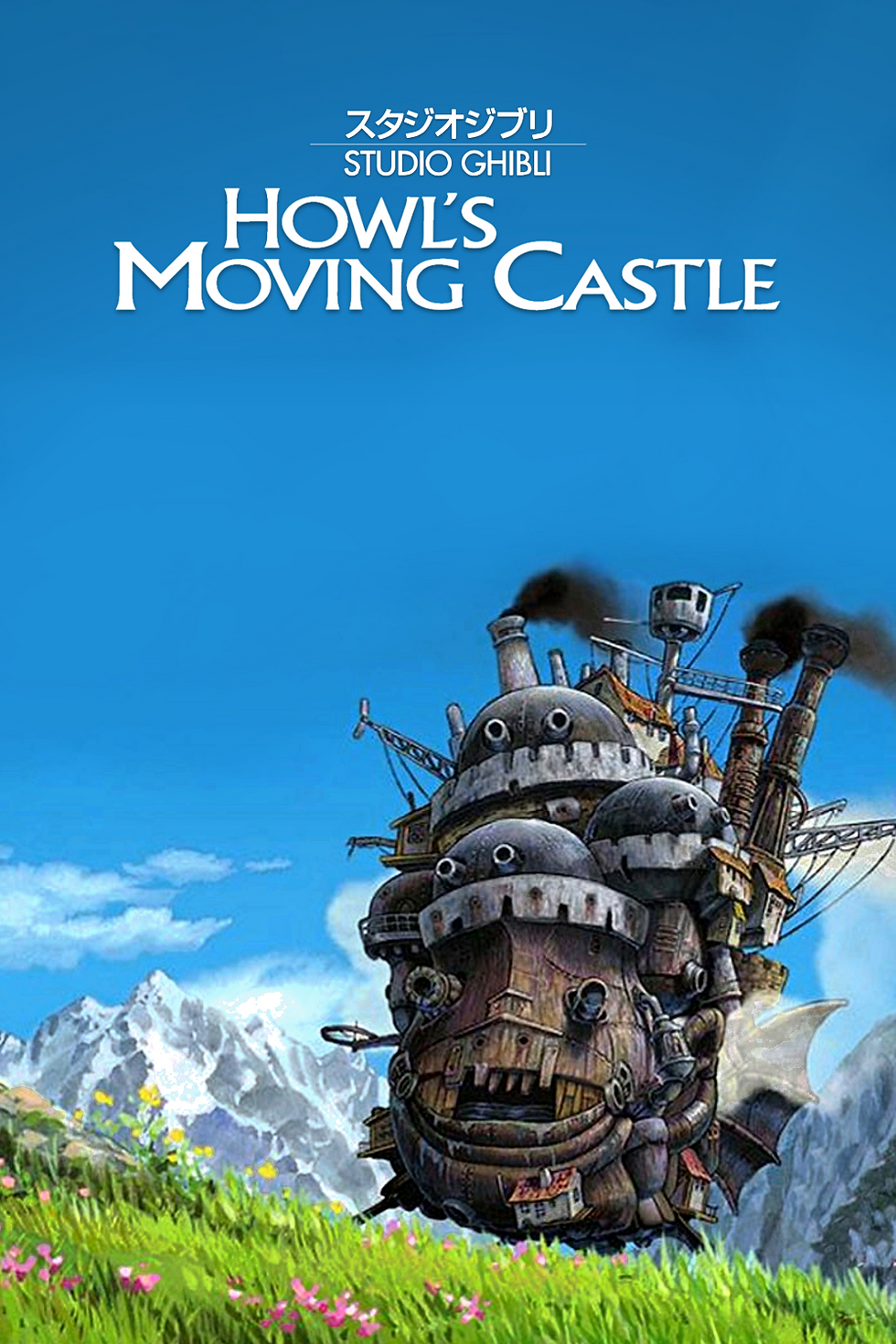
This fantasy-animated movie is a must-watch for people looking for a heartwarming romance movie. The main character Sophie, works in a hat shop, leading a boring life every day. This all changes when she meets Howl, a magician, who is both mysterious and has a bad reputation. One day, an evil witch casts a spell on Sophie, which turns her into an old grandma. Sophie, who wants to break this curse, finds Howl. The movie goes on to portray the war which has broken out in the country, and the enlistment of Howl to fight as a magician. Howl and Sophie develop a special bond, and the movie ends with a happy ending. This movie gives you a great insight into age- how being old can give you physical ailments but will give you wisdom. The scenes are so well portrayed in the movie, and every character that appears in the movie has such a different personality, which develops as the movie progresses.


Comments