Week #43 {8th November '21}
- The Bulletin Buzz

- Nov 8, 2021
- 8 min read
Good Morning Readers! Here is your weekly news summary, we hope you have a great week :)
Articles Written By Ananya Nayar and Misaki Tomiyama

Order of Articles-
Kid's Articles
Other Articles
What is COP26?
By Misaki Tomiyama

Climate change has been a pressing concern for us humans for a long time now, and it only seems to be becoming worse every year. In order to tackle this issue, a conference occurs every year, called the COP or Conference Of the Parties.

In this conference, countries which signed the UNFCCC, which stands for United Nations Framework Convention on Climate Change, come together to plan to cut emissions by 2030. This year, the summit is being hosted by the UK in Glasgow until the 12 of this month.
Climate change is mainly thought to be the result of human actions, which includes the emissions of fossil fuels, deforestation, increased livestock farming and more.

A total of 25000 people is expected or is attending the conference this year in Glasgow, which includes world leaders, environmentalists and journalists. A lot of things were decided and finalised at the conference this year so far. Firstly, leaders are planning to take issues on deforestation more seriously. Second, around 100 countries agreed to cut methane (which is the main component of natural gas) emissions by 30% by 2030. Also, around 40 countries agreed to decrease their reliance on coal, however major coal dependent countries like China and India, haven’t signed up for this agreement.
Why Palm Oil is So Bad
Article by Ananya Nayar
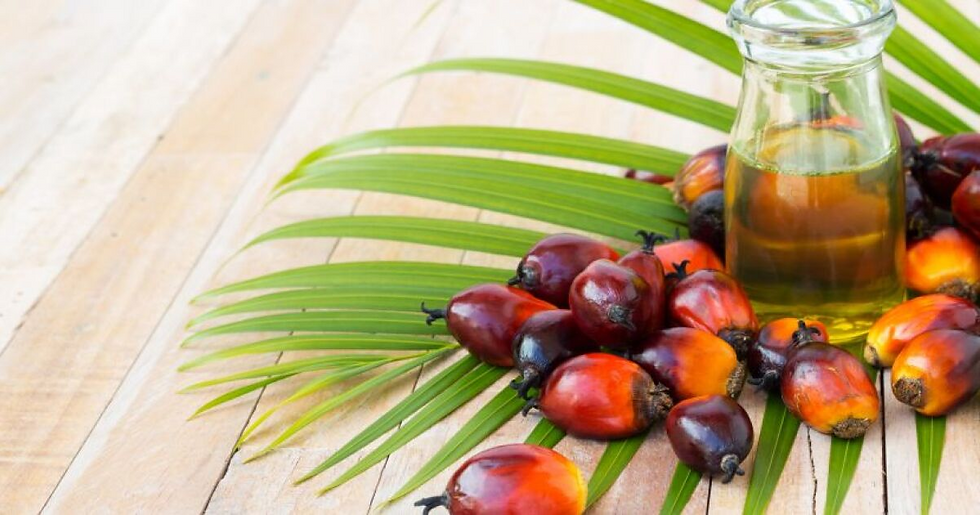
Palm oil. An essential ingredient, right? It’s oil- we cook our food in it, and we eat our instant noodles, Nutella, crisps, cream and chocolate. We apply lipstick, use shampoo, soaps and toothpaste all on a daily basis.
All the products above contain palm oil, a dangerous ingredient.
Palm oil is used more than any other oil, and in 2020, almost 75 million tons were used. It’s cheap in cost and is 10 times more efficient than other oils so companies all over the world are desperate to use it to make their products cheap and tasty.
However, over the years, many concerns have been raised about the effects of palm oil on the environment, human health and animals.

First, the demand is so high that oil palm plantations have been built on the land that used to originally be tropical forests. This large-scale change has removed a lot of natural lands and consequently killed many animals as a result. There’s been an increase in human-wildlife conflict as populations of animals deemed as threats have been forced to move into smaller fragments of their natural habitat or venture into human-inhabited areas.

Of course, there’s also widespread habitat loss for already endangered species such as orangutans, elephants and tigers along with soil erosion from chemicals.
Next, the unsustainable production of this ‘necessary’ ingredient produces a lot of emissions. The contribution to global warming is shocking. As rainforests are cleared, the CO2 amounts increase drastically up to 0.8% of total greenhouse gas emissions.
Along with this, the health issues related are not exactly ideal, the oil has a high saturated fat content which can harm cardiovascular health (your heart, arteries etc) which increases the chances of a heart attack, liver dysfunction, obesity and type 2 diabetes.
Considering all these environmental issues, it’s important to consider what you’re consuming, not just for you but for the climate. Find alternatives, be careful with cheaper, processed foods, use other oils like olive oils for homemade things instead and choose products that clearly specify the ingredients used.
Delhi Air Post-Diwali
Article by Ananya Nayar

The day after Diwali on the 5th of November, India’s capital Delhi saw dangerous air quality levels and smoked skies. During the biggest festival of lights, people like to light candles (diyas) and also like to burst fireworks to ward off evil spirits and add elements to the celebration.

Fireworks, however, are a huge cause of pollution that can remain in the local atmosphere for days and weeks, which is potentially harmful in the long term. Many people in India and around the world have expressed their objection to bursting firecrackers and there have been protests demanding prohibition of them. Fireworks were actually banned or had rules imposed upon them in the past few years (in 2018 they were banned,) and the Delhi Pollution Control Committee had ordered a complete ban on the sale and bursting of firecrackers in Delhi till the first day of 2022.
Several state governments also decided to ban usage and sales of firecrackers considering the pre-Diwali (frail) air quality especially in northern states along with the effects that COVID-19 had on many people’s respiratory systems. This included ‘green crackers.’

Despite this, on the days leading up to the festival, many began to disregard this rule which has brought hazardous air quality.
Most areas in Delhi had an AQI (Air Quality Index) above 500 and some locations even recorded 1000. AQI is basically a measure of the concentration of Pm 2.5 particles per cubic meter of air, and concentrated amounts are damaging to our lungs. Anything above the yearly average of 5 micrograms is said to be unsafe, and to compare, the average AQI on the day after Diwali was 700+ micrograms.

The Delhi government said that this year’s air is worse than 2020 but better than 2018’s index number. With this being said, it’s estimated that 57,000 people passed in 2020 simply due to the unhealthy pollution levels.
Kids Corner: Fridays For Future
Article by Ananya Nayar

'Fridays for Future' is an international movement by students worldwide who choose not to attend school classes on Friday to demonstrate their disapproval of political leaders' handling of environmental issues. They demand action and the ultimate goal is climate change mitigation.

In 2018, 15-year-old Swedish climate activist Greta Thunberg began this campaign by protesting climate inaction by the Swedish government in the weeks leading up to the election. She shared her objections on social media and gained worldwide support instantly.
The youth movement started in 2018, they've created the hashtag #FridaysForFuture and encouraged other young people all over the world to participate and speak up. There have been almost 5,000 strikes from students in 150 countries around the world

Research and history have shown us that non-violent disobedience movements are (the most) effective, here are some ways that you can support or get involved in the movement or even start your own strike effort.
Share the message with people around you. Compose an argument and create plans to achieve the decided goals. Formulate arguments.
Announce the strike details on social media, local newspapers etc and start to build a team.
Before announcing publicly, check with the police or obtain a permit to confirm that everything you’re doing is legal.
The Fridays For Future movement has a few protest guidelines which also go as such:
No violence
No property damage
No littering
No profit
No hate
Minimize your carbon footprint
Always refer to science

For many, it’s difficult to organise physical protests. So, resorting to a digital format is a better option in most cases. Social media, for example, is a great way to spread ideas. Hashtags like #FridaysForFuture, #Digitalstrike, #Climateawareness can help share information with a greater audience. Petitions: creating or signing online petitions and sharing them. The more signs and proof of support, the more pressure for change.
Another part of the movement is not attending school on Friday if you want your school to get involved in motions like such, you can try these:
Appeal to your head-teacher, classmates and teachers to inform them of your goals and spread your message.
Form a coalition, discuss the urgency of this climate crisis in detail in assemblies etc.
If school strikes aren't permitted, ribbon strikes, silent strikes, drop-off strikes, online strikes etc are great ways to persevere.
Organise climate change panels- invite activists or simply organise debates among your peers.
Kids Corner: Why is Waste So Bad for Our Environment?
By Misaki Tomiyama

You’ve probably heard of the term “zero-waste”- it is the concept of reducing waste so we send less waste to our landfills and reduce the amount of waste we burn.

When we list down the 3-R, we have reduce, reuse and recycle. Reduce refers to reducing the waste we produce, reuse refers to reusing goods to reduce waste produced, and recycling refers to recycling waste materials.
Have you ever wondered why reducing the amount of waste is produced is so important though? Well, we will explore the impacts of waste on our environment, and why it is especially important to reduce waste and try to go zero-waste.

First, visit this website- The World Counts- this website gives us the live counting of how many tons of waste was produced this year, and you will probably notice how it is increasing every second. According to this website, on an average, us humans produce 2.12 billion tons of waste a year. Majority of our waste ends up in landfills. Well, these landfills release methane, which is a type of gas that negatively impacts our environment. It is a potent greenhouse gas, and is linked to climate change. Landfills also contaminate the soil and waters.

Also, when the waste is collected from our homes and sent to landfills, there is a great deal of transportation involved. We produce more than 2 billion tons of waste a year, and the majority of this gets transported to landfills and other areas by trucks, so this leads to the large carbon dioxide emissions which is again bad for the environment.

Also, another way waste is managed is by burning. This releases a lot of toxic materials into our environment, and is not only bad for our world, but also for our health.
Going zero-waste is a popular concept nowadays, as more people are becoming more interested in protecting their environment and preventing climate change. Going zero-waste leads to healthy communities and a healthy planet after all.
Did You Know? November 8 is World Urbanism Day
By Misaki Tomiyama

Every year on the 8th of November, the world celebrates world urbanism day (also known as World Town Planning Day). This day promotes the role of planning and creating livable communities. Urban areas, as you probably know, refers to cities, towns and areas with high population, and urbanism refers to how humans interact with the environment built by us.
You can participate in World Urbanism Day by spreading awareness about the event, learning more about your city/town and finding out ways you think you can improve your city. You can also learn about famous urbanists such as Jane Jacobs, Lewis Mumford, Robert Moses, and Naomi Klein.
Book and Movie Reviews
By Misaki Tomiyama
Book of the Week- Counting by 7s, by Holly Goldberg Sloan

Counting by 7s is a book that revolves around 12-year- old Willow Chance, a ‘gifted’ child. Because she is gifted, everything interests her, but she is different from others, and finds it difficult to find a place she belongs. However, one day, she comes home to find tragic news- her loving parents were killed in an accident. Counting by 7s is a book that explores the idea of overcoming grief, and finding happiness.
Age recommendation- 10+, Rating- ⅗
Movie of the Week- Cinderella (2021 version)

Cinderella is a famous folk-tale that has been adapted into a lot of different movies, and another one just released this year, starring singer-songwriter Camila Cabello. This is different from every other version of Cinderella though, and has a rather interesting storyline. The movie revolves around Ella, a girl who dreams of becoming a dressmaker, however the village she lives in doesn’t appreciate the idea of women going into business. One day, the prince of this movie, Prince Robert, finds Ella and feels she might be the one, so to find her again he organises a ball. The movie features a beautiful dance scene of the two, but it doesn’t end like every other Cinderella movie. This movie is not a typical fairy tale adaptation- it has the element of romance, but is mainly a feminist adaptation. This new version of Cinderella is rather interesting, as it has a musical element, features a genderless fairy god-parent, and brings up ideas about women in society.
Age recommendation- 12+, Rating- 5/5


Comments