Week #42 {25 Oct - 1 Nov '21}
- The Bulletin Buzz

- Nov 1, 2021
- 11 min read
Good morning, readers! We hope you enjoy this week's Bulletin Buzz articles and have a great week ahead :)
Articles written by Misaki Tomiyama and Ananya Nayar

Articles:
Kids Corner
Other
Solar Power FAQs
Interviewed by Ananya Nayar
In a recent interview, I asked some interesting questions about solar power and the investment, cost, setbacks and more in Delhi, India.
How would solar energy impact electricity costs for residents? When will the investment be returned?
Well, years ago, the price of solar energy was almost 5 times as expensive as normal power. Today, the price of solar power is actually cheaper than conventional power like coal, which is what we normally get at home. The issue with solar is that it only generates when the sun is out, so, at night time when you have to run all the other appliances, you need power. That’s why you’ll add batteries, which makes it a little more expensive.
Electricity is measured in kW and at home, you’ll pay 7-8 rupee for a kW hour, in a day you may use 40-50 kW. However, in solar energy, when you add a battery on top, you’ll have to pay about half a rupee more. Yet in three or five years, battery prices would come down and the cost for nighttime power could actually be cheaper to go solar rather than conventional.

Clockwise from top left: Bhadla solar park, India; Desert Sublight solar farm, US; Hainanzhou solar park, China and Ouarzazate solar park, Morocco.Google Earth, Author provided
About payback, there are two problems. For those wanting to put solar on rooftops, that ends up being a disadvantage. Whereas if you put solar in the desert, there’s limited rainfall, less pollution, no clouds and that’s, therefore, an advantage. Ultimately, in the desert, there’s more sunlight to generate from, so those who put panels on the roof will generate about 20% less than those who place panels in the desert who will get their payback back in 6-7 years and gain profit for the remaining years.
Do you think apartment complexes’, societies etc in Delhi or Gurgaon have the ability to transfer to fully renewable sources of energy, and if they do, what are the hurdles they may face?
If you were to transfer to fully renewable sources of energy, you have to generate it somewhere. For example, if you put panels on all the roofs, it’ll generate hardly 10% or 5% of electricity consumed by apartment complexes. So, you couldn’t create enough energy in the area itself to fully transfer to renewable energy. However, you could place solar panels and wind turbines in rural areas and ship all the electricity in wires into the urban areas.
About the hurdles, however, some things often go wrong like wires may get cut. This cuts you off from those sources and instead, you will be generating electricity from diesel which doesn’t make you 100% renewable. Either, you organise backup renewable sources where power is generated on-site or you push governments to prevent things like wires from faltering en route.
Going back to batteries, you could place solar batteries and store energy there in case you have a blackout.
What steps could residents in societies take to conserve energy?
The number one thing is to turn stuff off. Yet we understand that you can’t always turn stuff off though and it’s difficult to tell people not to consume. However, if you convert lights to LEDs that are more energy and cost-efficient and more durable, it'll save you money and it'll help the environment a little.
Even switching to more efficient machines helps, for example, nowadays you can purchase washing machines that use ⅓ water. This also reduces electricity, as you pump water to the top of the building it uses power. Conserving water conserves electricity.
Many countries worldwide want to switch to solar or other sources of renewable energy as soon as 2030 or 2050. Looking at the progress so far, do you think this goal is achievable? Do you think governments need to take more incentives to reach this?
If you were to leave the situation alone right now then yes, by 2050 maybe 2060, in India 2070 is when we can switch to completely renewable energy. It’ll take so long because of the huge coal plants, they belch carbon into the air. For the people who have bought them, they’ll want to keep running these unsustainable power plants until they get their money back, which would be 2030-ish. Technically, we’re stuck with these huge coal plants.

However, if you were to say ‘let’s shut them off early’ and ‘let’s pay you off’ then you’d be bringing the payback period down. This will get the government involved too. So, we could go fully renewable towards 2035, which is 10 or 15 years later.
Spiking Drug Needle Cases in London
Article By Misaki Tomiyama
Recently, in England, similar incidents of ‘needle spiking’ have been reported. Young people, especially women in bars have been targets of spiking- which is when someone intentionally adds alcohol or drugs to someone else’s drink without their knowledge. However, these incidents are not the usual spiking incidents but are incidents of needle spiking, where victims were injected with syringes at crowded clubs.
The police have been investigating this case, and reports say the effects of this needle spiking is “consistent with a substance being administered.” Yvette Cooper who is chair of the Home Affairs Select Committee demanded in a parliamentary hearing that police compile a nationwide assessment for this issue. Young people have started an initiative “Girls Night In,” which organised boycotts of clubs to raise awareness on such incidents.
The Hidden Celtic Halloween Origins
Article by Ananya Nayar
On the last day of October, every year, children and often adults alike dress up in ‘scary’ costumes to trick o’ treat or celebrate Halloween, but what is Halloween and how did it come to be?
Halloween, also Hallow’s Day, or the evening before All Saints actually originated long ago and dates back to the ancient Celts.
2 millenniums ago, the Celts inhabited the land that’s known to us as Britain, northern France and Ireland. The Celts were agricultural people and before Christianity, the Celtic year started with the approaching warm weather. One particular festival, Samhain, concluded the end of summer and harvest, and the beginning of the dreaded winter. Samhain symbolised the boundary between the world of the living and of death. The Celts believed the sun was still for twelve days in the middle of winter. During this time, a small lamp was lit to conquer and banish the evil spirits that lingered, darkness and bring fortune for the following year.

It was strongly believed that on the night of the 31st of October, ghosts of their dead relatives would revisit the mortal world with unknown intentions; it was said that bonfires ward off spirits.

SUNBIRD/ISTOCK VIA GETTY IMAGES
Druids or Celtic priests led the Samhain activities and Druids made sure each houses’ fireplace was relit by remnants of the treasured communal fire, simply to also keep them warm and safe during the feared, harsh, cold winter months.
Throughout Samhain, people would light such bonfires and wear costumes to ward off the phantoms. Over time, this festival developed into a holiday that was full of modern-day, typical Halloween activities like trick o’ treating, carving pumpkins, sporting costumes, eating treats and hosting gatherings.
Kids Corner:
What Are Food Miles?
Article by Ananya Nayar
The term ‘food mile’ might be something you’ve heard before, it’s used by environmentalists and food system professionals too to describe the cost of food of the pathway between farm to consumer.
Basically, it talks about the total geographical distance food has travelled between the initial farming, processing and consumer. It measures how far your food has had to travel to be eaten.
You may ask, why is this important? It’s just food to be eaten? Well, food miles are important because they give us a scale that can guide customers into making better decisions about their food consumption, based on how far the food travels.
If your ingredients have travelled a long way to get to your plate, it’s probable that that has a cost on the environment. Some foods may have a big carbon footprint, depending on the distance they’ve been transported, the urgency and the method of transportation. For example, flying in food usually creates 10 times more carbon emissions than road transport and roughly 50 times more emissions than shipping products/produce.

Photo via: https://teambia.weebly.com/useful-links.html
Food miles are calculated by multiplying the emissions from transport by the distance travelled of each ingredient, by the carbon intensity of the mode of travel (whether it’s rail, water, air, road.) If the effects on the environment by the food we eat doesn’t waver you, well, eating food that’s travelled a long way is bad too. Fresh fruit and vegetables can lose up to 50% of their nutritional benefits.
Choosing to limit the distance your food has travelled can reduce pollution and protect the planet. If you’re wondering how you can reduce your food miles, or your family’s food miles, lucky for you we have some tips!
Buy Local

Locally produced food has its benefits, it’s not got a lot of preservatives, it may be healthier too. On top of this, it’s obviously not travelled many miles at all, and you are supporting smaller local farms.
Eating Seasonally

Eating seasonally ensures that you are eating foods locally produced in your area depending on the weather, rather than importing fruits typically grown in the summer that are now being grown across the world for your table in the winter.
Make a Choice

When you see two boxes of cereal at the grocery store, turn the box around and check, pick the one that’s been produced closer to your home or inside your country.
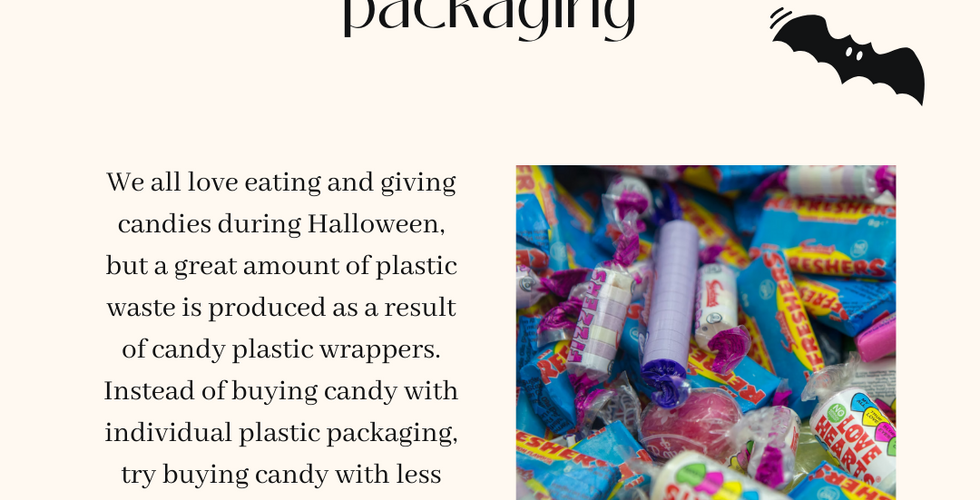
How to make your Halloween (season) More Eco-Friendly
By Misaki Tomiyama




Other
Book & Movie Reviews
Reviewed by Ananya Nayar
Book of the Week: The Girl on the Train by Paula Hawkins

This psychological thriller was extremely exciting. It was so interesting to see the story unfold how it did, with secrets being revealed over time, pieces of backstory and the way it fell together to form such an invigorating scenario was really cool. I enjoyed the narrative writing style and triple perspective, which really helps the reader understand the character and sympathise with them. There’s so much chaos, obsession and turns. It was easy to keep up with despite everything but it was very fascinating, each woman’s story was so different and full of bad decisions, helplessness, suffocation and romantic confusion.
A review online found the title interesting as ‘the girl on the train’ depicts each woman (Rachel, Anna and Megan’s) ‘intentional journey on the train of suffering, misery and self-destruction,’ I didn’t realise that until now.
What I didn’t like is how abrupt the ending was, it could’ve been stretched out a bit and it would’ve been nice to understand what the characters are doing maybe five years later.
Rating out of 5 Stars- 4.5/5
Age Recommendation- 15+
Movie/Show of the Week: History 101 on Netflix

I for one, am not a fan of docuseries or documentaries, and I’d certainly not watch them for pleasure. This one however was something else. Each episode is roughly 30 minutes and goes into depth about a new topic each time, whether it be ‘feminism’ or ‘’fast food.’ Overall, it seems to be very well structured, narrated and researched. The show dives into depth about topics relevant like the origins, the timeline, the problem etc which is really interesting. It’s informative and touches upon relevant topics in a great way so that it’s not boring. I personally liked the formatting and editing a lot because it kept you watching, rather than other documentaries that can become boring in a few seconds.
I’d certainly recommend this to people of all ages, it’s a perfect educational thing to watch.
Age Recommendation- 6+
Rating out of 5 Stars- 4.5/5
This Week in History
Article by Ananya Nayar

On the 25th October 1881, one of the world’s greatest and revolutionary artists Pablo Picasso was born in Spain. From the beginning, Picasso was talented. By the age of just 13 he had his first exhibit, he pursued art in art school but dropped out to focus and experiment with his own modern styles. His lifetime collection has 50,000 pieces of art, whether it’s ceramic, drawing, sculptures, paintings all completed over the span of 80 years.
The Cold War, the race for nuclear weapons and space technology. On the 27th of October 1962, the US and Soviet Union retreated one step from the brink of a nuclear war. During the preceding period, it was frightening and filled with tension and negotiation, many believed that a nuclear war was almost inevitable.
The Statue of Liberty in New York City was dedicated in 1886 on the 28th of October. The monument was originally a ‘gift’ from France to the United States. It was first proposed by Eduoard de Laboulaye to celebrate the unity and alliance between the two countries during the American Revolution. The “Liberty Enlightening the World” statue was 151 feet tall and its form is a woman with a raised arm holding a torch to the sky.

Photo via: https://www.historyextra.com/period/20th-century/wall-street-crash-what-happened-why-guide-economy/
The Great Depression of the early 19th century began on this day on the 29th of October. In just one day, the entire stock market crashed and billions and billions of dollars were lost. This one event spiralled most of the world into the ‘Great Depression’ where there was inflation, unemployment, invasion and many believe that the Wall Street Crash on the 29th was a leading factor of the factors of the second world war.
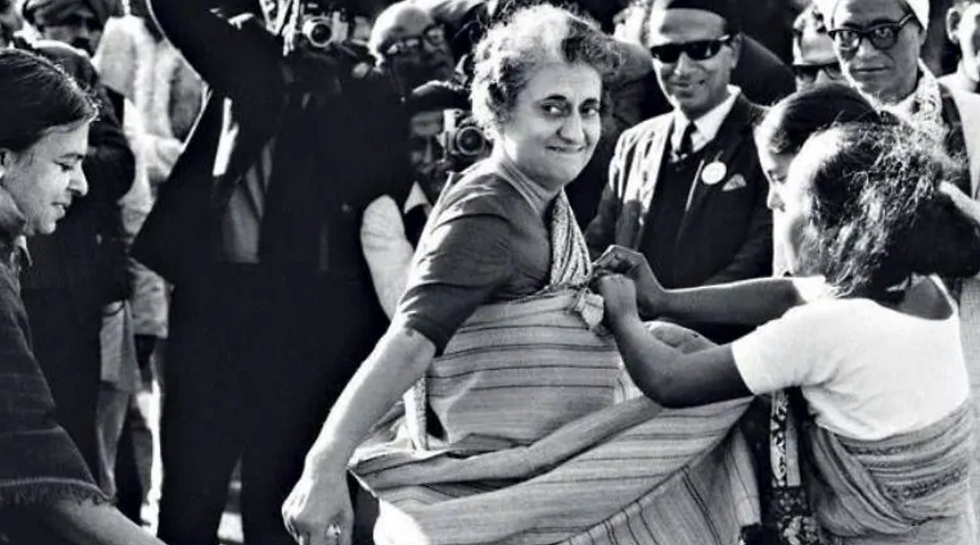
The 31st October 1984 was when the Indian prime minister of the time, Indira Gandhi, was assassinated in the capital New Delhi by two of her own bodyguards who were Sikh. Primary to this, in June 1984, she had ordered an army raid of a Sikh temple in Punjab to flush out the armed Sikh extremists. This was extremely controversial and was a leading factor in her untimely and unfortunate death.
Did You Know? November 1 is World Vegan Day!
Article By Misaki Tomiyama

November 1, World Vegan Day, marks the beginning of an important month- World Vegan Month! This day (and month) aims to spread awareness on vegan diets. Vegans don’t eat any type of food that comes from animals which include- meat, eggs, dairy products and honey.
Well, vegan is not one whole category, and there are different types of vegan diets. A few of them are listed below.
Dietary Vegans- they abstain from eating any animal products but use them in clothing, cosmetics, etc.
Whole Food Vegans- they are vegans who prefer whole foods including fruits, vegetables, whole grains, nuts, etc.
Junk- Food Vegans- they mainly eat processed vegan food, such as vegan meats, fries, frozen dinners, and desserts, they also eat dairy free ice creams etc.
Raw- Food Vegans- they are vegans who only eat raw food, or cooked under a temperature of 48°C or 118°F.
Well, why do people choose to go vegan?
There are different reasons people go vegan, but it is mainly divided into three main reasons- ethical, health, and environmental.

Ethical- Some people go vegan because they believe animals have the right to live, and that their reason for survival is not for human consumption. They believe eating meat, and consuming products that come from animals is not acceptable, especially when there are other alternatives.

Health- Some go vegan as they think it will provide potential health benefits. Some studies show that going vegan can reduce risks of heart disease, type 2 diabetes and cancer. Another reason people choose going vegan is for weight loss, as studies show a connection between going vegan and low BMI and weight loss.

Environmental- Animal agriculture (the farming that involves breeding, raising and slaughter of animals) is shown to have negative impacts on the environment, and raising livestock generates approximately 14.5% of global greenhouse gasses. Not only this, but animal agriculture requires a lot of water- around 1,700–19,550 liters is required to produce 0.5 kg of beaf.
Here’s how you can help and participate in World Vegan Day (Month)!
Join events- there are quite a few vegan events that take place this month, so try attending them! This way, you can learn more about the lives of vegans.
Try going vegan- you can try going vegan for a day or week, and if you enjoy this lifestyle, you can also switch to a vegan lifestyle.
Learn more about being vegan- do some research, or educate yourself on veganism (reading this article, is also educating you about veganism!)
Spread awareness- if you are a vegan, you can share your lifestyle with more people around the world, or share vegan recipes to try out. (Use the hashtag #WorldVeganDay when sharing on social media!)


Comments