Week #38 {27 September '21}
- The Bulletin Buzz

- Sep 27, 2021
- 8 min read
Updated: Sep 28, 2021
Hello, readers! We're back with another edition of The Bulletin Buzz.
Articles are written by Misaki Tomiyama and Ananya Nayar.

Articles of the Week:
Kids Corner:
Other:
Historical Gender-Fluidity in the Philippines
Article by Ananya Nayar
In History books from a long time ago, you’ll find that there are only two implied genders- women and men, and there are certain traits that are ‘assigned’ to those genders, now we already know about the harm in that and we are seeing progression in gender fluidity after centuries of seeing people in a box. However, the problems that much of the rest of the world saw with gender roles isn’t the case with the Philippines. In fact, there’s a beautiful legacy of fluidity and inclusivity in the Philippines.

In the Philippines, there is the common word ‘Baklâ’ which means a person who was assigned male at birth but adopted a feminine expression, they are exclusively attracted to men but would often be bisexual. Many times, this was a third gender. The word Bakla came about centuries ago, this shows that many cultures in South Africa, India, Thailand and parts of America have a cultural history of gender freedom.
During the Spanish rule over the Philippines from the 16th to 19th century, research told us that there was actually gender equality, which is unexpected considering that in the rest of the world men were ‘superior.’ A woman could divorce her husband and own property under her own name, which she kept after marriage as well. She had the prerogative and right to have a baby or not and then could decide the baby's name.
The first few centuries of Spanish rule was the Spanish trying to enforce the European view of what a family should be over the free families and people in the Philippines.
Even in traditional Hawaiin culture, gender and sexuality expression was encouraged and celebrated as a natural part of being human. Historically, ‘mahu’ appeared as individuals who identified as neither, or between female and male.
Indonesia too, had 5 terms in their languages that talked about different expressive combinations of gender, sex and sexuality like makkunrai ("female women"), oroani ("male men"), calalai ("female men"), calabai ("male women") and bissu ("transgender priests").
What is likely to be the reason that this inclusivity went awry is that after the colonial/industrial revolution period where much of the Western world claimed land, their values that talked about gender being binary were passed on, however, many islands in the Pacific or in Hawaii, Philippines remain gender and sexuality inclusive and creative.

Photo via ABC News.
Live Music is Back!
Article by Ananya Nayar
After a year and a half, it’s great to say that concerts, plays and the like are back and better than ever!

Photo via New York Post
The iHeart Music Festival, New York Fashion Week, Governors Ball, VMAS and artist tours are in full swing like how it was pre-pandemic complete with cheers and glory.
Remember, it’s still important to distance and wear masks, but enjoy yourself.
The concert process is safe (to an extent,) and it’s recommended to bring sanitiser, masks to wear throughout and your own food and water as nowadays the food stalls we used to see are no longer distributing.
Yet despite the return of comedy shows and festivals, the virtual option is here to stay- especially as backups if in case plans go awry. Livestream concerts would be beneficial to fans who can’t afford to travel or buy tickets along with the artist as that way they’ll get a larger virtual audience and could profit off brand deals etc.
Tourism- Why is it good for our world?
Article by Misaki Tomiyama

Tourism, if defined, is the act and process of spending time away from home in pursuit of recreation, relaxation, and pleasure, while making use of the commercial provision of services. (From Britannica) Because of the coronavirus pandemic, a lot of us couldn’t go on vacations, and while many of us find this annoying and struggle, a lot of businesses and tourism industries are facing challenges too! In this article, we will go through the reasons why tourism is so important in our world, and for businesses.

The first reason tourism is important is because it generates a lot of jobs. Due to tourism, jobs such as hotel staff (including concierges, accountants, housekeepers, chefs etc), event managers, restaurant staff, tour guides, airline staff, tourism officers, construction workers and so much more. Tourism helps a lot in preventing unemployment in many sectors of society and is one of the reasons it is so important for our economy.

The second point is that tourism is important for governments to improve infrastructure and services in their own country. If a country expects a lot of tourists, the government will most likely put effort into building infrastructure such as roads, public spaces, parks etc. This is because the country would want the tourists to have a safe and convenient stay in the country. This can overall advance the country, and improve quality of living, as it is not only the tourists who benefit from improved infrastructure, but also the citizens living in the country.

The third point is that tourism is an important way a cultural exchange and bond can be developed between countries around the world. Tourists coming into a country will most likely visit traditional and cultural spots, and will educate them about the culture of the country. Tourism is an important way people get to learn more about different countries, which is very important in our globalising world.
Kids Corner
Kid’s Corner: Ocean Overfishing
Article by Ananya Nayar
What is overfishing? Well, overfishing is the depletion of the fish population by catching fish for food etc at a dangerously fast rate, faster than the rate at which fish can naturally reproduce.
Overfishing can occur in any water body like lakes, ponds, seas, rivers, but today we’ll talk about it in oceans.
For starters, overfishing creates an imbalance in the food chain as when too many fish are taken out of their natural habitat, vulnerable species like sharks or coral consequently suffer. We already know the issues with fishing, if it’s not done properly or safely, then plastic equipment can end up getting lost at sea and gullible sea animals may think it’s food, eat it and get injured or die because they’ve consumed sharp plastic.

If fish are being fished at a higher rate than replenish-able it’s extremely unsustainable. Did you know that 70% of fish populations are either fully fished or overfished? By 2050, it's estimated that there’ll be no fish left in the oceans if fishing continues at this rate.

The Mediterranean for example is the world’s most overfished sea, with the highest percentage of overfished fish populations.
https://oceana.org/support-oceana to donate/support!
Photos via fishforward.eu
What are Microorganisms?
By Misaki Tomiyama

Microorganism, or microscopic organisms, just like the name suggests, is an organism or a living thing that is too small to be seen. They can only be seen by a microscope, thus the name microorganism. Bacteria and viruses are examples of microorganisms, and microorganisms can be harmful, but others are essential for life.

Microorganisms can live anywhere, and exist in all places, from soil, air inside living organisms and even inside us humans! An example of a microorganism in our body is a microorganism called Gut microbiota. It lives in our intestine, and plays an important role in helping us digest food.
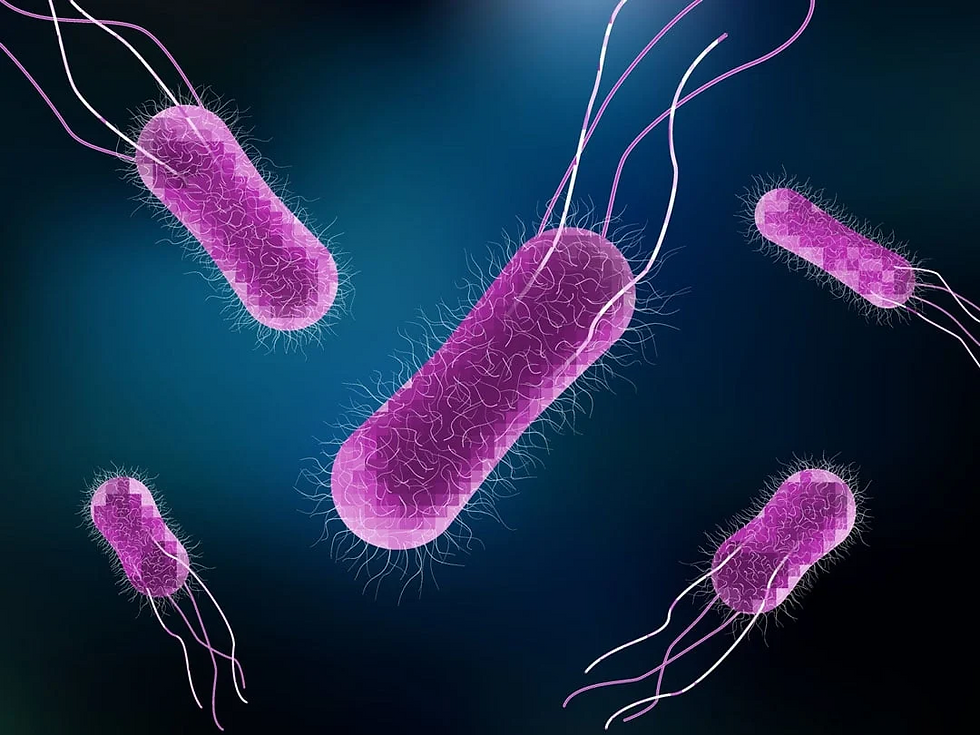
Although microorganisms like the Gut microbiota can be helpful for us, some can be dangerous and bad for us and our environment. For example, bacteria and fungi found on uncooked meat can be extremely harmful. They can make you feel sick, and this is why we have to make sure meat is cooked well before we eat.
Other-
This Week in History
By Ananya Nayar
On the 21st of September 2008, the last baseball game was played at the Yankee Stadium. The New York stadium hosted almost 6,600 Yankees regular-season home games in its 85-year life.

The Iran-Iraq war began on the 22nd of September 1980, it started with the full-scale invasion of Iran by their neighbour, Iraq. This cost 1 million lives and over $350 billion.
The war ignited after a long history of border disputes and anger at Saddam Hussein (a major dictator) regime. Iraq also wanted to gain control of the oil-producing, lucrative area near the Iranian border of Khūzestān, these were just a few of the 8-year conflict.
Did you know that on the 23rd of September 1846 the Planet Neptune was discovered? Well, in the Berlin Observatory, German astronomer Johann Gottfried Galle was studying gravity disturbances around Uranus and stumbled upon the blue planet, Neptune. Neptune is the 8th planet from the sun, it’s the farthest known and is the densest and third-largest planet that has been discovered yet. It’s around 17 times the mass of earth, which is huge! The atmosphere consists of hydrogen, helium and a little methane but the reason for its luminous colour is unknown and is probably due to another mysterious component.
Image Source: NASA

In 1789, on the 24th of September, the first Supreme Court was established in the U.S. The Judiciary Act was passed by Congress and approved by the then President George Washington. This higher court’s purpose was to oversee cases concerning treaties of the United States and review any laws being passed by the legislature.
On the 27th of September 1938, Franklin Roosevelt appealed to Adolf Hitler during the second world war. In his letter, Roosevelt reiterated the requirement to find a peaceful resolution after threats of invading Czechoslovakia and other countries.
Did You Know? September 27 is World Tourism Day!
Article by Misaki Tomiyama

Every year, on the 27th of September, we celebrate World Tourism Day. It is a day where we look at the benefits of tourism and spread the idea that tourism can create a better future for all countries. Tourism impacts the economy of a country a lot, and statistics show that tourism in 2018, contributed $8.8 trillion dollars to the global economy. Tourism adds approximately 319 million jobs. (You can read about the benefits of tourism in the article here!)

World Tourism day was decided as an international day by the UNWTO (United Nations World Tourism Organisation) in 1979.

Because of the coronavirus pandemic, the tourism industry is facing a lot of challenges, so it is especially important for us to celebrate this day. You can contribute by researching about a country, and learning about its history, heritages, monuments etc. Most of us cannot go on vacations, but we can learn about different countries, and let more people get knowledge as well.
Book and Movie Reviews
By Misaki Tomiyama
Movie of the Week
The Truman Show
Star Rating- 4/5 Age Recommendation- 9+

The Truman show is a movie which depicts the everyday life of Truman Burbank, the protagonist of this movie. Well, the daily life of a person may not seem to be so interesting, but Truman is actually a star of a 24 hour television show, which broadcasts his life to the rest of the world. His whole life has been planned and scripted by Christof, the producer of this TV programme. All of Truman’s friends, neighbours, colleagues and even his family are all actors, who are saying lines and acting from a script. The world, well, island he lives in is a mega studio, in a giant dome. While the whole world watches Truman live his life, he doesn’t know he is the star of such a famous television programme worldwide. What makes this movie even more interesting is that Truman, long ago, had fallen in love with a woman, who was a background actor. Although Truman is married to another woman, he dreams of meeting her someday again. This comedy- drama film is something you should definitely watch during the weekend to brighten your day!
Book of the Week
Fish in a Tree by Lynda Mullaly Hunt
Star Rating- 4.5/5 Age Recommendation- 8+

Albert Einstein once said “If you judge a fish on its ability to climb a tree, then it will spend its whole life believing that it is stupid.” Now, you may find this quote slightly weird, but this week’s book, Fish in a Tree is based around this famous quote. Fish in a Tree is a New York Times bestseller, and revolves around Ally, a girl who is dyslexic, but hides it from the rest. She never asks for help, and hides her inability to read, and everyone thinks she is a troublemaker. All of this changes when she meets Mr Daniels, a kind teacher who changes her life. He understands Ally, and brings out her brilliant and creative side, and helps her gain confidence throughout the novel. This book is a heart-warming novel, which portrays the wonderful idea that everyone, no matter what, has something special in them, and tells us that no one should be judged by their labels.


Comments