Week #37 {September 20 '21}
- The Bulletin Buzz

- Sep 20, 2021
- 11 min read
Articles by Ananya Nayar and Misaki Tomiyama

Articles of the Week:
Kids' Articles
Other Articles
Women in Afghanistan
Article by Ananya Nayar

A few weeks ago, the Taliban invaded and seized control of Afghanistan, putting the lives of many at risk. If you missed the article we published on it last month, you can read it here. (Week #34: Taliban in Afghanistan)
If you don’t know already, the Taliban are an ultra-conservative group that is infamous for being extremely oppressive, denying individual basic rights and they have one of the worst human rights records in the world. The patriarchal community claim that they are ensuring women & girls have a ‘safe and dignified role,’ however, they’ve perpetrated disgusting acts against women, assault, abduction and forced (child) marriage along with not allowing girls education and healthcare.
It is 20 years after the Taliban were forced to remove themselves from Afghanistan and they’re back and still extremely repressive. In the past week or two in power new restricting rules have already been put in place.
Days ago, Secondary schools reopened and only male teachers and students have been ordered to return to the classrooms with no mentions of women involved. Since schools were previously segregated it makes it easier to shut down girl schools as well.

Last week, the Taliban announced that women would be allowed to study at universities but would not be able to learn alongside men and would have to wear something inside the new dress code. Yet many say the rules would still exclude women from their education as many universities can’t provide separate classes, and by banning high school education it would be impossible for any girl to finish their further education.
On top of this, Afghan girls are prohibited from playing sports under the Taliban rule, which effectively ends the women’s cricket team there. Even certain TV shows have had their female presenters fired.

As people all over the world are looking to help Afghan people but not the Taliban, Afghanistan has gone into an economic crisis with the streets of Kabul ‘turning into flea markets’ as people are desperately trying to sell their belongings for a good price in hopes to get money to buy food. Shagufta, a lady trying to sell her best clothes cried to BBC that “Life has become an insult now, we are dying slowly..” and “If I get a good (exchange) price I will buy oil, rice and flour.”
The situation has become incredibly dire, and it is hard to help. Donors are donating lots of money to refugees and women in Afghanistan, but it is hard to consider you must dodge the Taliban authorities.
Earth Overshoot Day and Reducing Ecological Footprint
( Long Article ) by Ananya Nayar

Each year, our planet supplies or generates a certain amount of biological resources. Earth Overshoot Day marks the date in the year where we consume these natural resources so fast that they don’t even get us through the year. It marks the day when our demand for these precious resources exceeds the amount provided and is obtainable and generates waste at a nonrenewable pace. This year, that date was a few weeks ago on July 29th, less than 60% through the year.
Since the budget has been surpassed, for the rest of the year we have to draw down resource stocks and accumulate carbon dioxide in the atmosphere. To calculate a country’s overshoot day you tally the supply available in the productive land and sea, and the country’s demand for supplies which includes population and capacity to absorb carbon dioxide emissions.

If the ecological footprint per person measured in hectares is greater than the biocapacity then that country has an overshoot day. A great world-average biocapacity per person would be 1.63 global hectares, however, the average American’s footprint is 7.0 gha (global hectares.) Keep in mind that the ecological footprint per person also varies depending on the wealth and developing state of the residing country. Many country’s per-person footprints are dangerously high, for example, recent research shows that in Qatar, the average person’s ecological footprint is a whopping 14.4 gha. Today humanity consumes the equivalent of 1.7 piles of earth to provide the resources we use and absorb the waste. Meaning, it takes the earth over 20 months to regenerate what we use in a year.

How can you reduce your ecological footprint? First, visit https://www.footprintnetwork.org/resources/footprint-calculator/ to calculate your footprint and determine whether you’re living an environmentally friendly lifestyle or one that is negatively impacting the earth.

1- Reduce your usage of single-use/disposable bags, masks and water bottles. Due to the pandemic, the plastic waste rates have gone very high and by carrying a water bottle to the gym or wearing a pretty cloth mask you could be helping lots!

2- Only if you have the space and living budget, try switching to renewable sources of energy to power your homes like solar power or wind energy!

3- Drive less, carpool, or use public transport. It’s a great way to reduce emissions emitted by vehicles.

4- Reduce your consumption of meat- a lot is wrong with the meat industry including water degradation, land consumption, greenhouse gases and animal abuse. Do your bit to help these causes by maybe cooking a vegetarian dish instead for dinner tonight.

5- Support local businesses. This way, your clothes and supplies won’t have travelled so much to reach you and the transport emissions will be drastically less. Support small businesses around you for authentic products or tasty jams at the farmer’s market
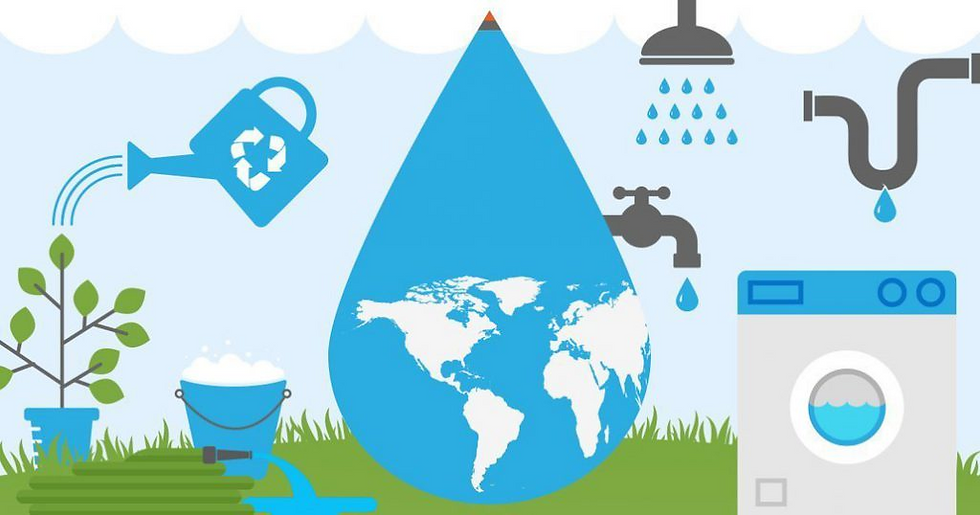
6- You may be very fed up with the cliché ‘use less water’ but it’s true. The probability of people getting clean water is reducing day by day and consuming excess water isn’t going to do any good. Switch to bucket baths instead of showers or baths, roast vegetables rather than boil them and make little changes in your lifestyle because even that can do great amounts.
What’s in it for you? You’d be doing your bit to look after the environment, potentially save a lot of money and expand or build community spirit by starting or supporting local businesses along with many other benefits you’ll discover after taking steps to reduce your eco-footprint.
Euthanasia Debate Perspective 2: For Euthanasia
By Misaki Tomiyama
Disclaimer: This is a two-part piece, the first perspective was published in last week’s articles.
You can find last week’s article on euthanasia here, but before we dive into why euthanasia should be legal, we’ll do a recap on what euthanasia is.

Euthanasia is the act of deliberately ending a person's life to relieve suffering. Euthanasia is often used in animals when they are old or are suffering from a disease when they are “put to sleep”. However, using euthanasia on humans is a very debatable idea, as many believe we are going against the right to life of humans and so on.

In the process of euthanasia, the patient is administered a fatal dose of a drug that is suitable and is injected into the body. The solution used for euthanasia suppresses the cardiovascular and respiratory systems and allows the patient to end their life without suffering.
Although euthanasia may seem very controversial- the idea of putting an end to a person’s life to relieve suffering may not the most acceptable to some people- there are a lot of people who believe euthanasia should be legal.
Firstly, some say we need to rethink what the “right to life” is. “Right to life” is a fundamental right listed in the Universal Declaration of Human Rights. Some believe that the right to life simply means humans’ right to live, and survive. However, others believe the right to life also includes the right to choose how to end their life. The right to life “entails being able to live a complete life of dignity and meaning.” If the right includes this, then euthanasia should be legalised, as patients will be allowed to choose whether they want to live a longer life but suffer, or choose not to suffer by ending their lives.
Moreover, euthanasia can help a lot in terms of the patient’s psychological aspect. Tackling an incurable disease and fighting to live every day can be extremely stressful. If a patient knows that they can choose to end their life and relieve all of the sufferings they are facing, their stress can be alleviated greatly. Euthanasia is not only a medical matter, but a psychological one as well, and we need to take into consideration the perspectives of patients.

Euthanasia is legalised in a few countries such as Switzerland, Netherlands, Belgium, Luxembourg, Canada and more. One of the main reasons other countries have not legalised euthanasia is that it gives rise to an ethical issue, and might cause rise to crimes. However, looking at the countries where euthanasia is legal, we do not see any unacceptable consequences. Many say that since these countries are proof that euthanasia can be legalised in countries without causing any harmful consequences, euthanasia can be legalised.

Euthanasia was first introduced medically in the 17th century, and questions regarding its acceptability have been present since then. It will take a long time to make a clear decision on whether euthanasia can be legalised in every country or not. Nonetheless, it is always important to know both ideas of this controversial topic.
9-year-old builds treehouse and rents, uses profit for charity
By Misaki Tomiyama
Many children dream of having the perfect treehouse, and very few make it themselves. A treehouse located in North Carolina by young Eli Sylvester makes dreams come true.

9-year-old Eli Sylvester designed his treehouse and currently rents it at Airbnb, an American company that operates an online marketplace for accommodation. Eli started collecting funds for the treehouse when he was 6 and has been making and selling crafts to collect a total of 4800 dollars in two years. He also collected tiles, roofing boards and plywood for his birthday and Christmas.

Eli’s treehouse was completed in 2021, and since then, there have been 21 reservations.
What’s more perfect about this treehouse is that Eli shares the profits earned from renting the treehouse with his mother, and uses his share for charitable events, by helping local families in his region. You can check out his treehouse here!
Monarch Butterflies
By Misaki Tomiyama

The Monarch Butterflies, also known as Danaus plexippus to scientists, is one of the most magnificent butterflies you will ever see. These butterflies are famous for their seasonal migration, and many of them migrate from the United States and Canada south to California and Mexico for the winter.

In the 1980s, there were about 4.5 million monarch butterflies that spent their winter on the coast of California and Mexico. However, according to statistics, this number was reduced to a mere 2000 in California in 2020. Scientists say there has been an approximate of a 90% decrease in the population of monarch butterflies.

What has caused this drastic decrease? The answer to that question will be climate change. Because of climate change, weather conditions have been unstable and has caused the butterflies’ migration pattern to disrupt. The colder winter conditions make survival difficult for these butterflies, and the hotter summers change their migration route.
A lot has been done by many organisations to tackle this pressing concern. Monarch butterflies need milkweed, and this is also where they breed. There has been a decrease in milkweed, and organisations are working hard to plant milkweed to retrieve the population.

Here is a wonderful Ted-talk by Mary Ellen Hannibal, “How you can help save the monarch butterfly- and the planet” which brings up the alarming issue of the decreasing number of monarch butterflies, and what we, as citizens, can do to help by becoming ‘citizen scientists. Watch the Ted-Talk by clicking the link here!
The SpaceX Crew Dragon
Article by Ananya Nayar

As part of NASA’s plan to introduce space station flights to private companies, Elon Musk’s SpaceX built the Crew Dragon.

Also known as the Dragon 1 or the Cargo Dragon, this spacecraft has some unique and interesting parts and capabilities that we’ll dive right into.
The first crewed flight was made in 2020. The 27-foot rocket has the standard modernised instrument panels to face the four astronauts, the unpressurised trunk section which is also partly covered in solar panels for power, the launch abort system and the four basic fins at the bottom of the trunk which help stabilise the vehicle in case the mission needs to be cut short. On the journey, they circled earth over 15 times a day.

The Inspiration4 crew members -- Jared Isaacman, Hayley Arceneaux, Chris Sembroski and Sian Proctor -- will spend three days in orbit, which became four in total.

Three huge touchscreen displays help navigate and control the spacecraft. It’s bizarre and entirely different from the analogue button and dials that we are familiar with in the cockpit of previous shuttles.

Furthermore, there are ‘suit-seat’ systems that protect members from depressurisation as standard, but what’s cool about these is that when the astronauts want to ‘strap in’ they plug in an ‘umbilical’ line from their seat to a place in the right thigh of the suit which provides life support systems through electricity and air connections.
On Saturday, the shuttle returned to earth and landed off Florida’s coast in Atlantic water, where SpaceX boats sped to pick up and bring the astronauts to safety.
Did You Know? September 21 is International Day of Peace!
By Misaki Tomiyama

International Day of Peace, celebrated every year on 21 September, is a day where we strengthen the idea of peace and observe 24 hours of non-violence. This year’s theme is “Recovering better for an equitable and sustainable world”. It addresses 2021 as a year we heal from covid, and as a year where we come together to think about how to help everyone recover, build resilience in the world, and change it into a world more sustainable, healthier and more equal.
Every year, in every town and city, a minute of silence is observed at noon in the time zone. You can take part in a community to observe International Peace Day! You can also learn more about the UN sustainable development goals, and donate to help hunger and poverty. You can use the hashtags #DayofPeace or #PeaceDay when sharing on social media!
Book & Movie Reviews:
Reviewed by Ananya Nayar
Book of the Week: The Secret Keepers by Trenton Lee Stewart

I read this book when I was around 11 years old and after re-reading it a few years later I remember why it’s one of my favourite books.
This book is a mystery fantasy adventure sort of genre and it’s so gripping, I couldn’t put it down. The plot is incredibly clever too!
When 11-year-old Reuben stumbles across a unique antique watch with an unknown secret power, his life changes. As strings of secrets unravel, Reuben has to be a hero or stick with himself. The adventure introduces mysterious characters, scary traps and foxy escapes. With just a few people on his side, he must outwit the Smoke, a sly villain who seeks a terrible fate for the city.
At first, the 500-page book seemed intimidating but after starting it I was hooked and couldn’t put it down. However, you will need the attention span of at least a teenager for this if you’re not very fond of the genre.
Age Recommendation: 10+
Rating out of Five Stars: 5/5
Movie of the Week: Black Widow (Marvel Movie)

Natasha Romanoff aka Black Widow is back and this time she’s back to investigate the past after dangerous conspiracy theories spiral. She must confront what she thought she left behind. This action plot was certainly interesting but was quite vague and confusing in lots of places. There was certainly an adventure but in some scenes a little too much, especially at the end where the fighting and motions were unrealistic even for an unrealistic movie. Starring Florence Pugh and Scarlett Johannsson, this film has had a lot of controversial reviews. The production was great and so was the acting. I think the ideas could’ve been more well-developed and I didn’t quite like how they portrayed girls and violent men in the movie. For example, Dreykov is extremely abusive and refers to his spies (widows) as a good use of ‘the world’s excess natural resource- girls.’ He also has a lot of power which he misuses and is able to control his ‘widows’ and he was a very static character, it might’ve been more interesting if even his violent character got a backstory.
From another viewpoint, you could love it, as the two powerful main characters were women and they were strong, brave and courageous. There is humour placed, great dialogues and a lot of the characters like Alexei, Yelena and Melina who make up Natasha’s ‘staged’ family were likeable, but again there was more potential with them.
Otherwise, it was pretty great to see a character like Natasha Romanoff through her eyes.
Age Recommendation: 11+
Rating out of Five Stars: 3/5


Comments