Week #32 Articles {August 2 '21}
- The Bulletin Buzz

- Aug 2, 2021
- 10 min read
Articles by Ananya Nayar and Misaki Tomiyama

Order of Articles-
Kids’ Articles-
Other (Including Opinion pieces)-
Articles:
Russia Banned from the Olympics. How are Their Athletes Competing?
Article by Ananya Nayar

When watching the Olympics, you may have observed that there was no Russian team, but a few Russian athletes were competing under a flag that is not the Russian flag. Russian athletes have won 22 medals, 7 of which are gold so far. Well, the Russian athletes are playing under the Olympic Flag, rather than the Russian flag since Russia has been banned from the Tokyo Olympics due to a doping scandal in the 2010 and 2014 Winter/Summer Olympics.

In 2016 Grigory Rodchenkov, a profound chemist, who had been the director of the country’s anti-doping lab, revealed how he and his team developed a highly effective cocktail of steroids, known as the Duchess. In 2017 a documentary called ‘Icarus’ exposed how the Russian team swapped urine samples after steroid testing to make it seem as if their athletes were clean (which they were not.) Probably the biggest scandal in sporting history is perfectly explained and available on Netflix!

In 2019, the World Anti-Doping Agency (WADA) banned Russia from participating in any international events for four years, following doping allegations. In 2020, The Court of Arbitration for Sport (CAS), reduced the ban to two years, which will end in December 2022. So, Russia is strictly prohibited from participating in any international sporting event during this time, which includes the ongoing Tokyo Olympics, the coming Paralympics in August or Winter Olympics in Beijing in February and the 2022 FIFA World Cup.
However, current athletes that were not part of the Russian team or involved in any doping scandals post-2010 are allowed to compete since they are not suspended or restricted. Drug-free athletes are allowed to compete under neutral Olympic flags with no anthem, Russian symbols and flags have also been banned from the official display. During the opening ceremony, they are to carry the ROC flag rather.
Many are critical of this choice and some people still believe that the Russian athletes are unavoidably representing Russia as a nation.
What are Wildfires and what causes them? + About Wildfires in Turkey
Article By Misaki Tomiyama
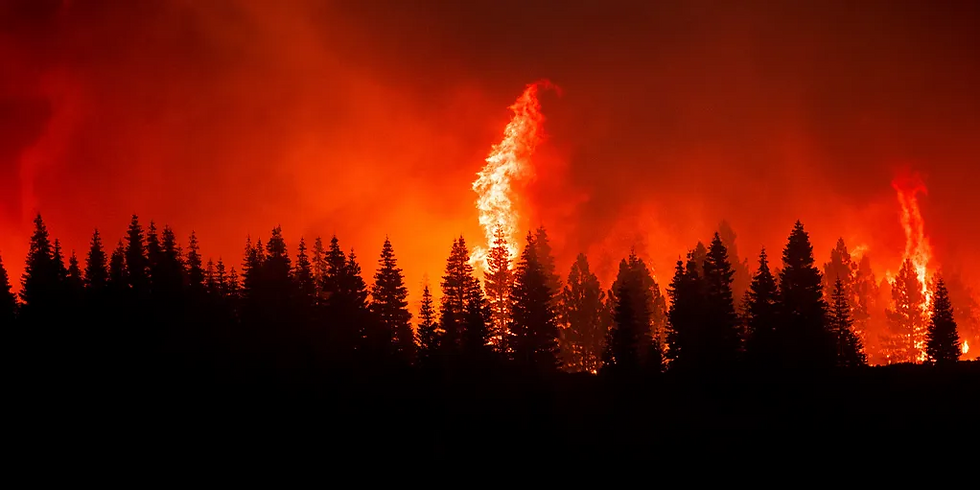
Wildfires, also known as wildland fires are uncontrolled fires that burn forests, often in rural regions. You have probably heard about the Australian wildfires, which occurred earlier last year. Recently, there were wildfires in Turkey as well, which injured and killed a few people. The Turkey wildfires were raging in south-western Turkey where many hotels and resorts are located. Tourists and residents were quickly evacuated from the area. There were around 100 different fires in different locations in Turkey, and fire departments were able to put around 10 under control. The fires have been burning since Wednesday last week.

Only 10% of wildfires on earth are caused by nature, such as by lightning or lava, while the remaining 90% are started by humans, either by mistake or on purpose. Summer is the time when most of the wildfires occur since it is when the trees and vegetation are dry, with very little water. When there is a fire, it quickly spreads among these dry trees and leaves, making it difficult to put it out.
Wildfires are dangerous, but it is especially more dangerous if they are located near communities where people live. If the fire goes uncontrollable, it will destroy houses and injure/kill many animals and people.

Although wildfires are dangerous, they are necessary for the ecosystem, as it allows the survival of a few plant species. This is because some plants require heat to release seeds so more of the same plant species can get planted. Wildfires can also kill harmful insects that harm the growth of plants, and kill diseases that make plants difficult to grow. They also destroy scrubs and underbrush, which can allow other plants to grow, such as herbs and shrubs which become important food sources for animals.
Because of climate change, a lot of the wildfires are becoming out of control. Wildfires are becoming more common as a result, especially in the southwest United States, which includes states like Colorado, Montana, Texas and more.
The Three Branches of The United States Government
Article By Misaki Tomiyama

The United States government is a representative democracy, where citizens vote for politicians, who choose laws and makes governmental choices, such as laws, rights, taxes, foreign affairs etc.

The United States government has three sections or parts, which we call branches. The three include- Legislative, Executive and Judicial. It is important to have branches in the government so that there is a relatively equal power with the government, and not one single person has all the authority or power.

The Legislative branch, also known as the congress, has the role to make laws. They write and vote on laws (or legislations) while also deciding how much the government can use, and how much tax citizens have to pay. They are the only branch of government that can declare war on other countries. Congress has an important job to make sure other branches of government are properly doing their jobs. Within the legislative branch, there are two branches, the senate, with 100 members, 2 senators from each state, and the house of representative, with 435 members. The number of members of the house of representatives consists of different numbers of people from a different state, and the number of members from a particular state is depended on the state’s population.

The Executive branch is the branch with carries out the laws. It is led by the president, followed by the vice president, which is then followed by the cabinet. The president is voted by citizens and enforces laws made by congress, and sometimes vetos them. The President is also the head of the U.S. military, which is also called the commander in chief. The vice president, who is chosen by the president, has the role to always be ready to become president, in case something happens to the president. The Vice President also has the role to advise the president. Then, comes the cabinet, who advises the president. They are the heads of the 15 departments in the government. The cabinet is chosen by the president and is confirmed by the Senate by voting. The Executive branch has the role to decide and make relationships and negotiations with other countries while also signing important treaties.

The final branch, which is the Judicial branch, has the role to interpret laws and consists of the judges and courts. Judges do not have the authority to make laws, but they make decisions in court and decide who is guilty, and who is not. Another important role of the judicial branch is deciding whether or not the laws in the U.S. is unconstitutional, which means to violate the right of citizens. The judicial branch is made of 3 main parts. The supreme court is the highest court and the one with the most power. They are the ones who can decide whether certain laws are unconstitutional or not. They have the final say in cases that are difficult to decide. The lower court, which includes the district court, and the Court of Appeals deals with cases that don’t need to go to the Supreme court, or cases before they go to the supreme court. The Federal Judges includes judges that are judges for life, these judges can make difficult decisions without worrying about losing their jobs by being fired. The federal judges are chosen by the president and confirmed by the Senate.
As mentioned before, it is important to have different branches of the government to ensure no single person has the most authority. The three branches work together to enforce the rules of society, economy, foreign affairs and so much more to make sure the security of citizens and the world.
Kids’ Articles:
The Importance of Wearing School Uniforms
Article By Misaki Tomiyama

When we go to onsite school, and hopefully we do soon, most of us wear uniforms. Some may like uniforms, but many find it uncomfortable and wish they could wear their own clothes. Well, there are reasons as to why we wear uniforms and we’ll go through the 4 main reasons school uniforms are necessary for our school.

Equality. Not all of us are as fortunate to buy luxury clothing, and in our society, the kind of clothes we wear reflect our economic standing. While students with high economic backgrounds wear expensive clothes such as Gucci or Chanel, students with middle or low economic backgrounds may not be able to afford those kinds of clothes, and eventually, get bullied by richer students. To prevent such bullying, and to maintain equality in the school, school uniforms are necessary.

Time-Saving. It usually takes time and effort to choose an outfit we like, since many of us have a lot of clothing choices. In the morning, it wouldn’t be ideal to spend so much time choosing an outfit for school, therefore, school uniforms are one way we can be punctual since we have a fixed outfit we have to wear to school.

School Spirit. By wearing school uniform, we can identify which school we come from, which brings a sense of unity and belonging to the school. This is important to create a pleasant school environment.

Money-saving. If we didn’t have uniforms, we would have to buy different clothes to wear to school, which might create economic burdens on parents.
In conclusion, although uniforms are not something we all love, it is something extremely important both for the school, and for us students!
(Images from Unsplash)
Other Articles:
Why the Olympics are Still Relevant. (Debate Perspective 2)
Article by Ananya Nayar
Disclaimer: This is an opinionated debate piece. The 1st part of this debate 'Why the Olympics Aren’t Relevant today' has already been posted in last week’s articles.

Every point against the Olympics is valid, however, that technically doesn’t make the games any less relevant. It just makes them harder and more complicated to host.
The Olympics are not only beneficial to the country hosting but it benefits all countries participating in some way.

Firstly, the Olympics are still relevant because they bring the world together. Countries worldwide tune in to watch the Olympics and support their teams. The purpose of the modern Olympic Games is to promote peace and unity within the international community through the medium of sports. Pierre de Coubertin, who was the first President of the International Olympics Committee, saw the games as a way to bring political enemies together. It contributes to World Peace more than we know.
Athletes around the world can play and spread peace and friendship with no discrimination in race and gender. They all participate with Olympic spirit, which requires mutual understanding with a spirit of friendship, solidarity and fair play. On top of that, it is essential that international social events exist since it (as said) unites all people.

Competing athletes get the opportunity to compete against athletes of a similar level on an international stage. This allows them to compare themselves against each other and to determine how good they are international.
The seven Olympic values are friendship, excellence, respect, courage, determination, inspiration and equality, and as the coming generations watch the Olympics they too develop a non-discriminatory mind-set.

It’s a great pride to participate or win something at the Olympics too and athletes inspire the youth every day. Achieving something from the Olympics also makes the whole country proud. A global poll said a majority of people say that their country’s performance in the Olympics contributes to their national pride.
It’s not just the social benefits, but the games do help the hosting countries in multiple ways. For example, it increases valuable tourism which in turn boosts local economies. Each hosting country reported at least an 8% rise in tourism the following year + local economic growth. Host countries tend to be invited to prestigious global economic organizations, which of course boosts international trade flows. It makes the country more popular in most aspects.

The Games help the unemployment problem as they’ll need builders, organisers etc to take care of the stadium and the people during and before the three weeks.
To conclude, yes, the Olympics have many valid disadvantages and advantages. Yet at the end of the day, if no country is suffering and no people are hurt and we are helping the world unite and obtain world peace that is a great thing as well.
This Week in History
Article by Ananya Nayar

On the 26th of July 1908, the FBI ( Federal Bureau of Investigation ) was founded. The U.S. Attorney General Charles Bonaparte ordered federal investigators to report to a Chief Examiner in the Department of Justice. The next year, the Chief’s office was renamed the Bureau of Investigation and in 1935 became the Federal Bureau of Investigation.
The FBI’s role is to protect and defend the U.S. against terrorist and foreign intelligence threats and to uphold criminal laws and provide/maintain justice.
On the same date but in 1948, President Truman signed Executive Order 9981 to end discrimination in the military. African Americans had been serving in the military since the Revolutionary War but were deployed in their largest numbers during World War II. Although things changed after the Servicemen Readjustment Act in 1944 most black veterans still faced severe discrimination and had trouble accessing the benefits of serving in the military.

On the 29th of July, 1958, NASA (National Aeronautics and Space Administration) was formed. NASA has sponsored many space expeditions and helped mankind come far closer than imaginable to understanding life in space.

In 1944, on the 1st of August, Anne Frank wrote her last diary entry. Anne Frank was a German-Dutch diarist of Jewish heritage, she was also a victim of the holocaust. She maintained a diary during her two-year period of hiding in Nazi-occupied land. Post her death, her father discovered her diary and published it, her writing provides us with an insight into how horrible the holocaust was from the perspective of a teenage girl.
Her last diary entry reads “As I’ve told you many times, I’m split in two. One side contains my exuberant cheerfulness, my flippancy, my joy in life and, above all, my ability to appreciate the lighter side of things. By that, I mean not finding anything wrong with flirtations, a kiss, an embrace, an off-colour joke. This side of me is usually lying in wait to ambush the other one, which is much purer, deeper and finer.”
Book & Movie Reviews:
Reviewed by Ananya Nayar

Movie of the Week: BEYOND THE BRICK: A LEGO Brickumentary
This documentary film was truly insightful to me. I had no idea how much effort or time went into creating the smallest cube- there’s so much behind it. This is a great and interesting film for a family night. It’s extremely well-produced as well- flipping back and forth from behind the scenes, history, work in the factory etc. It focuses purely on the construction, thought and story behind the popular Danish construction toy Lego.
Age Recommendation: All ages | Rating out of Five Stars: 5/5

Book of the Week: The Thing about Jellyfish by Ali Benjamin
(No spoilers review!) This book is heartwarming. I love how the author portrays everything- from grief, mourning, regret and how he builds up the story with memories and current state. It’s a story of friendship, loss and sadness. Suzy’s character is very well developed and she has lots of emotions that make the story great. The whole plot was very honest and realistic as well and it’s certainly gripping.
This book got me interested in jellyfish purely by the writing.
I recommend reading this simply because the writing and metaphorical perspective was really good.
Age Recommendation: 11+ | Rating out of Five Stars: 4.5/5


Comments