Week #28 Articles {June 21 '21}
- The Bulletin Buzz

- Jun 21, 2021
- 14 min read
Updated: Jul 9, 2021
Articles by Ananya Nayar and Misaki Tomiyama

Articles-
Kid's Corner-
Other Articles-
Articles
14 Different Pride Flags
Article by Ananya Nayar

There are a total of 23 Pride flags with 23 different meanings and representations. Many people only recognise Pride with the one rainbow flag- so, today we will explain and look at 14 different LGBTQIA+ flags.

1. The first is the original Pride flag, designed by Gilbert Baker, an openly gay and drag queen, in 1978. It consisted of eight stripes in different colours, each one with a specific meaning. Pink stood for sex, red for life, orange for healing, yellow for sunlight, green for nature, turquoise for magic/art, indigo for serenity, and violet for spirit. All the different colours aim to project diversity among LGBTQIA+ people.

2. However, because of production issues, the pink and turquoise stripes were removed and indigo was replaced by basic blue, which brings us to the contemporary six-striped flag (red, orange, yellow, green, blue, and violet). Today this is the most common variant of the rainbow flag, with the red stripe on top, as in a natural rainbow.

3. Later in 2017, the flag got updated again, and a black and brown stripe was added. The Philadelphia campaign group ‘More Colour More Pride’ added the two stripes to include people of colour who were often excluded from the LGBTQIA+ community.

4. A majority of bisexual people felt no connection to the rainbow pride flag, and when Michael Page heard that, he created a new flag with colours bi people felt an affinity with. The top 40% of the bisexual flag is a magenta colour, the middle 20% is lavender, and the bottom 40% of the flag is a royal blue colour. The magenta represents same-sex attraction, and the blue represents heterosexuality. The lavender strip in the middle is a mix of the top and bottom colours grey and represents attraction to both sexes.

5. The lesbian pride flag signals diversity with the orange line suggesting gender nonconformity. There are many different lesbian pride flags. There was a purple one designed by a man in 1999, Tobin explains that particular flag was problematic because it featured “a double-edged axe, known as a labrys, set in an inverted triangle” that looked a lot like “the black triangle used to identify some lesbians in Nazi concentration camps.” An updated one came in 2010 featuring shades of pink and a lipstick stain as an ode to “lipstick lesbians,” but this new one is here to symbolize diversity since the lipstick lesbian flag was exclusive of butch, Futch and gender nonconforming people.

6. The Transgender Pride Flag plays with the stereotyped colours for a baby boy or baby girl. The white stripe represents those who are intersex, transitioning or consider themselves to have a neutral or undefined gender.

7. The Genderqueer flag features lavender, white and a green hue. It was designed in 2011 by genderqueer advocate Marilyn Roxie. They chose lavender to represent queer identities because it’s a mixture of pink and blue—colours that are traditionally associated with men and women. The white stripe, as per the transgender pride flag, stands for agender or gender neutral identities. And the chartreuse green stripe, the inverse of lavender, represents third gender identities and identities that don’t fall within the gender binary.

8. This is the Genderfluid Pride Flag, J Poole created the genderfluid pride flag in 2012 because many people were disappointed with the lack of symbolic representation for gender fluidity.
The flag has five horizontal stripes, where it is considered that pink represents femininity, blue represents masculinity, femininity & masculinity is shown in purple, lack of gender in black and all genders in white. In 2018, Poole said they played around with shades to find an aesthetically pleasing outcome- they also said that they love the shade purple.

9. Salem X created the seven-stripe agender Pride flag in 2014. Agender refers to someone who does not identify with a particular gender.
The black and white stripes represent an absence of gender, the grey represents semi-genderlessness, and the central green stripe represents nonbinary genders.

10. The nonbinary flag was created by Kye Rowan in 2014 to represent nonbinary people who don’t associate much with the genderqueer flag. The yellow stripe characterises those whose gender exists out of the binary, the white one shows people with all or many genders and the purple represents the fluidity of gender and experiences, the black also represents agender or genderless people.

11. The flag with green and black shades represents Aromantic people who never or rarely experience romantic attraction. Dark green symbolises aromanticism, light green for aromantic spectrum and white for ‘aesthetic’ attraction which is finding someone beautiful without being romantically interested. The black symbolises the gender-nonconforming sexuality spectrum, grey for grey-romantic and demiromantic people.

12. The transgender pride flag plays with traditional colours, however, Tobin noted that the intersex pride flag works with colours that haven’t been traditionally gendered (such as yellow) and that is said to represent wholeness. It was created in Australia in 2013 and is used to unify people.

13. The Polysexual flag is a middle ground between pansexuality and bisexuality, where people are attracted to many genders, but not all. The pink stripe represents attraction to women, blue to men and green to people who don’t generally associate with a particular gender.

14. The inclusive progress pride flag unifies and represents all members of the LGBTQIA+ community- the colours brown black are depicted to represent coloured members, the transgender and the intersex flag is shown as well as the modern and standard Pride rainbow flag.
Democracy and Dictatorship
Article By Ananya Nayar
Disclaimer: This article lightly epitomises the following systems in a moderately 'biased' perspective.

Democracy and dictatorship are two terms that you may have heard before- especially if you read our previous article on Socialism, Capitalism and Communism in our 20th Issue.
The two forms of government are quite different in ways and it’s important to know the pros and cons of the systems especially if you want to follow politics at a young age.

A democratic government is a form of government in which the people have a say and can choose someone to represent them- it gives them a voice and allows them to have an impact.
Meanwhile, a dictatorship is where the entire power of a country or government is in the hands of one person in power- the dictator.
Now, there are always certain benefits and drawbacks so we will explain them here.
In bigger words, democracy is a form of government in which the majority of people elect the government. Furthermore, the general public takes interest in this form of government as they have the right to elect their representatives. Public participation makes citizens aware of social issues and they can choose their vote wisely in their right to vote. The system integrity is usually strong since it’s heavily monitored during election time and so it builds a sense of trust in the people.

In a democratic system, there are fundamental characteristics such as political freedom, rule of law etc. In addition to this, people are equal before the law and every eligible citizen’s vote has a constant weightage. The constitution also protects/promises to protect human rights through coordination and cooperation. This makes equality the core of democracy. However, even democracy can discriminate as well and oppress minorities to give them a lack of guaranteed healthcare etc- for example, in many countries, trans people have fewer rights, and specially-abled citizens have lesser freedom.
Some democratic governments are in France, India, America, Australia, the UK, Spain and many more countries.
Moving onto dictatorship, the nation is spoken for by the one in absolute power- who is the dictator. As seen in history, a dictator often plays the government to their own, selfish interest rather than what’s better for the country and this dictator has and usually uses their power to discriminate or be biased towards groups of people (based on religion, colour, gender, sex etc.)
There is no election here, often lack of civil liberties, repression of political opponents and restrained freedom of speech as a citizen. A few dictator-led countries are North Korea, Zimbabwe and Uzbekistan.
A democratic government usually fulfils the needs of the people, whereas a dictatorship government happens solely according to the dictator. Therefore, democracy is the preferred form of government.
What Exactly is OCD?
Article By Misaki Tomiyama

When you think of OCD, the first thing that may come into your mind is correctly and meticulously placing objects in an orderly way, washing your hands every ten minutes, or constantly organising your room etc. However, this is not the complete idea of OCD, and there is a lot more.
OCD stands for Obsessive-Compulsive Disorder. It is a mental health issue that many people face, and if we were to define it, it would be “a disorder in which people have recurring, unwanted thoughts, ideas or sensations (obsessions) that make them feel driven to do something repetitively (compulsions).” -from the psychiatry.org
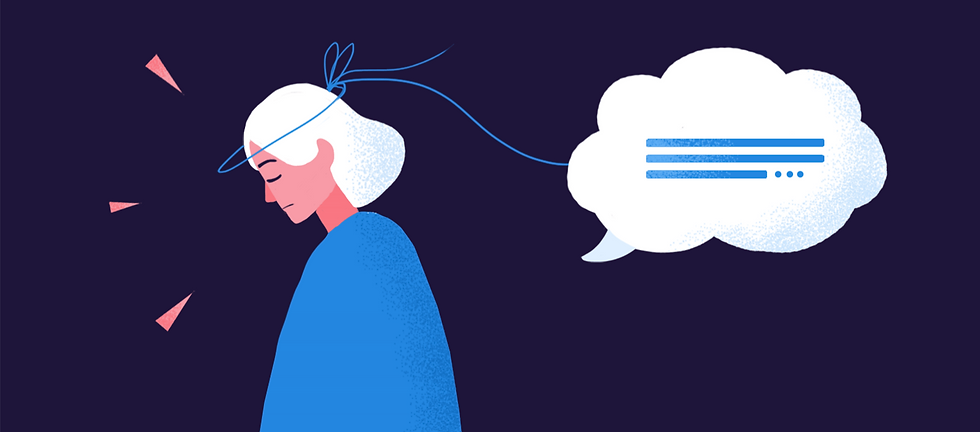
Let’s break the word "Obsessive-Compulsive Disorder." First, if something is obsessive it causes unwanted and intrusive thoughts or urges that cause distressing feelings. Simply put, obsessions are like thoughts that occur repeatedly, and when you are obsessive, you think of something over and over and over and over again. Some examples of obsessions can be the fear of getting infected or contaminated by people or the environment, fear of blurting out insults, recurrent intrusive thoughts of sounds/images/words, or the fear of losing something important etc. A compulsion is a repetitive action or thought that someone does or thinks in response to the obsession. Examples of compulsions can include excessive hand washing, constantly checking your belongings, constantly looking for assurance etc. Disorder means that it is distressing to the individual experiencing it, and it interferes with how one thinks, acts and feels.
Here’s how OCD works. Let’s say a person has an obsessive thought. This obsessive thought is intrusive, meaning it is in the person’s mind without the person intending for it to be there. This thought causes and increases anxiety within the person.
There are different ways a person can deal with this. The first action one may take is to perform compulsions, and compulsions like we described before, is a repeated action a person performs as a result of obsessions. For example, if one person has a constant obsession, or fear of losing their possessions like their keys or phone, one compulsion they may perform is constantly checking their pocket or bag, to make sure they know they have it, and to reduce the intensity of their obsession.

Another action one may perform is seeking assurance. This action can include both external and internal reassurance. External reassurance is when you ask someone, for example, your friend or family, a question or reassurance to reduce your obsessive thoughts. For example, if you have an obsession such as a fear of getting infected with germs, you might ask your friend if they think your hands are clean. If they say yes, that will be considered as external reassurance. Contrary to external reassurance, internal reassurance is when you reassure yourself and there is no third-party intervention. For example, let’s say one person has an obsessive thought of getting infected, they might ask themself, “Are my hands clean?” and their inner self can answer by saying yes, which will alleviate their obsessive thought, or no, which will make them start over in performing the compulsive action, which is washing their hands.
These actions are done by an individual to hope that their anxiety doesn’t increase. However, with severe obsessions, even after their anxiety has decreased, the obsession appears again, causing the individual to go through the whole process over and over again.
Soil Pollution
Article by Ananya Nayar

There are many types of pollution- air, water, sound, land and soil pollution, pollution is harmful (as we know) as it contaminates and damages the environment and our surroundings.

Soil is a thin layer made up of organic and inorganic materials. Soil covers the rocky surfaces of Earth. The organic portion is derived from the decayed remains of animals and plants, while the inorganic portion is made up of rock fragments. This portion was formed over a thousand years of chemical and physical weathering of bedrock.

Soil pollution can be defined as persistent chemicals, salts, toxic compounds, radioactive materials, that have adverse effects on animal health, general wildlife and plant growth.
Our soil can get polluted due to various reasons, such as the discharge of industrial waste into the Earth's surfaces, seepage through a landfill, ruptures in underground storage tanks, solid waste seepage, chemicals like pesticides, fuel and oil dumping, solvents and metals leakages etc. All these foreign materials and substances corrode and damage the soil which is essential for wildlife to thrive.
Soil pollutants deteriorate soil since the original texture, mineral and quality content is reduced. What’s more, is that soil pollution unbalances the biological balance of organisms depending on the soil and this can have tiny but noticeable differences in the food chain.
All creatures in the food chain- from insects to deer to humans are dependent on the food chain, and when toxic chemicals enter our bodies it has the potential to disturb our entire system, therefore it’s injurious to health.
Promoting recycling and tree planting are great steps towards conserving our soil and improving the lives of all the animals and plants around us.
Kids' Articles
A Balanced Diet
Article by Ananya Nayar

Your parents may tell you at every meal to take a portion of vegetables and don’t eat four scoops of ice cream all in the name of a balanced diet, and I’m aware it’s probably annoying to not be able to eat anything like chips and cake all day but hear me out- it’s very important to have a balanced diet and in this article, we will talk about why it’s so necessary.

A balanced diet has been encouraged in our childhood, and it refers to a diet (except it’s not exactly a diet) where you have appropriate amounts of the vitamins and minerals that keep our bodies healthy.
To keep your meal balanced you take food groups in proportions, so you don’t have too much of something that isn’t exactly as healthy as something else. So, when you intake good amounts of proteins, minerals, carbohydrates etc it’ll help your body function well and boost your immunity system.

When we consume a balanced diet, we maintain our physical as well as mental health. A balanced diet must contain the proper foods that are consumed in apt quantities. A perfect balanced diet is composed of carbohydrates, proteins, fats, minerals, high fibre content, vitamins, and more.
Simply exercising is not enough to keep yourself healthy, you have to exercise and eat a more or less balanced diet to keep fit. Nowadays, we’ve realised that the junk food trend is here to stay, however, we need to also consume vegetables and minerals rather than fatty, oily foods at every meal.
I’m not saying you shouldn’t go to McDonald’s and enjoy a burger and fries- you should do that as long as you are also balancing the meal and eating healthy and exercising regularly daily.

Fluids are very important for the human body to function healthily. As almost 80% of our body is filled with water, we need it for good metabolism and the digestive system. Thus, start with drinking at least two to three litres of water every day (although it does also depend on your age so you could research to see what your daily water intake should be.)
Furthermore, one must always eat fresh vegetables and fruits. As fresh fruits and vegetables are great sources of fibre and vitamins, we must consume them for good body growth. Try to avoid eating deep-fried or overcooked food as it loses all its nutrients. A balanced diet must have the five essential elements, i.e. bitter, sour, sweet, pungent and salty. Also, the emphasis is on fresh fruits because the processed or packaged ones do not have nutrients.
Perhaps, for your next few meals- try to eat a balanced meal.
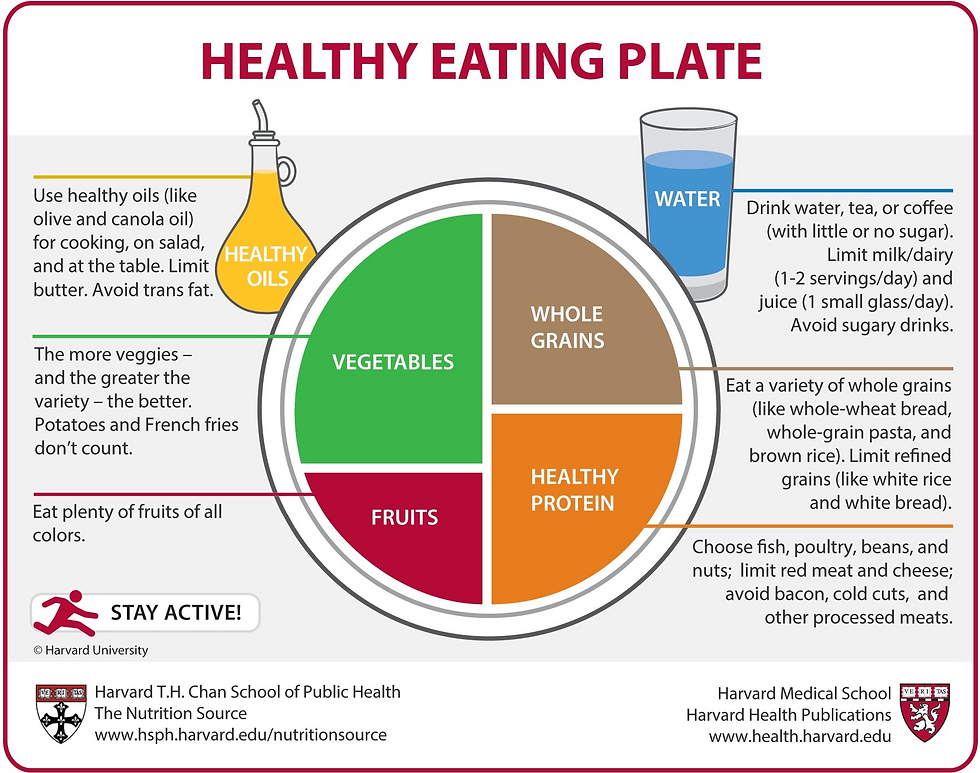
Start with making most of your meal vegetables and fruits (it should be about ½ your plate but doesn’t have to be exact.) Try to eat different colours and varieties (and remember that potatoes don’t exactly count as vegetables here)
Compose the next ¼ of your plate with whole grains, which could be whole wheat, barley, wheat berries, quinoa, oats, brown rice, and foods made with them, such as whole-wheat pasta. A form of carbohydrate.
The remaining ¼ is dedicated to proteins that give you energy and fill up your stomach- fish, poultry, beans, and nuts are all healthy protein sources—they can be mixed into salads, and pair well with vegetables on a plate.
To go to the next step you can try to skip your sodas and milkshakes to simply one glass per day but not every day. Try to drink fresh orange juices or lemonades, too!
Life on Mars
Article by Ananya Nayar

What do we know about Mars? Well, so far we know that Mars is the second-smallest planet in the solar system and the fourth planet from the sun. Over decades, scientists have questioned whether there actually is, or was life on this mysterious, dusty planet. The reason for this speculation is due to the similarity and proximity of the planet to Earth, and previous instances have shown that there could be life on Mars.

Scientists believe that billions of years ago, Earth and Mars were quite similar and that Mars was covered in oceans- more than what covers our planet! Around the same time, there was warmth on the planet, and we know that wildlife cannot prosper without warmth and water.

Over the years, Mars has dried and become cooler and hasn’t shown any hints of residence. Methane has always been seen on Mars’ surface- but where did the Methane gas come from? The Methane may be leaking from microbes deep in the planet's surface. Furthermore, some areas on Earth like the Antarctic, Sahara etc are inhabited by humans who are thriving where they are despite the harsh and extreme climate. This does indeed provide an optimistic view when looking at the question ‘Could there be life on Mars?’
The biggest issue here is that we are unaware of any wildlife that could explore Mars anymore since there is scarce gravity that affects your joints and muscles and the fact that the temperatures are incredibly and quite dangerously low. Right now, Mars has recorded temperatures −87 and −5 °C., whilst the coldest recorded temperature on Earth has been −89.2 °C in Antarctica.
We’re still entirely unsure if there are, were or could be inhabitants of the foreign, mystifying planet Mars- but right now, everything is looking slightly hopeful.
Other Articles
Did You Know? June 20 is World Refugee Day!
Article by Misaki Tomiyama

World Refugee Day is celebrated every year on 20th June to celebrate and honour refugees around the globe and acknowledge the difficulty. This international day was organised by the UN, who hoped the world could come together to help refugees, and find solutions to displacement.
Every year there is a theme to World Refugee Day, and this year’s theme is “Together we heal, learn and shine.” To solve problems and save others, we often need others’ help, and it is important to understand that without everyone’s support, we will not be able to tackle problems going on around the world, and this has been greatly reflected by the pandemic.

There are a couple of things you can do to participate or celebrate World Refugee Day. You can donate to the UN or other organisations to help refugees. A few websites to donate are- JRS or the UNHCR. Another thing you can do is spread awareness on this international day, to let more people know about refugees and the idea that everyone can help.
Book and Movie Reviews
By Ananya Nayar
Movie of the Week: Ford Vs. Ferrari

The story of this racing-based film follows Carroll Shelby, a retired driver and automobile designer, and Ken Miles, who is a fantastic race car driver. Together, the two friends join forces to build a car with Ford that’ll beat Ferrari’s fast race cars at Le Man and other highly spoken of races. Of course, there are ups and downs along the way- especially when everyone is working as a team and not everything usually goes to plan. This movie teaches you the brutal yet honest truth about how life goes, and how you often simply have to suck it up and move on. The visuals are extremely exhilarating- the tires squealing, wind rushing, rain pouring and expressions are thrilling. It’s surely a moody rollercoaster- but is worth it. I’d recommend this to people of all ages, and what’s even greater about this film is that you don’t have to be a car fanatic to love it!
Age Recommendation- 10+ | Rating out of 5 Stars- ⅘
Book of the Week: When Hitler Stole the Pink Rabbit by Judith Kerr

Hitler Stole Pink Rabbit is based on the life of Judith Kerr during her and her family's time in Germany. The story is narrated by a child and therefore captures the essence of the excitement, angst and peril of being a survivor of the Second World War, it’s even better seeing as it is an adventure story told with warmth and curiosity through innocent eyes. The German Jewish refugee family’s story has become a bestseller since the 1970s. The family travels through areas of Europe during the war. I liked this since it wasn’t any ordinary war story- it was hilarious but at the same time, moments of it were immensely saddening and each emotion was captured beautifully.
Age Recommendation- 10+ | Rating out of Five Stars- 5/5


Comments