Week #27 Articles {June 14 '21}
- The Bulletin Buzz

- Jun 14, 2021
- 16 min read
Articles by Ananya Nayar and Misaki Tomiyama

Articles-
Kid's Corner-
Other Articles-
Articles-
What is the G7 Summit?
Article By Misaki Tomiyama
You have probably come across the term 'G7 Summit' on the news, but many of you might be confused as to what it is. In this article, we will talk about the G7, what it is and what it does, and some facts about the summit this year.
G7 stands for “Group of 7” and it consists of world leaders from countries with large economies. The countries include- Canada, France, Germany, Italy, Japan, the United Kingdom and the US.

Previously, Russia was a part of this group, and together they were called the G8. However, in 2014, they were excluded from the group, after they invaded Crimea for a couple of years. Crimea is officially a part of Ukraine. While Trump invited Russia to the summit at that time, other members such as Justin Trudeau, Prime Minister of Canada and spokesman for the UK Prime Minister Boris Johnson rejected Russia’s readmission.
China is believed to have a lot of economic capability but is not part of the group. This is because it has a low level of wealth per person, unlike other countries of the G7.
Every year, the members of the G7 meet to discuss pressing issues going on in the world and often discuss international security and the world economy. International security is also called global security and refers to the measures countries, the UN and international organisations take to ensure security in the world.

This year, the leaders are said to have discussed how to recover the world from the pandemic, which was the main topic on the agenda this year. They aim to lead the world to recover from the coronavirus pandemic and build resilience to any such pandemics in the future. They also touched upon issues of free and fair trade and hoped this might promote future prosperity. Issues on climate change were also brought up.

The G7 also agreed to set a global minimum corporate tax rate of at least 15%. A corporate tax rate is a direct tax imposed on the total profit that businesses make from their business. By setting the corporate tax rate of 15% (minimum), the G7 nations hope to target the most profitable multinational enterprises.
This year, the G7 summit is being held in the United Kingdom, and more specifically in Cornwall. Along with the 7 countries stated above, Australia, India and South Korea are also attending this year’s summit as guest countries.

^ Image from Google Maps
Who is Agnes Chow? (and about the Hong Kong Protests)
Article By Misaki Tomiyama
Agnes Chow, Hong Kong’s significant pro-democratic activist was released from prison after a seven-month serving. She was jailed last year because she had participated in the Hong Kong Protest in 2019.

There were anti-government protests in Hong Kong that started in June 2019. People were against plans to allow extradition to China, meaning they were against plans to allow criminal suspects to be returned for trial to mainland China. This resulted in the outbreak of protests.

The plan was withdrawn in September that year, but the protests did not halt, as people demanded full democracy within their country. Hong Kong became a part of the Chinese colony in 1997, (until then, it was ruled by Britain) and was following the ‘one country, two systems’ arrangement. The country does have some self-governance, but demonstrators were demanding full democracy, as mentioned before. There were frequent clashes between the demonstrators and the police force, and it ended up being quite brutal- the police even used live bullets, and protestors retaliated by attacking the police and throwing petrol bombs.
Agnes Chow was an active pro-democratic activist and was supported by supporters around the world. The media shed a lot of light on her and greeted her in her release.
Mucormycosis: The Black Fungus Seen in Some Post-Covid Patients
Article by Ananya Nayar
Mucormycosis is a rare infection that occurs when the fungus known as mucor mould is introduced into the environment.

It is a fungal infection that can affect the nose, throat, and other parts of the body. It can also cause double vision, and it can affect the circulatory system- it’s thought that a drop in the immunity system especially after a respiratory or circulatory disease can trigger such cases.
This black fungus, which can also cause concussions and skull fractures, is a serious infection, but is also quite rare. It can infest the face and bones of the body. Symptoms of a fungal infection include bleeding nose, stuffy or dry nose, and pain in the eye. Doctors even said that most of the time, patients arrive late for their examinations, which can lead to an infection spreading to the brain.

COVID-19 can affect our bodies ability to fight fungal infections. It also triggers our bodies' natural defences against microbial attacks. However, Mucormycosis or black fungus is not contagious, said Dr Randeep Guleria, head of AIIMS in India.
New, Huge Dinosaur Species Discovered in Australia
Article by Ananya Nayar
We have proof that dinosaurs existed during the Triassic period 243 or so million years ago with fossils etc. These gigantic creatures became extinct due to an asteroid’s impact- contributing factors may also have been climate change, volcanism and sea-level rise.

Many of our modern-day species like sharks, lizards have evolved from dinosaurs as well and birds are said to have evolved from flying dinosaur species as well.
In 2007, scientists in Australia discovered a new species of dinosaur that seems to be even as big as a tyrannosaurus-rex (T-Rex.) Well, recently, palaeontologists and geographers have classified the species as an Australotitan cooperensis or "the southern titan", which is among the 15 largest dinosaurs found worldwide.
This new titanosaur measures 30m long and would’ve been up to 21ft (6.5m) tall.
Palaeontologists have identified the new dinosaur species, which roamed the Earth about 100 million years ago. The animal was able to be compared to other sauropods.

Sauropods were plant-eating dinosaurs known for their size. They had small heads, very long necks, long tails and thick, pillar-like legs.
These species of dinosaur roamed Australia during the Cretaceous Period, about 92-96 million years ago. As of now, the discovery has been named ‘Cooper the Dinosaur.’
How Does Astrology Work and Is It Real?
Article by Ananya Nayar
In the past several months, astrology and horoscope reading has become increasingly popular. Some believe their future lies in the hands of the stars, others think it’s just a silly myth and you determine your future (which is certainly true, but to what extent?)

So, in this article, we’ll talk about if astrology is real and to what degree is it determining yourself and the things around you.
Firstly, astrology is a pseudoscience that claims divine-human affairs by studying the movements and observation or interpretation of celestial objects such as the moon, planets, sun and stars. Astrology ascribes meaning to the placement of the sun, the moon, and the planets within 12 sections of the sky—the signs of the zodiac.

You have three zodiac signs but we’ll get to that later, your sun sign is dependent on what month you’re born in - take a look at this chart to see what your sun is (for example, I’m a Gemini because I’m born in June that falls in the Gemini section). These signs were originally determined by which constellation the Sun was "in" on the day you were born. Early astronomers observed the Sun travelling through the signs of the Zodiac in one year, spending about a month in each.

You may ask, what do Zodiac signs determine? To begin with, scientific testing has found no proof to support the premises outlined in astrological traditions or ideas, however, logic and observation have discovered that the signs paths are derived from the constellations that mark out where the sun will travel over the year. Your Zodiac sign is based on the date you were born, also known as your sun sign and is said to represent your personality and sense of self. However, it is not so specific to determine whether you like broccoli or are extroverted etc.
There are also rising and moon signs which ask for your time of birth and location of birth.
Your rising sign is also known as your ascendant and is determined by the nature of the location you were born in, your birth date and the precise time. The rising sign focuses on your social energy, physical body and outward style.
Your sun sign (mine’s a Gemini) focuses on the core of yourself (Gemini sun tend to be more adaptable, knowledgeable and energetic,) your rising sign represents your outer self (my rising is a Cancer which could say that I’m sensitive,) and your moon sign represents your inner self, (my moon is a Sagittarius and that makes me inspired, creative and trustworthy apparently).
Bear in mind that your zodiacs do not determine who or what you are- that is solely up to you, but your character may tend to be similar or have the attributes that your zodiac signs say you display.
Now, horoscopes and compatibility readings are made by astrologers who observe celestial events and objects. Horoscopes are what you may find on the back page of a newspaper, that tells you that you may have an awakening or you need to balance social relationships, for example. Those are based on your sun/star sign and they tell you what may lie ahead for the day or week.

^ Image from verywellmind.com
Compatibility readings tell you about your sign’s interactions with other signs or things. Like a Gemini & Aquarius compatibility is supposedly strong, and the two signs get along very well- they may bring out the best in each other. A Capricorn Libra compatibility is sometimes weak (apparently,) since many think Capricorns lead the relationship whilst Libras add the flourishes and they don’t balance individual activities but they do balance one another out.
The 10 Most Beautiful Words in The English Language
Article By Misaki Tomiyama
Words are interesting- they can be powerful, gentle, simple, beautiful, and more, and they can surely convey many meanings and feelings. English, having more than 1 million total words, consists of a lot of beautiful ones. Here are 10 beautiful words (beautiful in meaning and/or pronunciation) (beautiful words in my opinion :) and their meanings.
1. Sonder- the realization that each random passerby is living a life as vivid and complex as your own. (From the dictionary of obscure sorrows- a compendium of invented words by John Koeing.)
2. Ineffable-Too great to be expressed in words.
3. Mellifluous- A sound that is sweet and smooth, pleasing to hear.

4. Serendipity- The occurrence and development of events by chance happily or beneficially.
5. Euphoria- A feeling or state of intense excitement and happiness.
6. Iridescent- Producing a display of rainbow-like colours.

7. Vellichor- The strange wistfulness of used bookstores.

8. Petrichor- The pleasant, earthy smell after rain.
9. Labyrinth- A complicated irregular network of passages or paths in which it is difficult to find one's way: a maze.
10. Ephemeral- Lasting for a very short time.
Kid's Corner
What is Stress?
Article By Misaki Tomiyama
You have probably experienced “stress” before.
Maybe when you were doing your homework and realised you have so much work, when you cannot do a task and find it difficult, and when things do not go the way you want them to.

Stress is a feeling all of us experience when we feel overwhelmed, or feel tension. It is a way our body and mind responds to pressure. It is also a sign that makes us think that we are not able to cope with a certain mental or emotional pressure. We usually feel stressed when we start to do something new or cannot control a situation.
Scientifically speaking, stress is a natural defence our body creates against danger, and our body gets flooded with hormones, to face danger. Our environment can cause stress as well, such as loud noises, scary movie scenes, etc. These are environmental factors called stressors.

When a person is stressed, they may feel anxious, afraid, angry, sad, depressed etc. Different people deal with stress differently, and the way we do so depends on our mind, body, and our experiences (someone who has experienced a traumatic event in the past might find it difficult to handle stress etc.) Our body functions differently too when we are stressed, and stress can cause our breathing to speed up, blood pressure to rise and the tension of muscles.
Stress can seem pretty annoying, but it has some positive effects. It can increase your immunity for a short while- like discussed above when you are stressed, your body reacts and creates a natural defence to fight against any possible danger. So, when you're stressed, you can be slightly protected by injuries or infection. Secondly, stress can make you feel motivated to succeed. There is something called eustress, which is good stress. For example, if you are feeling stressed because your homework deadline is very soon, you will try to finish it faster, and this will increase your productivity. This will help you be better at managing situations. (However, this might not apply to everyone, as some people might not work well with stress.)

All of us experience stress at one point in time or another, and there are ways to deal with stress. Make sure you take care of yourself and not force your body and mind to think or do something. You could eat healthily, get a good sleep and take a break and relax when you are stressed. Remember to talk to others- telling another person about how you feel is a very good way to make your overwhelmed feelings manageable. You could talk to a friend, parent, doctor, counsellor, etc. Again, remember to take a break, if you realise there is something that causes your stress, take a break from doing that thing (unless doing it is absolute necessary).
Two Expeditions to Venus by NASA
Article by Ananya Nayar

Earlier this week, Nasa announced that they are sending two new missions to Venus to explore the bizarre and unknown sulphuric atmosphere and geography. Venus is the second planet from the sun, it glows red/orange and is named after the Roman goddess of love. It’s also the second brightest object in earth’s night sky, after the moon. Venus is also the most dangerous planet in the solar system, the because temperature is 393 degrees celsius.
There haven’t been any previously recorded signs of life on the planet- given that the temperatures are incredibly high and the atmospheric pressure is 90 times that of earth.

Bill Nelson is the current administrator of NASA and he said that these missions would offer a chance to investigate a planet ‘that we haven’t been to in more than 30 years.’ These expeditions will be costly and they each have had £352 million in funding, they both are due to launch in 2028 to 2030.
Mr Nelson also said that ‘the two sister missions both aim to understand how Venus became an inferno-like world, capable of melting lead at the surface.’
Previous expeditions have been carried out by the Soviet Union between the 1960s to 80s. Europe and Japan have also orbited the planet in the past. However, the last US trip or task to Venus was in 1990, the Magellan Orbiter being the probe.
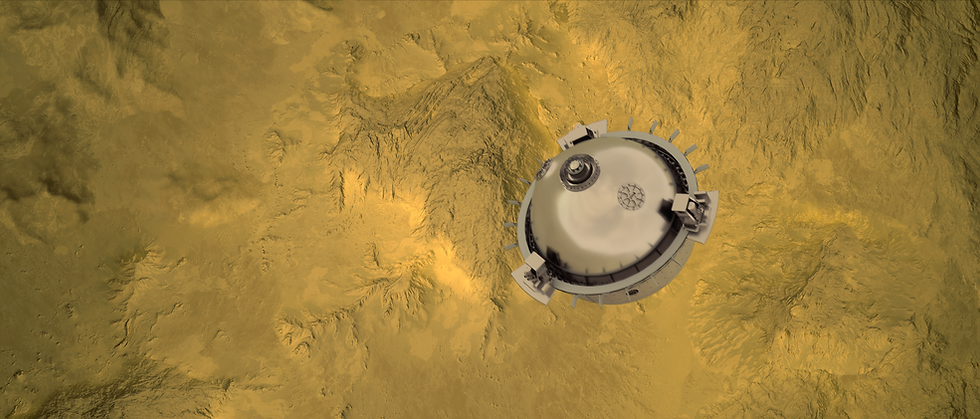
The first mission is called the Davinci+ (Deep Atmosphere Venus Investigation of Noble gases, Chemistry, and Imaging), it is being sent to explore the geological features and is expected to return the first high-resolution images of the planet’s “tesserae” features.
Many scientists believe the supposed features could be comparable to continents on earth and they suggest that Venus has plate tectonics, like earth.
The second mission (said to launch by 2030,) is called the Veritas (Venus Emissivity, Radio Science, InSAR, Topography, and Spectroscopy), which will map the planet's surface to understand its geological history and investigate how it developed so differently than Earth after the Big Bang.
What is the Equator?
Article by Ananya Nayar
You may have heard of the Invisible line in the middle of Earth, or the heat line, midpoint but do you know what all these names mean? Well, each of these means the equator.

The name equator is derived from the ancient Latin word equator, meaning ‘circle equalising day and night.’
The equator was first discovered and mapped out by a French geodesic expedition team that was led by explorer Charles-Marie de La Condamine in 1736. La Condamine spent 10 years in Ecuador taking measurements and proved that the world is not perfectly round, but that it bulges at the equator.
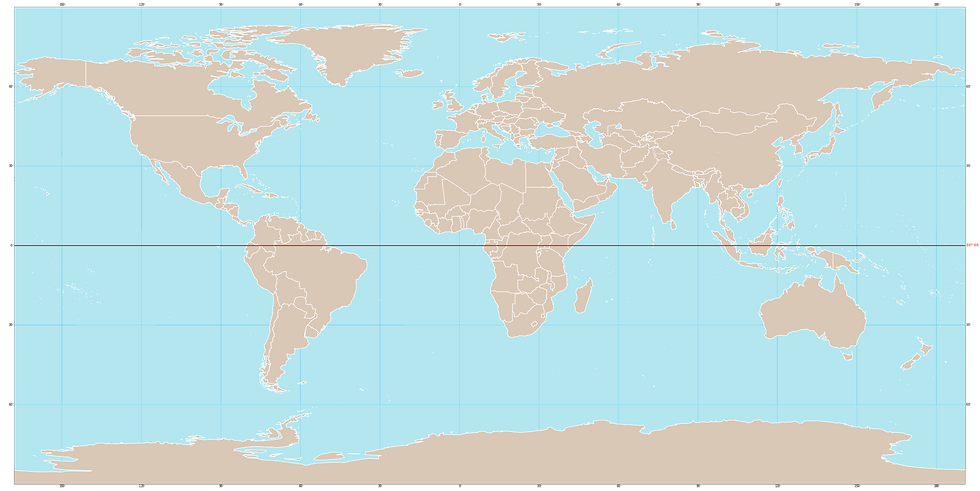
The equator is an imaginary line that runs around the centre of our planet, it is halfway between the North and South pole at 0 degrees latitude. It also divides the earth into the Southern and Northern hemisphere.
Our planet is divided by latitudes and longitudes, which also determine time zones. Take a look at these diagrams (via timeanddate.com) to understand longitudes, latitudes and more.

The Tropic of Cancer is the most northern latitude on the Earth where the sun can appear directly overhead. The Tropic of Capricorn is the most southern latitude on the Earth where the sun can appear directly overhead. And the Tropic of Capricorn is approximately 23.4 degrees south of the Equator which is the central latitude and marks the widest point around the earth.

The Prime Meridian is the central longitude that divides the Earth into Eastern and Western hemispheres. Longitudes and latitudes are also imaginary lines across the earth’s surface that are used in navigation and Geography. They help find out unknown locations and have no significance to the sun.

So, now that we’ve clarified what longitudes, latitudes and the special longitudes and latitudes are, let’s move onto the big question. What does the equator do?
Since the equator is an imaginary line, it technically doesn’t DO anything- but geographers and explorers have given it a logical and scientific purpose. We use the equator to measure how north or south a location is, same with the Prime Meridian.
For example, the coordinates of Thailand (the location of Thailand based on longitudes and latitudes) is 5.8700° N, 100.9925° E. Meaning Thailand is located 5.87 degrees above the equator, and 100 degrees east of the Prime Meridian.
The equator is also an imaginary line for the heat of the earth. Since it is furthest from the North and South pole, areas around the equator are naturally hotter than ones closer to the poles such as Switzerland where it’s cold and snowy in the winter, or the Arctic and Antarctic where the poles are and where it’s freezing all year round.
What is Photosynthesis?
Article by Misaki Tomiyama

Plants, like humans, are alive, and just like us, they grow, eat, move and reproduce. Plants go through a complicated (well, not so complicated) process called photosynthesis to survive.
Photosynthesis is a chemical reaction that happens inside a plant that allows it to produce food, to help the plant survive. This process happens within the leaves of the plant.
Plants are made up of cells just like us humans, but these plant cells are different from animal cells and they contain chloroplasts, which are structures within the cell that produces chlorophyll. This structure chlorophyll is green and allows the plant to absorb light and provide energy for the photosynthesis process.

In photosynthesis, plants take in carbon dioxide from the air, water from the ground and light from the sun. Carbon dioxide is absorbed from the underside of the plant, and water is absorbed from special cells called root hair cells and gets transported to the leaf by another type of special cell called the xylem cell. This allows us to make the equation-
Carbon Dioxide + Water —(sunlight)—> Glucose + Oxygen

So carbon dioxide and water together, along with light, allows the plant to produce glucose and oxygen. Oxygen is released from the underside of the leaf.
Plants have certain features or adaptations that help the process of photosynthesis to make it easier. For example, the leaves of plants are green because they contain a lot of chlorophyll. This allows plants to absorb more sunlight. Also, leaves usually have a large surface area so that they can absorb the maximum amount of sunlight. This again makes photosynthesis easier and effective.
Information from BBC Bitesize
Other Articles
This Week in History
Article by Ananya Nayar
On the 7th of June 1893, Mahatma Gandhi demonstrated his first act of Civil Disobedience. At this time, Gandhi was a young Indian lawyer working in South Africa- there was much racial segregation during the 19th century. He disapproved of it and refused to comply with the rules of segregation and limited rights of Indian labourers. He was forcibly thrown out of the first-class carriage in a South African train because his colour ‘belonged in the lowest class.’ This small event led to a huge victory and change in the world (especially India.)

On June 9th 1948, the aluminium prototype labelled ‘No. 1’ which would become the prototype of a Porsche. The design debuted in Paris.
In 1752, on the 10th of June, Benjamin Franklin flew a kite during a thunderstorm. No, there’s more- he didn’t JUST fly a kite. During the process, he managed to collect an ambient electrical charge in a Lambient jar, where he further demonstrated the similarities in lightning and electricity.

In 1963, on the 11th of June, the University of Alabama was desegregated (meaning people of all colour could attend the school.)
Alabama Governor, George Wallace (one of the most controversial politicians) enrolled two African American students. Mr Wallace was elected under an ultra-segregationist platform and he first promised all his white supporters that there would always be segregation and that coloured people would not have the same rights. However, he faced lots of pressure to leave his job and faced lots of hate as well from the general public. He resigned, yet the two African American students were allowed to continue to study in the school along with more coloured students to come.

Not so long ago, only in 2017, many died on the 14th of June during the Grenfell tower fire in London. Around 1 am, fires ripped through the 24-story residence, killing 72 citizens. The fire began with a refrigerator catching flames, and the fire escaped and ran up the sides of the building. Unsuspecting victims believed the tower’s architecture and design was such that it’d cease the fire, so they followed the stay-put policy implied, however, that was not the case and many died due to the incorrect policy.

Did You Know? June 14 is World Blood Donor Day!
Article By Misaki Tomiyamaa

World blood donor day, celebrated every year on the 14th of June, aims to “raise global awareness of the need for safe blood and blood products for transfusion and the critical contribution voluntary, unpaid blood donors make to national health systems.”- The World Health Organisation
This day also aims to encourage governments and national health authorities to provide better resources for blood transfusion and donation to increase the blood collection from a wider range of people, to help those in need.

This year’s World Blood Donor Day slogan is “Give blood and keep the world-beating.” Safe blood, its transfusion and resources to aid this is very important in the healthcare industry. With the help of donors and their donation of blood to those in need, millions of lives are being saved every year.
Specific aims of this year’s campaign are to spread awareness on safe blood transfusion and thank those who donate their blood. It is also aimed to spread awareness on unpaid- blood donation, which is quite prevalent.

A few things you can do to spread awareness. If you are not old enough, or if you simply can not donate your blood due to any reasons, that's alright! You can greatly help people in the need of blood just by spreading awareness, enlightening people about World Blood Donor Day, and when in need, spread awareness to find possible blood donors to help people. You can also donate to blood donation centres if you wish.
Book and Movie Reviews-
By Ananya Nayar
Book(s) of the Week: The Land of Stories by Chris Colfer
Age Recommendation: 9+ | Rating out of Five Stars: 5/5
I finished reading the series a couple of years ago but if anybody asks for books for younger children or pre-teens I always have the Land of Stories series on my list.

The Land of Stories is a fiction adventure and fantasy novels. Twins Alex and Conner find a magical book that their grandmother has and they are suddenly whisked into a world with all the fairy tale characters you can imagine- the Gingerbread man, Snow White, the Wicked Witch of the West and loads of other characters like in this whimsical land. Now, Alex and Connor must learn about the new world and help the creatures wherever they go. This foreign land of wonder is inducing and very well developed. All the characters are just like you would’ve imagined and the story never fails to please- there’s twists and turns wherever you go and I certainly recommend this series.
Movie of the Week: The Art of Racing in the Rain
Age Recommendation: (Family Movie) 8+ | Rating out of Five Stars: 5/5

This is a perfect family movie night film, the story goes as such of a dog named Enzo who realises that the methods used by his owner, a F1 race car driver, can help him in his own life. The film not only shows us this but it depicts the highs and lows of life, how life goes and family. The movie grabs you and tells you about struggles, love, sickness, happiness and more. The fact that Enzo narrates the film makes it all the more special and it’s a fantastically produced film.


Comments