Week #24 Articles {May 24 '21}
- The Bulletin Buzz

- May 24, 2021
- 19 min read
Articles by Ananya Nayar, Mahin Puri and Misaki Tomiyama
Articles :
Kid's Corner:
Other:
Articles
Why People are Migrating from Mexico to US, and Why They are Doing it Illegally
Article by Mahin Puri
On the brink of South America, is Mexico. A metropolis in the middle of nowhere, a place of varied cultures, endless singing and dancing, celebrations of life everywhere, yet it is home to the most poverty-stricken people in the entire world. With almost half of its population living in meagre and inadequate conditions, on less than 177$ per year, let's take a look at how this affects illegal immigration, and why it occurs.
There have always been immigrants, anywhere you see, in cities, in towns, in villages, not everyone is a native to a place. Mexico is no exception, with close to 20% of its population immigrating to different countries. However, unlike other countries such as Syria which produce huge numbers of immigrants, Mexican immigrants migrate specifically to one place on a large scale, the United States.

After the conclusion of the US-Mexican border war, in the year 1848, the flood of Mexican immigration began. Driven by the notion that the US was safer, and would provide a better lifestyle for them, Mexican citizens, especially those who had experienced poverty, began leaving their homes and crossing the border into the US. Nonetheless, this was legal during that time, and not many Mexicans immigrated.
On the other hand, immigration did increase drastically in the years from 1848 and so in the year 1985, there was a law passed that disallowed crossing over the border without official permissions and documents. This was a huge blow to the lower class of the Mexicans and eventually led to them illegally crossing the border into the US to seek a better lifestyle.
Recent statistics taken in the year 2019 said that “about 10.9 million Mexican-born individuals were living in the United States” and this number is ever-increasing, although it has recently been affected by the ongoing pandemic. This leads us back to the question, why does illegal immigration still occur, and what are some factors that attribute to this type of immigration?

Consequently, there should be a few reasons as to why this occurs. To begin with, Mexico is not the richest of countries, with an overwhelming poverty rate of 45.5%, and 75% of the population lacks at least one of the basic needs such as food, or a home. Living conditions are similarly substandard and inadequate, with homes attributing to an average of 40% of costs, for the Mexican population. This leaves many of the poverty stricken population with no choice but to immigrate, and without the adequate resources and funds to immigrate legally, they resort to illegal routes.
As well as this, there are many more factors that contribute to the illegal crossing of the US border, such as crime, pollution, unsafe transport facilities and even the geographical location with the country’s topography being rocky, barren and unsuitable for many.
In conclusion, should Mexico be able to make better use of the billions of dollars of aid it receives, it would probably be able to lower the amount of immigrants be it legal or illegal, that is supplies to the United States, and with the help of a strong decisive government, we may see such changes being applied soon, and Mexico may once again become prosperous, and less poverty stricken.
Why Colonialism Is/Was Harmful
Article by Ananya Nayar
The Colonialism Era was a political-economic phenomenon where America and countries in Europe raced to conquer, explore, settle and exploit overseas countries for their benefit. The competition to colonise (called the Industrial Revolution) was also a significant factor of the first world war. In this article we’ll talk about how colonialism is harmful and the effects of the colonialism era.
The age of modern colonialism began about 1500, post European discoveries of America and Africa’s southern coast. Portugal wanted to seek civilisation outside Europe and they searched for new trade roots. The European nations came to the Americas in the 15th-18th century to increase their wealth and broaden their power in different parts of the world, the Spanish were also among the first Europeans to explore the world and settle in the US.
However, the American Colonial Period began in 1607 and ended in 1776.
Countries began colonising further during the 18th-19th century which was the time of the Industrial Revolution in order to extend their power and have greater influence over world decisions, they wanted new trade routes, materials, supplies, valuables and wealth along with cheaper labour so they could create transport and vehicles and more which would develop their principal land. During this occupied period the British built an empire and had greatest power, they had scarce competition and access to raw materials. They had control over India, Pakistan, Northern parts of South America, parts of East North America, West Africa, Australia, Persia, Greenland and more. Over time the countries they had a hold of rebelled and managed to gain their independence, but as the British left, they took money, material, education and more with them, leaving the previously colonised countries almost to scraps.

During the time where countries were colonised there were negative impacts there itself, such as a mass degradation of natural resources, urbanisation, foreign disease spreading quickly, less money, discrimination and more. Ethnic rivalries, economic instability, repression, land displacement and human rights violations are also only some of the issues caused. The countries in the race ruptured native’s health as they brought diseases that decimated populations- another reason how the Spanish Influenza spread so fast.
So, we know that many of the pre-occupied countries have earned their freedom, however, as I said they were left with scarce money as the powerful governments left.
In fact, looking at it this way- the countries in the huge Industrial Revolution colonisation race were France, Italy, Germany, Britain, Spain, America and to this day they are economically stable and are first world, developed countries. Yet, the countries they previously settled in such as India, South America, parts of Africa, Pakistan, Indonesia are on this day still developing and can be called third world countries.

Hence, we can tell that centuries or decades later the effects of colonialism still exist and have caused discrimination, poverty and other issues that are listed in the UN’s Sustainable Development Goals. Like I said, you would think that the world learnt their lesson and does not want to conquer or build an empire no more, unfortunately that’s not the case. Although it’s considered to be a relic of the past there are still 16 non-self-governing territories populated by 2 million people that still live under virtual colonial rule. A situation and example of colonisation presently is the Israel-Palestine conflict where the Israeli government wants to extend their power over greater parts of Jerusalem or originally Palestinian land.
To summarise, the colonisation era caused harm, disease, exploitation, degradation of our planet, discrimination, poverty and more and imperialism still is an issue that should’nt be ignored today.
Why Stopping Plastic Consumption Entirely Cannot be a Goal
Article by Ananya Nayar
The production and expenditure of plastic is guaranteed in consumer behaviour, and we won’t be able to go about our daily lives without this vital material. We are also aware of the detrimental effects of single-use plastics, although we can’t stop using them. Today there are 150 million metric tonnes of plastic in the ocean itself- which is enough to cover France three whole times.
As I said, we don’t know how our lives would be without plastic- so we can’t exactly stop using plastic entirely anytime soon. However, we can Reuse, Reduce and Replace.
Plastic degrades into tiny particles that are harmful to animals, the environment and stay in the food chain- they also account for pollution. More than 400 million metric tonnes of plastic is produced each year, with 14% recycled and 83% ending up in ecosystems or going to landfills or incinerators.
Plastic wasn’t heavily manufactured until the 1960s, which provides us with more than enough proof that we can survive very well without them. So, let’s begin with asking ‘why is plastic used in the first place?’ The biggest consumers of plastic are the food industry- they use it in packaging mostly because it provides a barrier against bacteria, lengthens shelf life and keeps food fresh and for long journeys, which in turn reduces food wastage.
Plastic is used in our medicine packaging, self-care products, clothing, hygiene products, baby products, glues, books, technology and much more.

With these things we can’t exactly reduce our consumption because they are essential- yet we can replace plastics in these products rather than reuse. Scientists are working to find alternatives to plastic, however, they will be expensive. Yet, as we’ve seen with plastic the cost has drastically reduced over 50 years- so it’s estimated that this sustainable substitute will become affordable over time. With these items we could also reuse them- at first it may seem hard but donating used laptops and disposing plastic wrappers and packaging in recycling bins can do more than you know in conserving our planet.

A research project conducted by the United States Environmental Board stated that the US’s production of plastic releases 500 million tons of greenhouse gases annually. In comparison to more sustainable alternatives such as metal, glass, wood, concrete and paper the emissions were significantly lower. These materials released only 500 tons of greenhouse gases in the same time frame. As this study showed the plastic alternatives that are commonly found and aren't too expensive are much more eco-friendly we should encourage companies to switch to these types of packaging as replacements. It is obvious that it’ll be hard to switch to a clean planet with a click so we can start here.
When you go to your local starbucks- bring a mug from home or buy a reusable cup for a few dollars more at the cafe. That will prevent you from using a plastic cup ever again.
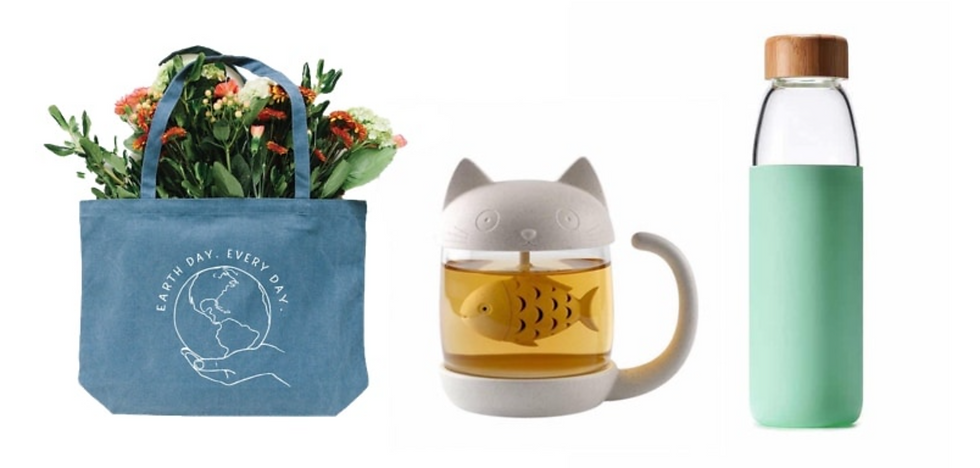
When you’re at a restaurant you could refuse the single-use plastic straw in your drink, and request for a metal one if it's required or bring your own metal straw! These straws cost little off amazon and are easy to clean as they are also stainless steel.
When you are going grocery or clothes shopping remember to bring a cloth or tote bag- they’re perfect, trendy, come in all sizes and colours and you can use them again and again! If you want, you could also begin to purchase food in bulk- for example buy a larger packet of pasta in the supermarket rather than several small ones because a large packet will use less plastic in the packaging than 10 small ones.
When you’re ordering food to your house you can request the restaurant not to send plastic cutlery and synthetic tissues since you may have them at home. These are some little ways to slow down or reduce your plastic consumption. It’ll be a long journey to eliminate or replace plastic entirely but it starts with you and the people around you.

Internalised Misogyny
Article by Ananya Nayar
All of us have unconsciously grown up with internalised sexism almost everywhere, and in turn it has spoiled many things for females around the world. Systemic misogyny hasn’t been great for women in the past few months especially, despite it being International Women's Day and Mother’s Day this year so far has been bleak and dark for women. Not only have there been protests about violence agaisnt women following Sarah Everad’s murder but more women are now opening up about their experience with sexual assault, abuse and sexism.
Domestic violence rates have soared during the pandemic, although a majority of the expected cases have not been reported it’s pretty much guaranteed.
It’s extremely dangerous and alarming if it takes a death for society to understand and have a conversation about misogyny and respecting women. The few past months have changed some of our perspectives, so that we now ask ‘How can we stop men from being violent?’ rather than ‘What can we do to help women feel safer?’

Now, what is internalised misogyny, you may ask? Deep-rooted sexism is basically the prejudiced behaviour that women project upon themselves and other women for male validation to feel good about themselves or to feel important to men. Now, this is internalised sexism that has caused women to seek male validation because as children it has been implied and we have learnt in some way or the other that men are superior. Embodied misogyny manifests itself in statements that attempt to make you as a woman stand out or seem better than other women. In another honest and better world we should all be sticking up for each other and not put others down in order to feel accepted or worthy in a man’s gaze.
A few dominant difficulties are that internalised misogyny provides a restricted view of femininity where in order to be independent a woman has to subvert all traditional or stereotyped notions of womanhood and challenge other girls' existence. It views the community of women as a competition rather than collaboration.
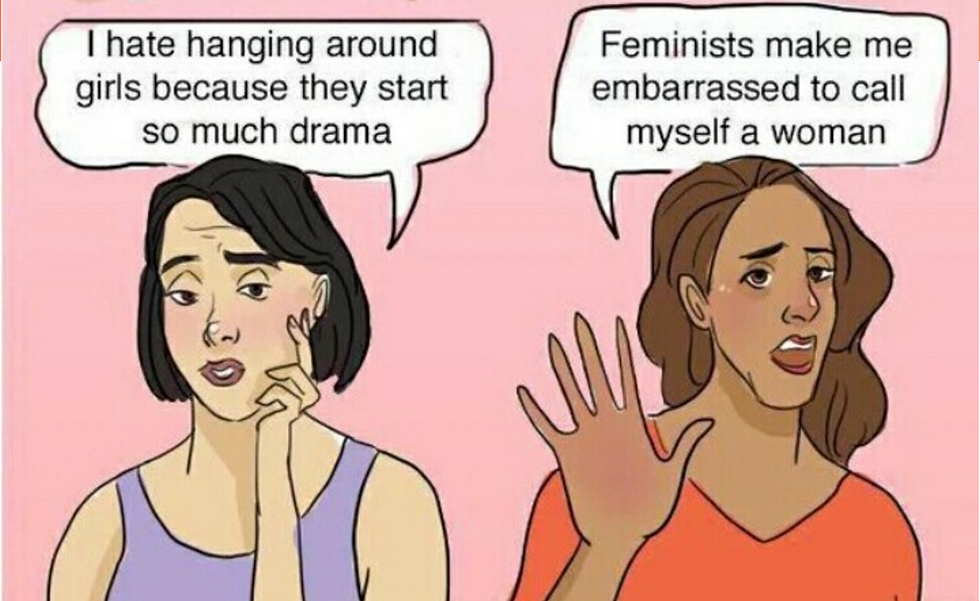
Yes, you may also be questioning the statement above and saying ‘but isn’t that the epitome of femininity?’ Well, yes and no. This mindset teaches us that being a woman dampens or reduces our joy in life and to experience happiness we have to be different- or disown our community of women.
Internalised misogyny has reproduced a new, toxic culture where we have to compete to be better than the next or for a man’s attention. The media itself plays a huge role in this especially when it comes to ‘This or That’ or ‘Who Wore it Better’ etc which elbow the idea that in order to be a woman in society you have to compete- like survival of the fittest. There is enough space for us all to feel whole and happy without bringing others down. Another view projected by these ill ideologies is the fear of being ‘weak’ or ‘incapable’ associated with one’s version of femininity.
All the comparisons make us feel shallow and incomplete, but one thing to remember is that another woman’s beauty is not the absence of your own beauty.
Another issue is when females re-enact oppression onto ourselves and other women, by sl*t shaming, body shaming, victim blaming and trying to fit into a certain stereotype of again a view of what femininity should be.
Some examples you may have seen in daily life are judging other women for superficial things like the way they look and dress because you think they’re doing it for attention. Next, looking down on what seem like typically feminine hobbies like sewing or painting or cooking, even styles of clothing or interests. Third is dismissing feminism and hating on other women for progress in any form.
More examples could be the ‘I’m not like other girls’ mentality, siding with abusers and misogynists.

These are all extremely harmful as you can tell and another important thing to remember is that other women are not your competition- none of us have to bring others down to feel more powerful. If you want to call someone out on a phrase that may seem to have another side, ‘What did you mean by that’ is a subtle, yet effective way to hold people accountable for their sexism. To cancel internalised misogyny we have to stop making excuses for discriminatory behaviour, stop assigning jobs and behaviours based on gender, have open conversations on topics that have been stereotypes, recognise that patriarchy is experienced differently based on gender, class, caste and religion so we should not generalise experiences.
To change our and the people around us mindsets we have to understand that patriarchy is ingrained in many different ways, and we need to recognise, educate, learn and unlearn.
There’s enough room for all of us so we should support other women and people of all genders towards creating a fairer, more equal and happy world.
What Will Festivals and Public Events Look Like Post-Covid?
Article by Ananya Nayar
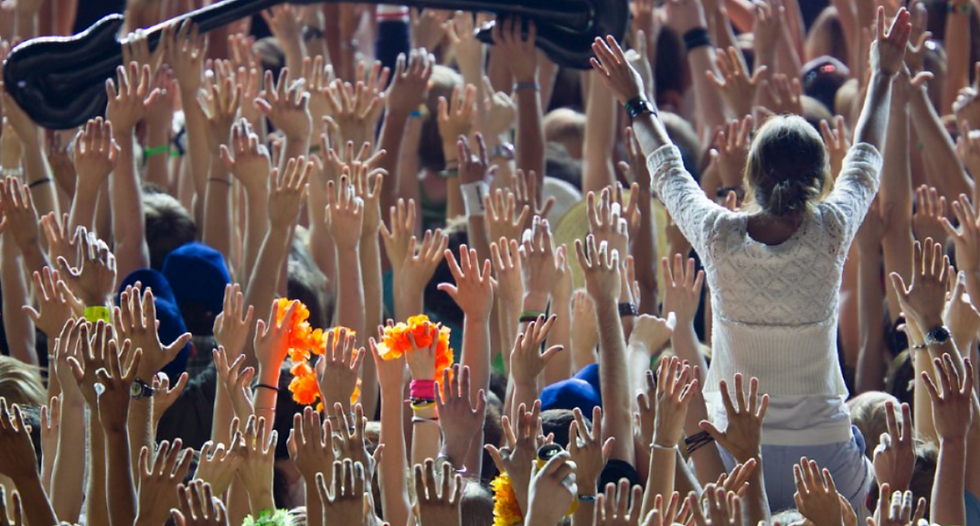
As the world begins to return to life how it was pre-pandemic we begin to experiment with large, unmasked, social gatherings without social distance. The UK and other parts of the world have begun to gather groups of vaccinated thousands to see if infections will still spread and at what rate.
An example of a large experiment was when 4,000 people gathered as the audience for the Brits awards without masks and without social distancing. As results from various observations are yet to come in we can see that so far the future for music festivals, concerts and more seems good.
This year, the Glastonbury music festival has been cancelled along with many others but we’re still trying to see to what extent public gatherings can open up. In the Netherlands, a music festival is occurring despite the rest of the country remaining in lockdown. The BBC reported that the two day experiment aims to see if there is in fact a safe way to allow large-scale social gatherings to take place without increasing the number of coronavirus cases.
Although many remain pessimistic on the results and future, many also think that Summer Festivals can go ahead, only with the government’s support. In fact, a report by UK Music stated that they were confident it could manage health risks if the government sets a start date for the industry and introduces COVID-19 cancellation insurance which has put a strain on people’s money for previous Covid postponed festivals.
Meanwhile, the Government must continue to steadily roll out the vaccines and openly debate about returning to a similar normal life by spring. Yet, there is a risk that lack of notice and insurance options may not allow 2021’s music season to continue.
Here are some guaranteed things that will happen especially when public gatherings restart as soon as we return to a more normal life.
It’s almost known that everyone’s hygiene standards have gone up during this pandemic, so planners and caterers will be focusing on hygiene the most in order to not only keep the customers satisfied but to prevent chances of infection.
Venues may also begin to question their sustainability- the pandemic has also drawn light to the extreme consumption of plastics and global warming, so hopefully many places will rethink their environmental ways.
There will always be all sorts of people and it is certain that many will still want to social-distance, delegates will want to be sure that the activities they offer are distanced to an extent- which will require construction in bathrooms especially.
Many facilities and entertainment areas will want to boost their content to offer more enticing and valuable time to those who will remain hesitant on stepping out post-pandemic.
It’s also thought that many places will switch to more contactless or virtual options, for example electronic restaurant bills on your mobile etc to prevent contact as much as possible.
Kid's Corner
Super Blood Moon Lunar Eclipse
Article by Ananya Nayar
On the 26th May get out your telescopes and cameras because a celestial event is going to occur! The Super Flower Blood Moon lunar eclipse will be visible- this natural phenomena is definitely exciting!
This year there will reportedly be 4 eclipses- two of the moon and two of the sun. The first of these eclipses is going to be sighted on the 26th May. For this month’s eclipse, the moon will be under the earth’s shadow for only 14 minutes and 31 seconds precisely. Unfortunately, it will only be most visible from parts of East Asia, Australia, New Zealand and Western areas of America where it is night time there. Lunar eclipses are always spectacular and in this article we shall explain what these sensations are.
During a lunar eclipse, the moon will be at its perigee- which is its closest distance to earth, causing the moon to appear 7% larger and 15% brighter than a regular full moon.

This diagram (Credits to cehhs.utk.edu) explains the magic and science behind it.
For a total lunar eclipse to occur there are two categories that need to be checked- 1. The moon has to be in perfect alignment with the Earth and Sun (again as portrayed in the image above,) remember that eclipses don’t occur every full moon because the plane of our orbit is always slightly tilted to a side and so does not line up exactly with Earth.
2. Since the moon does not produce any light of it’s own it usually reflects light as a non luminous object that cannot produce light energy by itself. The moon reflects light from the sun, so, when the earth gets put in the middle of the sun and moon, it creates a shadow on the moon’s surface. However, the moon doesn’t become dark- it becomes a deep red colour like blood, hence the name. This colour is produced on the surface when the sun’s rays bend around the edge of our planet to reach the moon.
Yet, the earth’s atmosphere has the same qualities as a prism, and disperses or scatters light rays to different wavelengths- like how a rainbow is formed. As the atmosphere disperses different wavelength’s colour, the longer wavelengths like the colour red are the only ones that actually reach the moon and give it it’s eerie colour quality.

NASA also says that the ‘exact colour of the moon depends on the amount of dust and clouds in the atmosphere, if there are extra particles… the moon will appear a deeper shade of red.’
So, if you live in an area that you may be able to see the blood moon from, grab protective goggles and cameras to click this natural phenomena.
Apps to Help you Study/Increase Productivity
Article by Ananya Nayar
We all find online learning difficult and often boring, so, to improve your virtual experience we’ve curated a series of apps and sites to help you keep to a schedule, study well and often, and be more productive during the day! At least I can say these have helped me alot during exams and balancing school and other activities!
Pomodoro Technique:
In a previous article we talked about the Pomodoro technique. (https://pomofocus.io/) The Pomodoro technique helps you to cut out your
unproductivity and get work done efficiently, with a good amount of breaks. The way you use this technique is fairly simple, you pick a task and set as many 25 minute timers as you think the task will last for- every 25 minutes you are given a 5 minute break or even a 15 minute one. During the sets of 25 minutes you don’t touch your phone, gaze out of the window or do any other distracting activities. Read more about Pomodoro in our article written by Misaki Tomiyama linked here! (click here for previous article!)

Save My Exams
When I was busy revising for my exams I found it stressful and most of the time I couldn’t quite find the right information or research material online! So, I visited the Save My Exams site to help me with my revision and I have to say it certainly did Save My Exams! The website has collections of resources and thousands of revision questions to help you do your last-minute-learning. They include question PDFs, exam specifications, practice questions and model answers along with so many verified notes with great diagrams, organised structures, tips and more. Do check it out for help in Science, Geography, Math, English and more.
Evernote
Although I personally have never used Evernote because I prefer my hand written notes I know so many of my friends use it! Evernote is a free note taking app which helps with organisation, task management and more. Not only do your notes come out perfectly nice but they are also saved in a neat structure so they are able-to-read.
Quizlet
Quizlet is one of the most perfect flashcard and fast revision applications, I’ve been using it for years! You can create your own flashcards and use other creators cards, it’s great. You can also give yourself quick and easy tests or quizzes. What’s best is that it’s free! So go create an account and write all your terms and definitions down already.
My Study Life
My Study Life is like a school planner, except it’s online, easy to use and free. This app adds all your homework, exams, tasks and revision material for your exams to help you get through the process of learning what you need to fast. It’s really great because it has it all laid out for you in a perfectly organised manner.
Forest
This app enhances your productivity and certainly does bits! The app as a whole costs $1.99 but that’s only because it goes towards planting trees. It helps you stay focused on whatever has to be accomplished, and you document your work time in the app and it slowly builds trees in the forest that represent the time you have concentrated for.
They are partnered with the organisation Trees For The Future in order to build actual trees. So, the more you study the more you help save the planet indirectly. In fact, over 250,000 trees have been planted with the app!

Should Schools Provide Free, Nutritious Meals?
Article by Ananya Nayar
Hello everyone! Today we're going to debate one of the biggest topics that have been discussed recently- should schools provide free meals?
Well, let's begin with the facts- all the meals we eat at school are paid for by our parents, so whether we are on meal plan, paying in person at the cafeteria or bringing our own food our families are paying for lunch regardless.
However, many families don't have enough money or time to pack lunch for their children or give them money to pay for lunch, or sign them up onto the meal plan- which makes their child go without lunch for 180-195 days in a year because that's how long a typical school year lasts.
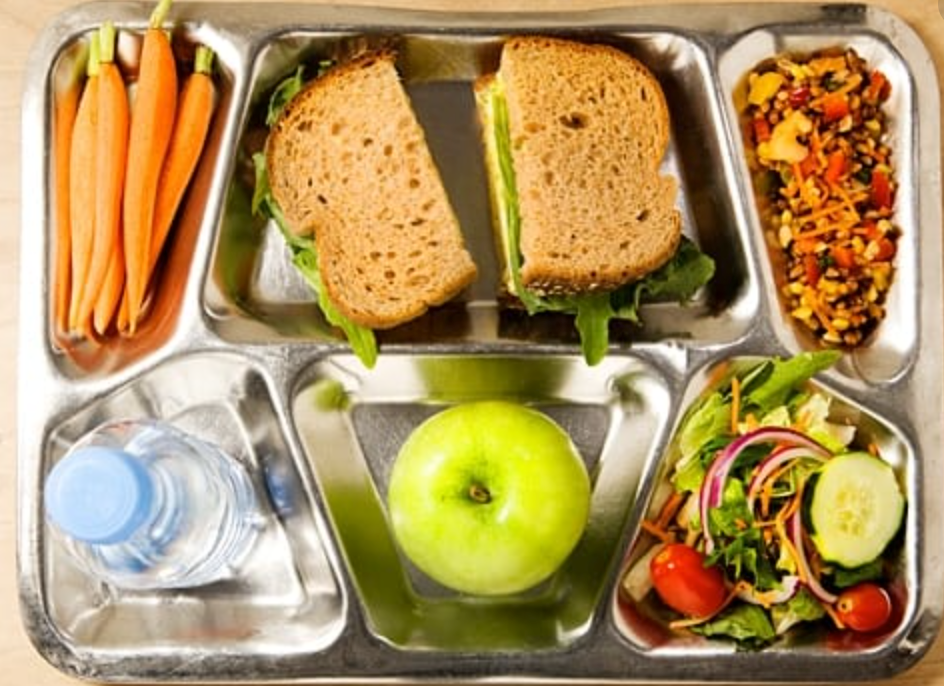
Not only does this make us hungry but in turn it leads us to go with smaller portions of food/no food during a school day and we then can't focus very well in school or we will have malnutrition which is when our bodies aren't recieving a good amount of food or nutrition.
The main reason I want all schools (regardless if they're public or private schools) to provide free meals to students is that schools then have the ability to give a student a filling, healthy meal a day. Many students don't get much food or don't get healthy food at home because of their financial situation or other reasons, and it's hard for students to organise money to buy their food. If schools can organise and produce balanced, heavily portioned food out of taxes or the school fees it can make a huge impact in a childs life and spare us from a lifetime of malnutrition and rid many children from the stress of finding a good portion of food .
The primary issue with meals in many American schools is that they aren't health nor filling, like I said this is a problem because children deserve good meals.
On the other hand, we are very lucky to be given some food at home that is not only nutritious but tasty and filling.
Book and Movie Reviews
Article by Ananya Nayar
Book(s) of the Week: The Uncommoners by Jessica Bell

I remember reading these books when I was 9 and 4 years later I still love them. Jennifer Bell captures a new, unknown world with secrets, deception and where nothing is quite as it seems perfectly with her literature. These books intrigued me and I could not put them down. Ivy and Sebastian are weaved into another fantasy world and learn about mystery objects, that they are being hunted and more… I really liked the series because the characters were really well developed and heartwarming and they also had really interesting stories. The entire epitome of the novel is well written and perfectly descriptive. I would recommend this to anyone interested in fantasy, sci-fi, mythical creatures and adventure- it truly is a page-turner.
Age Recommendation: 9+
Rating out of Five Stars: 5/5
Movie of the Week- Over the Moon (On Netflix)

This film is perfect for all ages- it’s sweet and charming. It explores mystery along with magic, combines it with perfect animations, well planned characters, musical numbers and positive life lessons. I liked how it grabbed your attention with a child’s perspective because it was also really interesting to see how the characters felt. I also really enjoyed the plot because it had turns as it should have and it was again, well thought out. I never thought Netflix would be one to produce such a colourful and bright animation movie but Disney has definitely got competition now!
Age Recommendation: All ages
Rating out of Five stars: 4/5
This Week in History
Article by Ananya Nayar

On the 21st of May, but in 1881 the American Red Cross Organisation was founded- their purpose was to provide vital and necessary humanitarian aid to those who were victims of war and natural disaster. One of the founders, Clara Barton, born in Massachusetts in 1821 worked with the sick and wounded during the Civil War and became known as the ‘Angel of the Battlefield’ due to her sincere work and dedication. On the same date but in 1932 Amelia Earhart became the first woman to fly a solo, nonstop flight across the Atlantic Ocean and later landed in Ireland.
4 years ago on the 22nd of May 2017, the Ariana Grande concert in Manchester was bombed by the IS. However, the One Love concert was later held to celebrate the people whose lives had been lost and to reunite as one.
In 1990 on the 22nd, North and South Yemen unified as the Republic of Yemen after 150 years. The conservative and marxist territories formed an alliance again and Ali Abudallah who was former President of North Yemen then became the President of the whole country.

On the 23rd May 2015, which wasn’t too long ago a major breakthrough for the LGBTQ+ community happened when Ireland finally legalised same-sex marriage. Again, this called out other countries to do the same yet to this day we are still fighting for gay rights.

We'll be back again with another edition of The Bulletin Buzz next week Monday. If you are enjoying our teenage initiative and want to read more then feel free to read articles from previous issues. Contact us via email or instagram so we can hear your feedback. Thank you so much for reading The Bulletin Buzz, readers. We are extremely grateful.
From, The Bulletin Buzz Team.
(thebulletinbuzz@gmail.com)


Comments