Week #22 Articles {May 10, '21}
- The Bulletin Buzz

- May 10, 2021
- 15 min read
Articles Written By Ananya Nayar and Misaki Tomiyama, Website edited by Misaki Tomiyama

This Week's Articles-
Covid-19 and How It Has Impacted The World Economy
Abandoned Chinese Rocket Lands in the Indian Ocean
Tokyo Olympics- How It Will Possibly Impact Japan
Animal Migration in the Spring
How did the Nazi’s Adapt the Buddhist Swastika?
What Will Happen If All The Ice On Earth Melted?
How are Shell Animals Shells Formed?
This Week's Topic- Why Do We Forget Our Dreams?
This Week in History
Did You Know? May 11 is National Technology Day!
Book & Movie Reviews
Covid-19 and How It Has Impacted The World Economy
Article By Misaki Tomiyama
The Coronavirus pandemic has impacted all of us and has impacted our economy as well. As a result of the Covid-19, many companies have shut down, many became unemployed, many countries are now in recession and so much more.



One major aspect of the economy that has been impacted because of the pandemic is the stock market. The stock market is basically where investors buy and sell stocks (mostly), which are public company ownership shares. If stock prices go low, it is not good for the economy, since there is going to be less money for businesses, pension funds and individual investors. These results can negatively affect the economy, and individuals like us as well.
The graph shows the falls and recoveries of stock markets as a result of the pandemic. Most of them experienced huge falls at the start of the pandemic but have slowly recovered after the announcements and roll-outs of vaccines. However, many feel that the stock market will fall, as a result of lockdowns.

The pandemic has also greatly impacted job seekers, and the unemployment rates have gone high. Almost every industry has been affected as a result of covid, and many have even gone bankrupt. This has resulted in the loss of jobs, and unemployment, since businesses cannot open shops because of lockdown, low customers, etc. At the start of the pandemic, many disinfectants and mask manufacturing companies benefited and workers were employed. Now, however, many companies have closed and downsized, particularly in India, the USA and Brazil, and new employment opportunities are particularly scarce. The tourism and hospitality industries have almost come to a halt, while the healthcare sector is always looking for healthcare workers.


All of these have resulted in the recession in many countries. A recession is when the economy of a country slows down, so there are fewer jobs, less spending of money, and businesses close or stop growing. This can be measured by looking at how the GDP- gross domestic product (the total value of goods and services provided in a country) has changed within a certain period.
This graph shows the GDP changes in countries that have been hit by the pandemic. You can see how many countries, especially hard-hit countries like India, the U.S. and Brazil have experienced a recession.


Two industries have also been hit hard by the impact of Covid-19: the hospitality and travel industries, as mentioned earlier. As a result of Covid, people are travelling relatively less for both tourism and business, and airlines are reducing their flights. In addition, governments have imposed travel restrictions in many countries. As many people are not travelling to other countries, the use of hotels is also decreasing. Furthermore, restaurants, cinemas, gyms and recreational facilities have also been severely affected, with many going bankrupt as a result of the lockdown and public fear.




While many industries have been negatively affected, the online shopping industries have been benefitting. Many have switched to online stores such as Amazon to buy products, and food delivery stores such as Zomato and UberEats, as many are anxious about actually going to shops.
There has also been a drastic rise in the usage of the pharmaceutical industry, for example, AstraZeneca, Moderna and Novavax. These industries have been producing the Covid-19 vaccines, and are being paid billions of dollars by the government to secure doses.
Abandoned Chinese Rocket Lands in the Indian Ocean
Article By Ananya Nayar
Remnants and pieces of China's biggest rocket landed near the Maldives in the Indian Ocean this weekend.
Parts of the Long March 5B re-entered the Earth’s atmosphere on the 8th May at around 10 am Beijing time. The Chinese state media announced that many of the components were destroyed as they entered the atmosphere and the coordinates put the point of impact in the ocean.
As of now, it’s unknown whether it damaged land or water and investigations will be conducted to see if marine life is harmed.
Pre-crash experts said that there is very little chance that people will be hit by debris as the material is not only small but because 80% of the earth’s surface is indeed covered by the ocean.


The out-of-control debris was originally a rocket used by China to launch part of its space station. Usually, space debris objects have to combust in space, but unfortunately, they didn’t burn this time. The Guardian reported that the spoilage is about 30 metres long and weighs 20,000 kilograms. This makes it the largest piece of waste from space to fall back to earth. China has also received backlash and criticism for being habitual in not planning re-entry thoroughly. In 2020 a different Long March 5Brocket entered the earth again and damaged villages in West Africa. 5 years ago there was another incident where Tiangong-1 crashed into the Pacific Ocean in 2016. Two years ago, Tiangong-2 ended up burning the atmosphere over the Pacific Ocean for the second time.
Tokyo Olympics- How It Will Possibly Impact Japan
Article By Misaki Tomiyama
The Olympics, the international sports festivals that occur every four years, was meant to take place in Japan in 2020.


However, the unthinkable finally happened, and because of the coronavirus, the Tokyo 2020 Olympics and Paralympic games have been postponed. The Olympics is planned to take place in 2021, from July 23 to August 2021, the Paralympics from August 24 until September 5. These were confirmed by IOC, the International Olympic Committee.
Currently in Tokyo, there are tightened restrictions due to the pandemic, however the government is still planning to host the Olympics this summer.
Usually, the Olympics is a wonderful event for a country to host, and a beneficial event that is likely to boost the economy. Countries that host the Olympics spend billions of dollars for infrastructure and tourism industries, to expect a return. However the pandemic is likely to impact Japan in many ways, good and bad.


By hosting the olympics, one country can get international recognition. It raises the city’s profile, and can attract tourists. Also, usually, hosting the olympics will create new job opportunities, such as in construction of infrastructure, planning, investment, managing etc. This can be especially beneficial in a time like this when many people are suffering from unemployment.
However, hosting the Olympics has a major economic toll, and this is further aggravated given the current situation. The IOC has announced that there will be no audience in the stadiums during the Olympics. This means that there will be no fans in the audience to cheer the athletes up, and pay for tickets. This, estimated by a professor at Kansai University, will result in an extreme economic loss of ¥2.4 trillion in Japan, equivalent to rougthly $30 billion USD. (according to the Japan Times)
Despite its economic toll, the Olympics can also have a positive impact on Japan. The Japanese government is expecting long term social and cultural benefits from hosting the Olympics. Let’s hope that by the Olympics, the world would come together and shed light in this time of darkness.
Animal Migration in the Spring
Article By Ananya Nayar
Migration is when you relocate to another place within a country because you want to settle somewhere else, you are forced to, there is a better quality of life etc. People migrate every day, likewise, animals do too. In the spring and winter, many types of animals like sea life, insects, birds, and more species move across the country or oceans because they have to search for food or the seasons are changing.


Today we’ll dwell into the migration of animals during spring- particularly exploring the activity of swans, wildebeest and whales.
During March, April and May which are typically classified as the spring season, the temperatures begin to rise and vegetation grows back, creatures begin to migrate back to places with warmer weather. Other animals travel to find food or more livable conditions. Many species such as frogs move to breed grounds to lay their eggs in ponds & lakes.
18 percent of the world’s 10,000 bird families migrate tremendously long distances due to the seasons. Most migratory birds move from north to south, meaning they feed and breed in northern parts of the world in the summer and most hundreds of kilometres south for the winter where they will be satisfied with warmer weather. That brings us to swans and their journeys.

This map ^ (photo credits to The Washington Post) shows the route swans take during the migration period in the United States.


Swans mate for life and can breed at 3 to 4 years old. Cygnets stay with their parents for the first year to learn the migration route. Wild swans can live for more than 20 years. Tundra swans usually fly several hundred miles a day on their migration flights. They fly about 18 to 30 miles per hour, although they can fly up to 60 miles per hour.
Next are wildebeest or gnu, these species of antelope have a lifespan of about 20 years. They can weigh up to 130 kg and can run 80 km/h. Wildebeest always travel in groups and they stay with that group during the whole migration. They are preyed on by big cats like cheetahs, lions, leopards and also African wild dogs and crocodiles which makes it all the more important that they travel in packs. Gnus habitat only in southern and eastern Africa. They adapt to many habitats like woodland floods, dense bushes but prefer savannahs and plains.

This map shows the annual journey that the groups of wildebeest take.





All wildebeest give birth in the same month and further proceed to journey one of the worlds biggest migrations.
On the other side of the world, Whales begin to voyage the seas too.


Humpback whales are a species of beluga whales, they can grow 12-16 metres in length and weigh a colossal 30,000 kg. These types of whales can live up to 50 years and are easily identifiable by the knobbly head. The NOAA is committed to saving and preserving the number of whales, and right now only 80,000 humpbacks are swimming in our oceans worldwide.
In the 20th century, whales were hunted viciously, which in turn reduced the population significantly.

Humpback whales undergo their hike annually and during the summer, they will be found in polar waters, feeding in the cooler areas. Whereas in the winter they move to warmer waters in low latitude oceans to breed. Tourists can see humpbacks in Greenland and Norway in the summer!
How did the Nazi’s Adapt the Buddhist Swastika?
Article by Ananya Nayar


(Left- Nazi Symbol, Right- Hindu Swastika)
I’m sure we’ve both seen these symbols of the swastika somewhere- whether it was in our history lessons or religious books. The swastika (above) is a symbol that was used by the Nazi party led by Hitler in the early 20th century.
Before the 1930s, the Western world associated the symbol with auspiciousness, wellbeing and good luck. The character belonged to Jainism, Buddhism and Hinduism. However, the Holocaust movement tilted the symbol some degrees and changed people’s perception of the symbol. Nowadays, much of the Western world unconsciously think of anti-semitism and the war has turned into an emblem of hate. In Germany, it’s illegal to display the swastika. In parts of Asia like India, China, Mongolia, Nepal and Japan, the symbol continues to be used as a sign of good luck and prosperity.
The story of the Nazi acclimation started in Germany in 1868 when Heinrich Schliemann became fascinated and fixated on finding Troy, the lost city of Greek mythology. In the 1870s, Schliemann discovered the city. Amongst the ancient ruins, he discovered hundreds of depictions of the now known as the Swastika symbol. His success caused the swastika to become a sign of hope and victory and soon after the symbol began to appear in advertisements, sports teams and more. Later, German extremists adopted the symbol and as the world went to war the symbol became correlated with hate and torture.
What Will Happen If All The Ice On Earth Melted?
Article by Misaki Tomiyama


We’ve all heard of climate change and global warming, causing rising sea levels as a result of the expansion of water by the warm temperature, and the melting of ice-caps. But have you ever wondered about what will happen if ALL the ice on Earth melted? Well, if you haven’t, we will now.
Before we get onto the topic, we should understand why ice is important for our planet. Ice acts like a protective layer of Earth and its oceans to reflect excess heat into space. This helps keep the planet cooler. Glaciers are also important for us, and these glaciers can be thousands of years old. Currently, 10% of the land on earth is covered with glacial ice, and 90% of it being in Antarctica. However, since our world has become extremely industrialised, we have been emitting a lot of carbon dioxide and other greenhouse gases that have raised the Earth’s temperatures. This has resulted in the melting of glaciers/ice caps.


We all drink fresh water, and only 3% of the water on earth is fresh, the rest being salty, and 70% of the freshwater is frozen which accounts for around 30 million cubic kilometres of frozen freshwater. Freshwater is important for us, and it is melting.
Also, glaciers and ice caps are the habitat to many marine animals, such as walruses and polar bears. If the ice melts, their habitat will get lost. These animals will go low in number.


A lot of the ice on earth is land-based, and is contained in enormous land sheets that cover land such as Greenland and Antarctica. Where there are entire mountain ranges fully covered with ice. If all of the ice on land melts, the oceans will have more water, so measured from the coast, the sea levels will rise. Experts estimate that if all the ice on land melts, it will rise up 70 meters. And that is a lot. If sea levels increase, people living near the coast will have to migrate to different areas and this will involve a lot of cost.
Cities like Tokyo, New York, São Paulo, Shanghai, Mumbai and Jakarta are all big coastal cities. If sea levels rise even by a few feet, it will cause trillions of dollars per year to migrate people, improve infrastructure etc. A rise of 10 meters will displace around 630 million people, and an increase of 25 meters, around 1.4 people will be displaced.
How are Shell Animals Shells Formed?
Article by Ananya Nayar


Turtles, Snails, Crabs, Oyster, Mussels, Armadillos and more fantastic creatures are shell animals. All these animals are molluscs, which are a type of invertebrate. Many molluscs have shells but many don’t at the same time- for example, an octopus is a mollusc and doesn’t have a shell. The molluscs with shells have to build their shells which act as protection from scratch. The shells protect the organism from storms, predators, currents and can also be used as camouflage. The sea snail shell is the strongest in the world and today we’ll look at how they’re built.


A sea snail is similar to the land snails we see, but their shell is much thicker and usually shaped differently like in the image above. Sea snails can be found in rock pools, rocks by the seashore, reefs or on the ocean floor near coral and algae.
Their shells have many shapes, sizes and patterns- each pattern is unique. The shells are usually small but there are shells like the Syrinx aruanus (the largest living shelled snail) which is a shocking 91cm long and there are also minuscule species of sea snail adults whose shells are hardly a millimetre long.
Seashells are the exoskeleton of a creature, the endoskeleton describes the skeletal internal bones of an animal like in humans we don’t have an exoskeleton but our endoskeleton consists of all our tiny bones, our ribcage, skull and spine.
The shells have three layers and contain calcium carbonate (like the calcium in our human bones) in the majority of shells. There is 2% protein in a shell too but there are no cells or tissue in it at all. Meanwhile, turtle shells are different and contain blood vessels, cells and nerves.

Did you know that sea snails and other shelled molluscs are endangered because of climate change? We know that her shells are made mostly of calcium carbonate, and the majority of these creatures live in the sea. Well, a rise in carbon dioxide levels in the oceans has caused the acidity of water to increase. The acidified waters are causing all marine life to face the detrimental aftermath & effects of sewage dumping, acid rain caused by pollution and more. Due to the pH level alteration, the water corrodes the sea snail shells and impacts the thickness, density, strength and structure of the shells- with deterioration clearly visible on the surface.
“Ocean acidification is a clear threat to marine life, acting as a stressor for many marine animals,” said Ben Harvey, an assistant professor at the University of Tsukuba. “Here we found that the ability of the triton shells to produce and maintain their shells was hindered by ocean acidification, with the corrosive seawater making them smoother, thinner, and less dense.”
This Week's Topic- Why Do We Forget Our Dreams?
Article by Misaki Tomiyama


Dreams are interesting things. We often watch them while we sleep, and in the morning, when you try to recall the wonderful dream you had, most of us don’t really remember it. If we were to define a dream, we could say- a series of thoughts, images, or emotions occurring during sleep.
(I’ve written an article about why we dream and a few fun facts on what you dream tell about you, if you want to check that article out- visit Week #20 Articles)
We sleep around ⅓ of our lives, and dream in around 25% of our sleep. The funny thing about dreams is that some people can perfectly recall them, and others can’t. Some people can’t even figure out if they’ve had a dream or not.

We dream mostly in the stage of sleep called REM or rapid eye movement, and as the name suggests it is when our eyes are rapidly moving and moving back and forth. But during this stage of deep sleep, the rest of our body is paralysed, or not moving. This sounds really scary, but is actually quite helpful, as it prevents you from acting out your sleep, such as from walking outside your house, driving to different places, visiting another person’s house, while you’re asleep. Each REM cycle can last from a minute to an hour.
During this REM cycle, your body acts pretty much the same as it does when it is awake. There is blood flowing into the brain, and this creates lively emotional experiences, a lot like the ones you have when you are awake. But, we do not act this out with our body, since your body is paralysed, as mentioned before.


Coming back to the topic, some people remember dreams while others don’t because their brain is more active during their sleep, because of the blood flow. When there is more brain activity, there are more vivid dreams, and the more vivid your dreams are, the more likely you will remember it.
Another factor deciding whether you will remember your dream or not, can be determined by the level of hormone called norepinephrine. This hormone helps you remember things, whether you are sleeping or not. Everyone has a certain level of norepinephrine, but they all drop during your sleep, especially in REM sleep. So, the amount of norepinephrine in your brain while you sleep, determines how well you sleep, and how well you can recall your dreams.
This Week in History
Article by Ananya Nayar


The Loch Ness monster legend was born on the 2nd May 1933. A couple sighted an ‘enormous animal rolling and plunging on the surface.’ After that, interest grew and more sightings and theories were reported. Sonar expeditions in the late 20th century said that the monster was a complete hoax. However, that didn’t impact the enthusiasm of tourists and many still believe the Loch Ness monster exists and they seek to prove it.
On the 5th May 1961, Alan Shephard became the first American to travel into space and land on the moon.
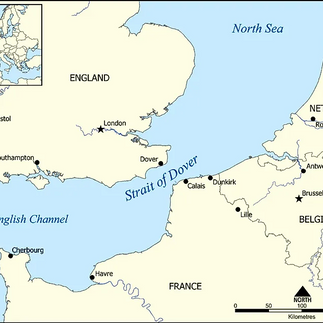
Merely one day and 33 years later, the English Channel opened on the 6th May of 1994. The channel connected France and England through a rail tunnel. The channel connects Folkestone, England, with Coquelles, France, 31 miles away. IT also cut travel time between England and France to a swift 35 minutes and eventually between London and Paris to two-and-a-half hours.




On the 8th of May 1945, Victory over Europe day is celebrated in the United States and the UK. Cities rejoiced the defeat of the Nazi party in Europe during the war which flags and more. On the 9th of May, there was a huge victory for suffragette women. The ‘pill’ was passed! The food and drug administration (FDA) approved the first birth-control commercial pill.
Margaret Sanger opened the first birth-control clinic in the United States in 1916, encouraging the development of a more practical and effective alternative to contraceptives that were in use at the time.
Did You Know? May 11 is National Technology Day!
Article By Misaki Tomiyama

Every year, India celebrates May 11 as National Technology day. It is celebrated in order to acknowledge India’s technological advancements, and is also the anniversary of Pokhran nuclear tests of 1998.
The Pokhran nuclear test was conducted by the Indian Army’s Pokhran Test range, and was a series of 5 nuclear bomb test explosions. On May 11, 1998, India successfully fired a test nuclear bomb. This day is marked as an important day to celebrate India’s advancement in space technology.
Book and Movie Reviews
Reviews by Ananya Nayar
Book of the Week: Little Fires Everywhere by Celeste Ng
Rating out of Five stars: 4.5/5
Age Recommendation: 12+

(No spoiler review)
This novel is really interesting because there is so much to keep up with which makes it all the more intriguing. I like how the family is different and how they work and how the mothers raise the children. The character changes and the perspectives each character has is really interesting because even if you don’t understand or agree with their actions you sort of understand why they did something through their vision. The effect on the reader was nice too because Celeste Ng caused the reader to sympathise with the character which is hard to do so.
Movie (Series Actually) Of the Week: The Fresh Prince of Bel-Air

If you’re looking for a good family-friendly show to keep you entertained during lockdown I recommend the Fresh Prince of Belair. The 90s based hilarious sitcom will keep you happy and positive. Will Smith plays Will Smith in the show and he’s moved from his old neighbourhood in Philadelphia to stay with his rich cousins. At first, it is hard for him to adapt to the new family rules and schooling but he figures it out and has fun too! The show is quite long so you can continue it for a long time.


Comments