Week #20 Articles {March 29, '21}
- The Bulletin Buzz

- Mar 29, 2021
- 17 min read
Articles Written By Ananya Nayar and Misaki Tomiyama, Website edited by Misaki Tomiyama

Informative Articles + World News-
What Are Hate Crimes? + Asian Hate Crimes In The U.S.
The Suez Canal’s Traffic
Small Businesses vs Large Corporations
Political and Economic Systems
This Week’s Topic- Why Do We Dream?
Opinion pieces + Other Articles-
Developing India with Education
Did You Know? March 29 is Vietnam War Veterans Day!
Book of the Week
What are hate crimes?
Article By Misaki Tomiyama
TW- Gunshots and violence
Please note that we are not aiming to criticise any person in particular, and saying that other forms of racist and xenophobic acts don’t exist, or not have been normalized. This article is aimed to spread awareness of racism and hate crimes against Asians.





On March 16, eight people were shot dead in a shooting spree in several massage parlours in Atlanta Georgia, by a white man. Amongst the eight people, were 6 Asian women. Many are calling it an act of hate crime fueled by Xenophobia. (Read more about this incident in last week’s article)
Let’s talk about hate crimes. Hate crimes are crimes that are motivated by prejudices or xenophobia. Xenophobia is the “fear and hatred of strangers or foreigners or anything strange or foreign.” (definition by Merriam-Webster) In simpler words, hate crimes are crimes motivated by bias or hatred towards one particular group of people, especially in terms of race or religion. Hate is a strong and confusing word, it is usually used in the context of general dislike, but in the context of ‘hate crime,’ it refers to bias against people or groups. For a crime to be considered a hate crime, the crime or offence must be an offence under criminal law, and the crime must be motivated by bias. Hate crimes do not only have to be killings to murders, it can be threats, property damage, assault etc, in other words, any crimes that constitute an offence under the criminal law.


There are several types of hate crimes. A few of them can include- crimes against people, such as physical assault like violence, verbal abuse like calling racial slurs, crime against property like robberies etc. Different biases can motivate hate crimes. The most common biases include- race or ethnicity, religion, sexual orientation, disability, gender identity etc. You can report a hate crime if you’ve experienced or witnessed it. It is important to speak out. Hate crimes are prevalent, and it not only affects the victims, but their family and friends, and everyone.
There were approximately 3500 hate crimes against Asians last year, and xenophobic violence has increased by 150%. There have been growing concerns about the racist beliefs of Americans towards Asians, which can be evidenced by the fact that many people still use words and phrases such as “Ching Chong” or “Ching Chang Chong” which are racist pejorative terms used to mock the Chinese. Many of these jokes are dismissed.
Hate crimes against Asians are increasing steadily, not only in the U.S. but in many other countries such as Canada, Russia, Brazil, etc. Hate crimes against Asians in New York City have increased by 1900% (yes, not 190%, it is 1900%).
There have been other reported Asian hate crime incidents. An elderly Thai man died after being forcefully shoved on the ground, a Chinese woman was slapped on the face and put on fire, and so much more. Hate crimes against the Chinese are especially increasing since the outbreak of the coronavirus. There was a report of a first-person account, where a woman came up and told an Asian ‘You and your people are the reason why we have corona, Go sail a boat back to your island.”
So, what can you do?
Speak out if you witness a hate crime. It doesn’t have to be a hate crime, but if you witness someone saying a racial slur, speak out, and tell them it's wrong. If that doesn’t work, report the incident. The majority of hate crimes are not reported, so it is important to speak out.
Learn about the history of Asian American discrimination, and spread awareness on what is happening. Learning about it is especially important so you can know the background behind all of these incidents and realise its importance.
Spread awareness. Spreading awareness about an issue makes more people aware and conscious about the issue. It is very important because educating people about problems will encourage them to participate to bring change.
You can also donate to several organisations or gofundme pages that are supporting Asian communities facing racism/hate crimes, and the families of the victims of the spa shootings. Here are a few websites where you can donate money-
Asian Americans Advancing Justice- They aim to advocate civil rights and providing legal services for Asian Americans.
Asian American Legal Defense and Education Fund- They work to promote the civil rights of Asian Americans which includes immigrant rights, voting rights etc.
The National Asian Pacific American Women’s Forum (NAPAWF)- Work to create change for AAPI women and girls by policy changing and legal advocacy.





For more Informative posts like these, follow our Instagram!- Click here!
The Suez Canal’s Traffic
Article By Ananya Nayar
You may have heard of the Suez Canal, but do you know what it is? The Suez Canal is a man-made waterway that connects the Red Sea and Mediterranean Sea in Egypt. It is significant because it is the shortest route from Europe to Asia and is used by countries around the world for transporting goods. Before this path came about, ships from Europe that headed toward Asia had to journey around the Cape of Good Hope at the southern tip of Africa and then move further upwards to reach the destination.
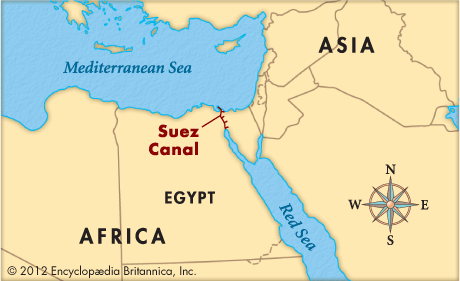
In this map, you can see the Suez Canal as it is and the current path.

Meanwhile, on this map you can see the journey ships had to take before the Suez Canal came about. In comparison, this voyage that requires ships to move around the continent is considerably much longer.
The Canal is a manmade 'bridge' connecting Africa and Asia for trade or war.
It is international and open to ships from every country- whether it be for commercial purpose or war.
It cuts in Egypt in the Isthmus of Suez. The single-lane waterway is at 30 degrees north, and 33 degrees east.
Egypt is the only bordering country.
It takes about 12-16 hours to transmit through the canal, and around 50 vessels and ships pass every day.
In 1854, Ferdinand de Lesseps, an ambassador from France to Egypt, secured an agreement with the governor of Egypt to build a canal across the Isthmus of Suez and it opened on the 17th November 1869, and Egypt nationalized the canal mid-1956.
However, the British also wanted control of the canal because it allowed them to have easy, quick and mobile access to colonies in Africa and Asia. In fact, during the beginning of the 19th century, Britain and France both attacked the canal in the hope to claim it as their own. For 87 years the two countries had joint power over the canal, however, the canal soon became a centre of conflict- and it still is. The protest from Egypt forced all troops to withdraw in 1957 with Egypt emerging victorious. On the other hand, this battle drastically damaged all relations that the Soviet Union had with the US and the entire conflict almost led to nuclear war! Soon after these events, Egypt made sure that Britain and France could not grasp power over the Suez Canal ever again, and they nationalised the canal to prevent the other two countries from colonising it.
Last week, we saw that the Suez Canal became blocked by the Ever-Mega container ship.
Since Tuesday last week, the large 200,000-ton ship became lodged and stranded in the canal and despite efforts of trying to dislodge the ship, there wasn't much change.

This satellite image displays the ship which is blocking the canal.



An estimated amount of goods costing up to $10 billion every day from 52 ships have been held up and apparently, it’ll possibly take weeks to evict the vessel.
Small Businesses vs Large Corporations
Article By Ananya Nayar
We all often buy from companies and stores like Ikea, Sainsbury’s, H&M, Tiffany and an endless number of more Large Businesses. Withal, have you heard of the millions of small businesses? Small businesses are independent startups that people begin to promote an idea or product, a product that people usually make themselves. These small businesses are private, usually on social media, and have few employees, unlike large corporations that employ thousands. In the US itself there are 30 million small businesses, which account for 97% of the businesses in the country itself. However, research shows that 50% of the firms closed after or within a mere year because they weren’t earning enough after investing.


Posts by Small Businesses on Instagram
Let’s begin with why it’s important to support small businesses.
For starters, small businesses need all the support from the buyers for them to grow and continue selling their product.
Even though the market is the same, small corporations tend to have large differences from bigger businesses in the manufacturing process. Modest businesses tend to have a more eco-friendly approach to production- not only to feed towards a customer’s sights and attention but to create a more positive impact on the environment. For example, they’ll put 15% of the proceeds towards an animal shelter. Meanwhile, large-scale firms usually give proceeds to their many employees, which is good- but let’s see the next point.
Bigger firms produce a lot of products because they have a large following, meaning that they need lots of cheap labour. The employees hired don’t earn a lot for their workload, and often earn under the living wage. Many businesses often employ children, especially in poorer areas where manufacturing is done, child labour is a practice that must be discontinued. I mean, it’s pretty self-explanatory!
Supporting small businesses means that you may also get a better deal! The owners need all the support, so in a way, it’s guaranteed that you’ll get good packaging, a good price and shipping since there’s love put in every product. They’ll customise and personalise the product for you specially.
Not only is buying local great for you, but it’s also nice, too. Choosing to shop small is respecting the efforts and acknowledging the hard work put into making some of the best products.
Political and Economic Systems
Article By Ananya Nayar
If you missed our post on capitalism, communism and socialism- these are the three major systems epitomised.

Let’s begin with socialism- briefly, socialism is where the government owns and operates all the means of production which includes all the land, labour, employment, factories and income. It’s all controlled by the central government and income would first go to workers. Since wages are divided by the government there is an assurance of education and basic requirements including medical care, it also assures citizens that they earn above the living wage- so there are chances for financial equality and social stability and life is much better. Even though it abolishes poverty, the government may spend money on not so necessary things. Socialism can also give the government greater control, this demands higher taxes too. The market subsequently becomes affected, because there won’t be extra credit or wage when you put in extra effort, so over time, the workers lose motivation and this reduces competitiveness in the workplace and market.

The next system is communism, a sociopolitical system that is in a way similar to socialism. Here, the government owns all means of production and money is distributed as per a person's occupation- however, there is financial equality and all people earn above the living wage.
However, a communist country is led by a dictator- who controls peoples’ lives, up to religion, media, education and spirituality. A communist country today would be China or North Korea- those countries are Marxist and idealises a community where the property is communally owned.
The main goal of communism is to eliminate casteism and society’s wealth division. Certain areas are assured by the government, which includes food, healthcare, education, necessities, medicine. Another few good things about communism are that it eliminates discrimination, there are lower unemployment rates because jobs are guaranteed. On the other hand, in the hands of a bad dictator, it may lead the country to poverty, and freedom is limited, the media is fully controlled and there is almost no freedom of speech so no opposing party. Citizens can not look at self-fulfilment as a goal and likewise, you cannot save money.

Lastly, let’s look at our modern-day capitalist society. Most of the countries we live in have been capitalist since the 18th century. This political and economic system gives all citizens rights. Anybody can start their own business, and the private owner can control the earnings and employment etc as per their interest. The people have a say in the choices of the government, and there are voting rights along with a competitive market. The aim, in the long run, is freedom, profit and self-fulfilment. There are many benefits of capitalism- like wealth is brought to owners, there’s lots of freedom, innovation is encouraged and there is high motivation in workers. The government plays a secondary role here, and economic growth increases GDP and improves people’s standards of living. However, there is always a negative side, here the monopoly power favours those who are already financially better off, and that leads to unemployment. The consumption and production means reach much higher than required, which isn’t eco-friendly. There is also a market failure, high debt, and social benefit is ignored. In socialism and communism, we saw that healthcare and education are already assured- here it isn’t. There is also marginalisation and discrimination, which is a big problem we see today too.


This Week’s Topic- Why Do We Dream?
Article By Misaki Tomiyama
You’ve probably been to sleep and had some vivid dreams. Sometimes you might have had nightmares. Sometimes you might know you dreamt but don’t remember it at all, or sometimes you might have not dreamt when you slept. We all have dreamt in our sleep at least once in our life, but what is a dream, and why do we dream in the first place?
Dreams are extremely interesting and mysterious. If we were to define a dream, we could say- a series of thoughts, images, or emotions occurring during sleep. (Definition by Merriam-Webster) Dreams are hallucinations that occur in our mind while we sleep.
Truth be told, scientists have been long researching about dreams and why humans dream, but they don't know the answer yet. Here are a few interesting theories scientists have come up with to explain why we dream-




We dream to fulfil our wishes- Sigmund Freud in the early 1900s proposed the idea that all of our dreams are a collection of images from our daily lives. These images or objects that appear in our dream have symbolic meanings, which is related to our subconscious wishes in life. Therefore, everything we remember when we wake up about our dream is a representation of our thoughts, desires and urges.
We dream to remember- Dreaming while we sleep is exceptionally good for boosting performance on mental tasks. According to researchers, certain memory processes can only occur in our brain while we sleep, and dreaming proves this.
We dream to forget- In our brain, there are millions and millions of neural connections, which are connections created between neurons, or synapses, when you experience a new memory. According to the research of 1983, while sleeping and REM cycles (REM stands for rapid eye movement, and is one of the important stages our brain goes through by sleeping), your neural connections are being reviewed, and any unnecessary neural connection is deleted or dumped. This process, which leads to our dreams, is particularly important because if this process did not happen, our brain would be overloaded with information and neural connections.
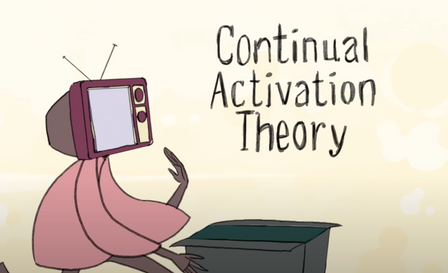
We dream to keep our brains working- According to the continual activation theory, you dream because of the brain’s needs to constantly create long term memories, which allows your brain to function properly. When you are asleep, the brain automatically starts generating data from its memory storages and this appears as the thoughts experienced in dreams. According to this theory, your dream is something your brain activates to prevent it from shutting down.
We dream to heal- When we sleep, especially during the REM sleep cycle, stress neurotransmitters are much less active compared to when we are awake. So many believe that we dream for us to heal psychologically. People who have PTSD or other mood disorders usually have trouble sleeping, so some theorize that is because of their lack of dreaming.
We dream to solve problems- You have probably realised that anything can happen in your dreams, and your mind can create endless scenarios. Many scientists believe that while you dream, your brain can grasp problems by creating those endless scenarios, and create solutions.
(credits to the above information- TEDed YouTube Video- Why do we dream? - Amy Adkins)
Now that we know the theories on why we dream, here are a few fun facts on what you dream tell about you. (Disclaimer- these aren’t always true!)


If you dream about falling, such as falling from aeroplanes or very high places, this might be a sign that something in your life isn’t going well, and you are willing to enjoy life more.
If you dream that you are being chased, which is common, this might be a sign that you are avoiding something in real life.
If you dream that your teeth are falling out (which sounds extremely weird but quite usual), you are either conscious or worried about your appearance and attractiveness, or you are either concerned about your ability to communicate.
If you dream that you are dying, you are most likely anxious about change, or you are scared of the unknown.
If you dream that you are taking a test, you probably have a fear of failure.
If you dream that you are flying, you are either expressing feelings of freedom and independence, or you are either desiring to be free and desire to escape from reality.
Developing India with Education
Article By Ananya Nayar
For this week’s topic, I’m sharing a speech I wrote for an afterschool TedX youth club. Please note that this is opinionated and one-sided.
Hello, everyone! I’m Ananya Nayar and I am passionate about making a change in the world. Being a resident in India I’ve observed a lot of different things in the community and the country.
“Education is a liberating force, and in our age it is also a democratising force, cutting across the barriers of caste and class, smoothing out inequalities imposed by birth and other circumstances.”
I just quoted Indira Gandhi, the first female Prime Minister of India. She felt strongly about education and worked hard to bring tuition and schooling for everybody around the country, and especially for women and young girls, to make sure that each gender had equal rights and women would be able to work and no longer do their socially standardised and expected jobs as a housewife.
I’m ardent about education because I feel that everyone has a right to education, and I want to see the social class and casteism ideology significantly reduced, if not eliminated. Education is key because it helps develop the world around us by building an educated society. Schooling helps people get better jobs, see from different perspectives, be more open-minded, and help us as a whole grow. Not only that, but it helps people improve knowledge, their social, financial and economic status. It’s important
India, being a south-east Asian country is a developing country, we have a population of 1.4 billion- standing at the most populated country in the world. Having such a large population and also being a developing country, India is behind on many of the UN’s Sustainable Development Goals like gender equality and quality education which I’ll be focusing on in this presentation.
Today we’ll explore India’s current education system with the statistics, and then I’ll talk about how a stable education network and the process can impact and advance an entire, impoverished country.
6.7% of the country’s population is living in poverty- which is 90 million people. 35 million children aged 6-14 years do not, and have never attended school. 53% of girls from ages 5-9 are illiterate. The literacy rate is only 74%, with 26% of adults illiterate and uneducated.
There are problems of overpopulation, inequality on gender, sex, race, religion, and lgbtq+ terms, rough driving, sexual assault and violence, domestic abuse, unemployment, child labour, overworked workers, child abuse, drug abuse and alcohol abuse especially on roads, poor household infrastructure, poor sanitation, poverty, limited or no access to food and water, scarce access to health care facilities, casteism and I’m just stating some of the biggest issues we have and face in the modern-day Indian society.
Most of the education system in India is funded by the Government as a public good rather than merit good and more than 65% of children get an education to attend Government schools around the country.
The budget for Government schooling is 850 billion Indian rupees or only 1 million US dollars.
In one government or public school in India, a school up to the 12th standard is given 1.5 crore rupees. However, the school infrastructure in Government schools where the majority of education is occurring is often poor, 40% of these schools do not have electricity, 30% of tin one classroom, so there is still mass illiteracy and a disproportionate or limited number of resources and facilities. Many students also get removed from school at an early age, hard and frequent testing to meet the education requirements to carry on with schooling creates a problem too. The ideology is that only pupils performing well and scoring the most are eligible to continue with their education, otherwise you are eliminated.
Students in Government schools often also face bullying, violence, sexual abuse, hunger.
Only in 2001, forced by the Supreme Court, were schools mandated to provide one midday meal to the students, however bland and poor the quality was.
You see, if we collectively- our generation fix the education problem in India, then many other issues we face will automatically be annihilated.
Educating people about the problems with overpopulation and introducing contraception will play a role, when the educated graduate they will find good jobs to continue their lives in- solving the problem of mass unemployment, families will no longer see the need to require more children to carry on their legacy or help in their farms or take care of them when they’re older.
Inequality will be solved to some extent- if the teachers are qualified and properly educated with a degree too- poverty will start to diminish as more and more people start earning money above the living/minimum wages. At the moment, the living wage in India is almost only 7,000 rupees. As more people start working, the gross domestic product and economic income across the country will go up- increasing the minimum/living wage. If Government schools start providing more meals and more nourishing food, the health and wellbeing problem along with zero hunger will also slowly eliminate overtime. There could also be a world food programmed subdivide between India, if we talk to the UN, to have a food drive to start educating people about the starvation problems in India and to feed people with hungry stomachs
Over time, with well-paying jobs, there will be less domestic violence because the major problem will be fixed when people start learning and receiving an education in school, or when people start doing something with their time or start earning money, research indicates that most domestic violence cases are related to the family’s financial problems. When people start going out of the house and earning, the problem will slowly decrease.
Moreover, less alcohol and drug abuse would occur - leading to fewer road and driving incidents.
We could also provide a course in driving, to bring about and enforce strict regulations on the road to prevent accidents. Indirectly, the pollution problem will be lightened to some degree since education will lead to society realising we do not need so many cars on the road, our new generation will find alternatives to fossil fuel emitting vehicles that damage our planet, and we will improve public transport to make it appealing and usable, as well as clean and safe for everyone. People and scientists will work towards looking for alternatives or improving public transport in India after seeing the standards of living rise.
Educating more children and more young girls will gradually blur the line in society for what a woman should ideally do with her life, and women will start to go out and work, earning income for themselves, becoming more independent and not having to look after the household and her family like she is expected to. Emissions of greenhouse gases will decrease, as more people are aware of the effects and more are on the job to create a clean planet. Sexual violence and harassment rates will begin to decrease, due to education and learning what everyone is going through. You may also ask, but who will work in our factories? Anyone can, because now they won’t be overworked and underpaid, encouraging more adults to work there rather than children to, putting an end to child labour. Child labour would also be eliminated if we make sure every single child goes to school because every child has potential. Now, the increasing GDP and per capita income will increase, slowly bringing India out of the developing country phase. No, this will not happen in 4 years, this will need time and effort, and an increased budget for education and commitment.
Do you realise the impact of schooling? School’s and proper education have such a large influence and positive aftermath on modern society and our generation’s future.
Did You Know? March 29 is Vietnam War Veterans Day!
Article By Misaki Tomiyama
On March 29, we celebrate Vietnam War Veterans Day, which is a day celebrated to honour all the people who served the Vietnam War, and to all who sacrificed their lives.
How can you celebrate this day?
You can learn about the war, and visit websites, or watch videos about it.
You can attend events that celebrate the Vietnam War Veterans Day.
Book of the Week- Keeper of the Lost Cities By Shannon Messenger
Age recommendation- 9+ Rating- 4/5

Keeper of the Lost Cities is a series by Shannon Messenger. The main character of the story is Sophie Foster, who is a child prodigy. She has a secret, which even her family doesn’t know- she is a telepath and can listen to what other people are thinking. She lives in a world where she doesn’t feel like she belongs, and all of that changes when she meets Fitz, who is a telepath just like her. He tells Sophie she is not human, but an Elf, and introduces her to the Lost Cities, the world of the elves. This book is a wonderful fantasy page-turner, full of mysteries and suspense, actions and adventures, and a tiny bit of romance. Despite being a book for 9+, it was a page-turner, and is a perfect book for fans of the Harry Potter series!
Review by Misaki Tomiyama


Comments