Week #14 Articles {February 15, '21}
- The Bulletin Buzz

- Feb 14, 2021
- 13 min read
Articles Written By Ananya Nayar and Misaki Tomiyama, Website edited by Misaki Tomiyama

Articles for this week-
World News-
Joe Biden cancels all funding for Trump’s border wall project + US allows in thousands of asylum seekers in Mexico
An attempt to poison Florida’s water supply
Myanmar Coup Continued
Indonesia’s Dyed Water Supply
Ocean noise pollution
India News-
Glaciers and Floods in Uttarakhand
Other Articles-
This Week’s Topic- Interview with Frontline Workers and Doctors
This Week in History
This Day Signifies- Did you know? 15th February is Singles Awareness day!
Black History Month
Joe Biden cancels all funding for Trump’s border wall project + the US allows in thousands of asylum seekers in Mexico
Article By Ananya Nayar and Misaki Tomiyama


On Friday, the newly elected US President Joe Biden called off Donald Trump’s previous National Emergency Order to build a wall between the US and Mexico. He stated in a letter to the congress that no more money shall be spent on the deemed ‘unnecessary’ wall that $25 billion had already been spent on. This order removed Donald Trump’s main argument for his 2016 Presidential Campaign.


We’ve all heard Trump say “We’re going to build a wall”, but what did he mean?
During his presidency, Trump had wanted to build a physical wall on the border between the U.S. and Mexico. He had built this wall, aiming to prevent illegal immigration and illegal border crossings.
It was one of his key promises he made during his campaign, and during his presidential announcement speech, he had mentioned “I would build a great wall, and nobody builds walls better than me, believe me, and I'll build them very inexpensively. I will build a great great wall on our southern border and I'll have Mexico pay for that wall.” Currently, there is a total of 650 miles of the wall along the border.
He aimed to build a 1000 mile steel wall, but this costs a lot of money (it has been estimated it will cost a total of $5.6 billion). There were many critics, one being Vincente Fox, former president of Mexico, who commented: “We are not paying for that stupid wall.”
Many American citizens did not support Trump’s idea of the construction of the wall, but some had. The supporters of this wall believe that illegal immigrants are a threat to the country. They believe that many illegal immigrants are taking advantage of the taxpayers of the U.S. Many democrats feel that building such a wall would spread a bad impression on American immigration policies.
On Thursday, the White House released a letter to Nancy Pelosi, House Speaker, notifying that President Joe Biden had repealed Trump’s February 2019 proclamation.


The Biden administration also announced that they will start allowing many asylum seekers into the U.S., who were waiting in Mexico. Asylum is a granted protection for foreign people who cannot return to their home country for specific reasons. It is outlined by the U.S. and international law. Asylum seekers are people who are seeking international protection but not determined as a refugee yet. They said that they will start with 25000 people next week. All of the asylum seekers have to register and prove to be negative for the Covid test, before entering the U.S.
An attempt to poison Florida’s water supply
Article By Ananya Nayar
On Monday, a computer hacker gained access to the water system in Florida and tried to increase the level of Sodium Hydroxide in the country’s water supply. However, a water treatment worker quickly noticed the change and reversed the action just in time to save thousands of gallons of water around the country from being poisoned and harmed.
Sodium Hydroxide is a chemical made with Sodium Oxide and Hydrogen. When swallowed or touched upon the skin, it can be lethal and is so corrosive it damages all body tissues. The vapours will cause damage to the respiratory system, eyes and could lead you to death! Pain, redness and scars are also often permanent, so, luckily, the worker reached on time!
Myanmar Coup Continued
Article by Misaki Tomiyama
Currently, in Myanmar, people are protesting against a military coup. As mentioned in last week’s article, in Myanmar, the military is back in charge, following a general election won by the National League for Democracy (NLD), led by Suu Kyi, and has declared a year-long state of emergency.


The military seized control on 1st February, and since then, the military has declared it will have absolute control over the country for at least a year, and many people are currently protesting against the military coup. The military has reacted to this, by firing water cannons, imposing restrictions in certain areas and limits to gatherings. They have also been accused of gross human rights violation, after many MPs (Members of Parliament) sent a letter to the UN Humans Rights Council in Geneva, reporting shootings of anti-coup protesters by the security forces.
The UN human rights envoy to Myanmar has also found evidence of live bullets being fired. Many protesters are still demanding the release of Suu Kyi and other detained elected leaders. Security forces were also accused of visiting the homes of medical professionals and making attempts to detain them for involvement in a civil disobedience movement. On Friday, Facebook claimed that it has restricted any content shared by the military coup, as numerous accounts had shared misinformation.
Indonesia’s Dyed Water Supply
Article by Ananya Nayar


A few days ago, villages in Indonesia were submerged and flooded in the blood-red coloured water. The cause of this was Batik dye: a wax-resistant cloth dyeing process. Indonesia faces frequent flooding- and apparently, this isn’t the first time that coloured waters have drowned roads, last month there was an alleged green pool of water in many villages in Jakarta. Media was told that the factory “did not dumb the dye on purpose, but several home industries were flooded and the dye packages were carried away by the water…” the citizen also added that the Batik dye is thankfully not toxic in any way. Within an hour the crimson water was drained.
The fast fashion industry has caused many incidents like this before, dyes and worse, more toxic chemicals have flooded water sources and in some cases made drinking water undrinkable. The amount of situations when fluids from the fast fashion industry polluted the water is shocking- people and animals drink the water with lethal chemicals inside it unknowingly and then face organ issues. Purely due to carelessness and mass-producing of trendy clothes to keep up for seasonal lines and new stock.
Ocean noise pollution
Article by Misaki Tomiyama
Ocean noises come from all sorts of noises, most human activities such as commercial shipping, oil exploration, ship traffic, air guns and military sonar. Although invisible and often overlooked, noise pollution is one of the major threats to the marine world.


Every animal underwater gets affected by ocean noise. These noises reduced the marine animals’ ability to communicate, navigate, locate prey, find mates and so much more. When the sound waves produced by human actions hit the ocean’s surface, they pass through the ocean, into the ocean bed, and bounce back up again.
All marine animals are sensitive to sound, as many of them communicate by using sound. Marine mammals use echolocation, they emit clicks or short pulses in the ocean, and marine mammals listen to the echoes and detect their surroundings. This is mainly done by some whales and dolphins.


When there is a lot of noise around the oceans, it makes it difficult for marine animals to detect their prey and their groups/mate/young.
Whales are especially sensitive to noise, and their efforts to escape from the loud noises made by air guns and navy sonar has resulted in the death of a few whales due to decompression sickness. It also alters the location species go, which is a great threat to many marine animals. In 2008 for example, it was found out that seismic testing delayed the southward migration of narwhals, and trapped them in the sea ice. This resulted in the death of 1000 of these narwhals.
The good news is that when this noise pollution stops, the pollution stops. So as soon as the noise pollution levels in the ocean decreases, the animals will be less harmed. A few things we can do to help this issue as an individual is to be careful when buying online. It is always a better idea to buy from local stores, or if not, buy products that were made in your country, and not outside, since that means that the product has been shipped from abroad.
Glaciers and Floods in Uttarakhand
Article by Ananya Nayar
Previously this week, a burst in the Himalayas glaciers caused flooding and avalanches in India’s northern state- Uttarakhand.
On Sunday, a piece from an avalanche lake broke and fell into a stream, which triggered massive floods and avalanches which have killed a recorded 20 people so far, and more than 150 people missing. The floods stormed towards villages and dams, breaking hydroelectric plants and dams and ruining villages. Apparently ‘it happened so fast, and it was extremely hard to evacuate villagers downstream’ reported a villager.


Ashok Kumar reported that “some people inside the tunnels are either alive or half-alive” and continued to say that they are trying to reach everyone as soon as possible.
Dr Anjal Prakash said that the glaciers broke due to the harsh effects of Global Warming and the Climate Crisis. It was also said that the IPPC’s Special Report on Oceans and Cryosphere warned that glacier retreat could increase the risk of landslides, floods and cascading events in regions where these disasters were previously unheard of.
This scary event also caused many to question if it’s worth developing a region that is exposed and prone to more series of incidents like floods and avalanches similar to what went down on Sunday.
Scientists believe that a glacier was handing on a slope, held by a mass of rock, and as it goes with melting and freezing in changes of temperature, the glacier cascaded downwards and fell into a stream. The water level increased in the shallow river, and then it broke and surges of water stormed upwards, breaking constructed dams in the process and heading towards villages nearby.
This Week’s Topic
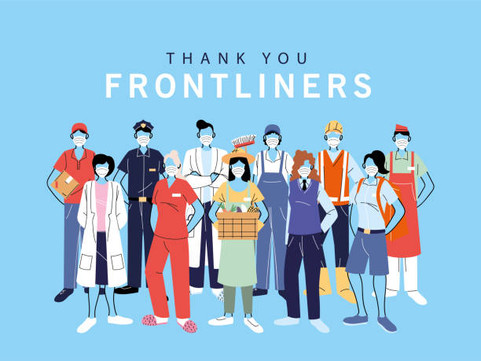
For this Week’s topic, we decided to bring something very special to you and we interview a few frontline workers and doctors living in different places around the world. They’ve been keeping us safe and helping with the current coronavirus situation around the world and we are very grateful for that. We asked them their points of view on the pandemic, how they deal with struggles related to their work, their perspectives on vaccinations, how countries dealt with the situation, what motivated them to keep going and more. Meet Nihar who is living in Singapore, and Anu residing in Pune, India.



Anu Mainkar is a paediatrician who works in a private clinic in Pune, India. Every day, she works and talks to people who may have CoronaVirus. She has worked tirelessly for the past several months to play her part in ‘crushing the curve.’
Q1. What would you urge the general public to do during this pandemic?
The global pandemic is no doubt a tough trying time for everyone. However, it has given a massive setback as people have lost jobs, and businesses have suffered.
It's time to start again and face the situation. One has to abide by basic rules of SMS...
S... Sanitisation
M... masks
S... Social, more correctly physical distancing as much as possible.
The above measures when consistently followed, have shown a significantly very low risk of contracting the virus on a global platform.
Of course, we need to be more careful about improving our immunity by eating right, regular exercise.
We have to learn to be positive in life for we may have to face many more challenges
Q2- Share a fear you have when treating potential Covid Patients.
..In medical practice, each patient is being looked at as a potential covid carrier whatever may be the status. It exposes the medical practitioner to danger at each step. And of course the fear, anxiety that comes with it.
But somehow the sense of responsibility and duty is such that one takes this risk knowingly.
Proper precautions need to be taken eg, wearing a PPE kit and masks, face shield, gloves which will protect oneself more.
After the duty, it's mandatory to bathe and change clothes before entering home and going back to the living ones.
One has to take this risk to serve patients which courage comes naturally.
Q3. In your opinion, how did India handle this pandemic? What do you think they could have done better?
India overall has done a commendable job. Many decisions like guarding the national borders, quarantine, testing were done in time. Our country being one of the biggest, having the second largest population and yet economically not very forward, we did what we could in the best of the capacity.
With the global uncertainty and the uncertainty of the viral behaviour and the treatment protocols, we were one of the nation's which dealt with patient load quite effectively.
Of course, the labour migration was an unfortunate incident, maybe a few decisions could have been taken with planning but no one can blame, for the situation demanded the strict imposition of lockdown.
Proud of our country to have manufactured the vaccine.
Q4. What would you say is expected out of doctors during these times?
..You can say somewhat the same as the answer to the Q2.
Doctors should continue to serve the nation as they always have. However, the nation should acknowledge their service.
There should be strict and prompt legal actions against people who beat doctors. Strict security needs to be provided to doctors working in govt hospital
Q5. How long had you expected the pandemic to go on for when lockdown began?
It was a very new virus, unexpected presentation, unknown treatment, unknown pattern of behaviour. All over the world, doctors and scientists did many studies and researches from the available cases and collected data about the way the virus affects humans: complications etc. Autopsies were carried out to study apneas to what exactly went wrong in the body organ-wise.
This data was published from time to time and with the technological advancements, the world could arrive at certain treatment protocols. It was expected to last about 4 to 5 months but it turned out much more complicated than that. Especially with the mutant strains emerging, we can only hope the vaccine can control it effectively and we can go about our jobs easily and travel globally without restrictions.
Thank you so much, Anu for this interview! It was very insightful.
Now, meet Nihar Pandit- a frontline worker and doctor in Singapore. In his interview, he describes what kept him motivated, what he was sceptical of, why he didn’t have many fears and how he dealt with incidents in the hospital.
Q1- Describe a difficult time you faced as a frontline worker, and how you resolved it.
The fear of the unknown. There was a lot of media coverage of the pandemic with half baked truths. Answering queries from laypeople and trying to make them see scientific rationale reasoning ... was a difficult process.
Resolve it- no way to resolve it, but give each one a patient hearing ...at least it lightens them up.
Q2- What motivated you to keep working and going through difficult times at the hospital?
As a doctor, you are bound to come up with medical challenges.
This is something unexpected but challenging.
The intrigue and not knowing to turn your back on patients ...
kept me going. Day after day.
With a smile.
Q3- In your opinion- how did Singapore handle this pandemic? Do you think they could have improved the situation faster?
Singapore handled the pandemic decisively and proactively.
‘Do what it takes’ ...
I quote a few lines from the PM’s speech ...
Changi (airport) shall rise
The Jewel (the new airport tourist attraction) shall shine
SIA (Sg airlines) shall be a great way to fly again!
What he meant was that ... not just would Singapore airlines fly again but would retain its numero uno position in the airline industry.
That’s the vision with which Singapore plunged its resources for the pandemic.
Q4- What is your day like- as a doctor treating Covid patients?
I start work at 7.30 am
Check for updates on the latest protocols and guidelines for treating COVID patients.
8.30 am Patient rounds - rounding 10 patients would take up to 4- 5 hours as the need to gown, degown after each patient.
The whole process takes the majority of the time.
Other non-COVID related work in the afternoon.
Then another round of the patients in the evening, albeit lesser duration.
Q5- If you want, share a fear you have when working in hospitals and getting lots of exposure to the virus daily.
I have no fear of working in a covid hospital.
The screening and isolation process for suspected And confirmed covid cases is very robust. Doctors and other medical staff are given adequate resources so as not to compromise infection control protocols.
Q6- Were you reluctant or doubtful of the vaccine or getting vaccinated? If so, why?
I had no reluctance to get vaccinated.
Thank you to both of you for providing us with an insight into your busy lives and jobs, it was so interesting! We are all very thankful for every doctor and person handling the pandemic and keeping us safe!
This Week in History
Article By Ananya Nayar

We’ve all heard and played the game chess, right? Well on the 10th of February 1996, the World’s Best Chess Player at the time lost the game to a computer. The game lasted three hours, and the computer evaluated 200 million moves per second. 6 million people followed the action on their televisions. This was the first time someone lost to a computer in a six-match format, people had previously lost to a computer within an hour but never like this in such a fair game before.

The following day 6 years before, on the 11th of February 1990, a victory occurred and Nelson Mandela was released from prison. Mandela was the leader of the South African Apartheid movement, and after 27 full years, he was released from his 2x2 metres cell and became a free man once again. Nelson Mandela made extreme positive changes not only in South Africa, but around the world, and inspires us all to this date. He sets an example for fellow activists and he spoke up and made a change against racism. Mandela spends two-thirds of his jail time confined in a cell without a bed or plumbing, and like other black prisoners at the time, he was forced to do hard labour inside a quarry. He could meet a visitor for only thirty minutes annually, but this treatment didn’t tear him down or his values. Mandela remained the leader of the anti-apartheid movement against the racial segregation and systemic white supremacy that he and many others of colour faced in South Africa.

On the 16th of February 1923, the tomb of King Tutankhamun, the Ancient Egyptian Mummy was opened by Howard Carter, an archaeologist. They entered the sacred premises of the burial chamber of the Pharaoh. Many tombs were consecutively discovered, and most had already been raided by thieves in the past but the discovery and opening of the tombs provided a glorious insight into the lives of Ancient Egyptians in 1400 B.C.E. Inside were sarcophagus and coffins made of pure gold. The mummified body of King Tut lay with riches like jewellery and food, the Egyptians believed that the Kings should have a fantastic afterlife and be blessed with a life better than the one they lived. Chariots, weapons and clothing lay in the tomb and statues protected the sarcophagus’. King Tut’s body was one of the most perfectly preserved mummies in the world and the first to be discovered. In Cairo, Egypt, the exhibition called the ‘Treasures of Tutankhamun’ lies, open to visitors around the world.
Did you know? 15th February is Singles Awareness day!
Article By Misaki Tomiyama
We all know that 14 February is Valentine's day. Also known as St. Valentine’s Day, this day is celebrated by lovers to show affection to each other. Singles Awareness day, on the other hand, is the day that is celebrated by single people, to remind everyone that it’s okay to be single on Valentine’s Day, and also addresses that not everyone needs a significant other. On Singles Awareness day, people address the benefits of being single, some of them can include- freedom, career opportunity, having more time to yourself, and more. The hashtag- #SinglesAwarenessDay is used on social media, to spread awareness about this day.
Black History Month!
Ananya Nayar


Comments