Week #10 Articles {January 18, '21}
- The Bulletin Buzz

- Jan 18, 2021
- 12 min read
Articles written by Ananya Nayar and Misaki Tomiyama, Website edited by Misaki Tomiyama

Articles for this week-
World News-
Trump's Impeachment
US blacklisting of Houthis
What’s happening in China? + UK Bans imports that may be manufactured by Uighur Muslims
Uganda Elections
India News-
The Covaxin Vaccine in India
The Avian Influenza in India
Other Articles-
The Importance of Sleep
This Week in History
This Day Signifies
Trump impeachment
By Misaki Tomiyama


Donald Trump has become the first president of the United States that has been impeached twice. He was impeached last week, charged with "incitement of insurrection" after the storming of the congress. (You can read more about the storming of congress in last week's article- Week #9 Articles)
Trump was accused of encouraging violence with his claims about electoral frauds- which were fake. He has been attempting to reverse the election for many months now, and republican protesters violently protested at the White House and Capitol.
Trump has been impeached in the past for pressuring the Ukrainian president to investigate President-elect Joe Biden. However, he was acquitted (made free of charge) in February 2020. Now, many Democrats including Nancy Pelosi (House speaker) want him removed for inciting violence against the government.
Impeachment is when a president is charged with political crimes. These charged offences can include treason, bribery etc. Impeachment allows the removal of the currently sitting president.


Trump was charged politically by the House for inciting the protest in the Capitol, with the speech he made on January 6th 2021. In his speech, he had urged people to "peacefully and patriotically" make their voices heard and also said to "fight like hell". The article of impeachment addressed that Trump "repeatedly issued false statements asserting that the presidential election results were fraudulent and should not be accepted". It also mentioned that "President Trump gravely endangered the security of the United States and its institutions of government".
The impeachment article will go to the Senate and a trial will be held. A two-thirds majority is required for convicting (declaring someone to be guilty) Trump, meaning at least 17 Republicans will have to vote with the Democrats. New York Times reported that 20 Republican senators are open to voting with the Democrats- therefore convicting Trump.
The Senate session is due to take place on the 19th of this month. However, Senate Republican leader Mitch McConnell has noted that the impeachment trial is unlikely to take place as Trump is leaving the office on 20th January.
US blacklisting of Houthis
By Misaki Tomiyama
The U.S. has planned to designate Houthi- Yemen’s rebel group as a terrorist group. The United Nations’s chief has said that this will cause a "famine on a scale that we have not seen for nearly 40 years''.

A famine is an area where at least 20% of the population has highly inadequate food consumption, at least 30% of the children malnourished and have at least two deaths per 10,000 people, or four deaths per 10,000 children are there.
Yemen has been facing a humanitarian crisis for years now, and there are more than 50,000 people who are starving to death and five million more people who are near starvation. Yemen’s situation aggravated when the Iran-aligned Houthis seized control of large parts of the country. This further became worse when a military operation was launched by the Saudi-led coalition of Arab states supported by the US to restore President Hadi's rule. This fighting has led to the death of more than 110,000 people and the UN has mentioned that this might be the world’s worst humanitarian crisis.
Mike Pompeo, US Secretary of State has told the congress that he intends to designate the Houthis as an FTO- Foreign Terrorist Organisation on 19th January. He mentioned that he aims to make the group responsible for "its terrorist acts, including cross-border attacks threatening civilian populations, infrastructure and commercial shipping". The UN worries that the US designation of the Houthis as a foreign terrorist organisation could tip Yemen into a huge famine. The UN is still working together to try to tackle this problem in Yemen.
What's happening in China? + UK Bans imports that may be manufactured by Uighur Muslims
By Ananya Nayar
TW- Mentions of Violence and Assault


Uighurs (Uyghur) are an ethnic group who reside around Xinjiang, China. There’s around 12 million Uighurs in our world and they are typically from areas of Turkey before it was annexed in 1949. Recently, Uighur’s and minority Muslim’s have been grouped in ‘re-education’ or Concentration camps in China. Yes, the same torture that Jews and minorities went through with Hitler and in the World War periods.It’s unethical and disgusting to repeat such history, right? Well, obviously, but now that’s happening in real life in China! It’s been proven that the Chinese authorities are expanding their detention camps in order to suppress the Uighur Muslim minority in Xinjiang. Since 2017, 1 million people have been detained and incarcerated within more than 90 identified camps. Although the Chinese Government is denying the existence of such camps, satellites spotted multiple of the re-education camps.
China holds extremists and chauvinistic views that the Uighur Muslims are a huge threat to society after a couple attacks earlier this decade that they held responsibility for. Yet, Chinese Spies ostensibly faked these attacks to ‘prove’ that the Uighurs were in fact ‘terrorists.’
Since 2017, the Chinese Government has been targeting this group of people because of their religion, and at that year, the Xinjiang government prohibited men to grow long beards and women from wearing long veils, which is part of their culture. The authorities also tore down most of the mosques this year, leaving the Uighurs bare and stripped of religion as they are highly religious, principled and conservative. This has been identified as an act of oppression and despotism towards the specific Uighur Muslim society.
In the concentration camps, families are torn apart and parents aren’t able to see their children. The children fall at the liberty of the Xinjiang Government and are re-educated to go against their religion and obey the communist rule. Hundreds are being killed every single day, and the alleged population has gone up by around 4 million. Their ways of re-educating involve beating, torturing and starving them. Women are abused and assaulted sexually too and often lose their minds. Women are forced to use contraceptive devices and forced to go under abortion against their will, they’re forced to praise the communist party and learn mandarin. Interrogation involves sleep deprivation, starvation and torture. This is a massive breach of human rights.
China is also forcing Muslims to pick cotton, they have 60,000 minorities and Uighur Muslims picking cotton. China produced 20% of the world’s cotton, and 85% is exported to parts of Asia including India, Bangladesh and more. The UK and US are boycotting all cotton imports from China and removing ties with third parties that interact with the cotton from China. Previously, the UK banned all cotton coming from China, and clothing brands including M&S are boycotting and creating petitions to abolish the uncivil torture and modern-day slavery.
In July 2020, 56 countries signed a petition for the United Nations to investigate, and although the UN announced their disapproval, they said that they do not yet have grounds to carry out a full scale investigation.
Uganda elections
By Misaki Tomiyama


Yoweri Museveni has been re-elected as Uganda’s next president. The 76-year-old President Museveni has been the president since 1987, and the election results make this his sixth term in office. Despite the accusations of voter fraud by his main rival Bobi Wine, Museveni won 59% of the vote and Bobi Wine with 35%.
The government shut down all internet connections after the voting day so that no voters can access social media or news websites to receive any real time information regarding the elections.
Many of the citizens of Uganda were fearing the violent attacks during the voting period. Because of the high tensions, there were several violent attacks, leading to the death of hundreds.
Uganda has been extremely cautious about voting during the pandemic and has encouraged voters to wear a mask and sanitize, but the social distancing has been hard for them.
The Covaxin Vaccine in India
By Ananya Nayar

On Wednesday, there was news that the vaccine has been shipped to 11 cities in India including Ganavaram, Patna, Delhi, Guwahati, Bengaluru, Pune, Jaipur, Chennai, Lucknow, Kurukshetra, Lucknow and Bhubaneswar. This indigenous Indian vaccine developed by Bharat Biotech is going to be rolled out soon and the Indian Council of Medical Research will decide where the vaccine will be stationed for people to get vaccinated.
The employee involved in the process announced that “The Centre will communicate to the states the number of vaccination sites where Covishield and Covaxin will be deployed respectively. The states will decide the specific sites, that is site names, on their own where the vaccine supply is to be directed.”
When the Covaxin vaccine was going through trials, many of the volunteers reported that they had felt side effects for several days which included pain where injected, weariness, muscle pain and body pain, nausea, fever or chills and migraines.
To lure in volunteers for testing, the company had allegedly targeted people in poverty, but paying each participant a sum of 750 Indian rupees. However, Biotech denied these statements and expressed the fact that it was ‘NOT an inducement…’
Another source in a letter they had written to the Prime Minister revealed that “in the majority of cases that we have interacted with, the participants from these communities had not received any hard copy of their signed consent forms even after receiving the first dose. Participants remembered signing in many places during the visit but they were not given copies of their consent forms.”

On Saturday, India began the World’s biggest Covid-Vaccine Drive. Narender Modi, the President of India said “We are launching the World’s biggest vaccine drive, this will show our capability.” He also added that India will quickly vaccinate the population using the indigenous app Aarogya Setu which means ‘health bridge’ in Hindi. 10 million will be vaccinated in the first round, and 300 million people are targeted to be immunised by August 2021.
The Avian Influenza (Or Bird Flu) in India
By Ananya Nayar
The seasonal influenza or seasonal flu within birds is similar between humans, the flu period usually occurs within the same months in autumn-spring which are October to March. The Bird Flu is a virus that is transmitted through birds, but can potentially affect humans as well. Now, the Bird Flu has struck India and is affecting poultry stocks and birds by the thousands. Earlier this week, all poultry markets were banned from selling and egg and chicken dishes weren’t allowed to longer be sold in restaurants. Top hatcheries and poultry markets in India have seen a 15-25% impact on sales, and are hoping to quickly recover it.
The bird flu has affected thousands of birds around the country and killed millions of birds in public and private places and poultries. When one bird is apparently diagnosed with the avian influenza, then all the birds in their batch in poultry farms (which may be thousands) will automatically have to be killed to avoid further cases and transmission of the virus. Ruthless, I know. The virus is highly contagious among birds and will quickly infect and kill them within days.

The disease is transmitted to humans through contact with infected bird feces, nasal secretions, or secretions from the mouth or eyes. If you properly cook poultry or eggs from infected birds doesn't transmit the bird flu, but eggs should never be served runny. Since it automatically affects anyone or any animal who has been in contact with a bird, the bird flu may pose a threat especially during a pandemic. However, the influenza cannot be spread through human to human or animal to animal contact.
The Importance of Sleep
By Misaki Tomiyama

Many of us love sleeping. We love staying in bed, but many of us neglect sleep, even though it is an important part of our lives. Sleep is an important time to maintain your body and mind, to relieve fatigue, and to nourish your energy for the next day. But what is the importance of sleep anyway, and how can you get a good night’s sleep?
Sleep is just as important as the water we drink and the food we eat. During our sleep, our body recharges and maintains various parts of the body, the most important being the brain. The human brain’s structure is very delicate, the brain function can decline if you do not get enough sleep. We all have internal body clocks that control when you feel tired or awake. It is known as the circadian rhythm, which operates on a 24-hour cycle. Sleeping is also especially important to recover from fatigue.

All of us have different bodies, therefore a different internal body clock. The amount of sleep one requires varies depending on person to person. Some short sleepers might only need 2-3 hours of sleep, while others may need as long as 10-13 hours. The amount of sleep one requires depends on the person themselves, and it is important to find the right amount of sleep.
Even though everyone is different, there is an average time one should ideally be sleeping. According to the National Sleep Foundation, this is the ideal time a person should spend sleeping depending on their age-
0 to 3 months: 14-17 hours
4 to 11 months: 12-15 hours
1 to 2 years: 11-14 hours
3 to 5 years: 10-13 hours
6 to 13 years: 9-11 hours
14 to 17 years old: 8-10 hours
18 to 25 years old: 7-9 hours
26 to 64 years old: 7-9 hours
65 years old and above: 7-8 hours
As mentioned before, everyone has different requirements, but this is just the ideal time of sleep one may require. It is suggested that if you are a teenager, you should have at least 8 hours of sleep a day.

So, now that we know the importance of sleeping, what happens when you don’t get enough sleep? Well, if you get sleep deprived too often, your brain and body will become extremely tired, which can impact your attention, productivity, fatigue and memory during the day. If you do not have enough sleep, you will not be able to perform at your normal level, so your performance will decline. As a teenager, many students might stay up all night to study for an exam, but it is actually not beneficial, as the student will have to take the exam with a tired brain.
Sleeping is also especially important for your health. People who sleep less than six hours are said to have a 13% higher chance of dying quickly than to those who sleep sufficiently. Sleep deprivation can also lead to several diseases and illnesses such as heart diseases, diabetes, Alzheimer’s disease and dementia, depression etc. Sleep deprivation can also damage your skin, and lead to a poor immune system.
Here are a few tips to sleeping better.


Develop a sleep schedule. It is important to make sure you sleep and wake up at the same time every day. This can help you have a sleep routine that can support your brain into sleeping at the right time and waking up at the right time as well. You should consider how many hours of sleep is the best for you when developing a sleep schedule.

Limit daytime naps. When you take naps during the day, you may not be able to sleep as well at night. If you are too tired during the day, you could consider taking a short nap that is not more than 30 minutes around 7-9 hours after waking up.

Exercise regularly. Some sort of light exercises can enhance your sleep quality. You could do some yoga or pilates, or even meditate to get better sleep. However, a workout that is too intense can be counterproductive. If you want to do an intense workout, you should do it in the morning, not late at night.
So, these were a few pointers of how and why sleep is necessary for us, and how we can get a good sleep. Even if you think, you don’t need sleep, there is a possibility that you are feeling fatigued or tired even if your body doesn’t recognize it. For a productive day, it is extremely important to get enough sleep.
This Week In History:
By Ananya Nayar


On January 12, 2010, the small nation, Haiti was struck by a large-scale earthquake. They received support from countries all over the world but still had to recover.
Haiti is the poorest country in the Western Hemisphere, due largely to its history of colonization, occupation and exploitation by Spain, France and the United States. Other horrible earthquakes were recorded there in 1751, 1770, 1842 and 1946 so it does have a large history of seismic activity and moving tectonic plates.
On the 15th of January, 1929, civil right’s activist Martin Luther King Jr. was born. He led and organised the first African-American civil rights movement to protest for equality. He used civil disobedience and nonviolent means to express opposition to the injustice people of colour faced in early 20th century America. It was revealed that he was inspired by Mohandas or Mahatma Gandhi who used peaceful protesting as a way to lead India to Independence from the British.
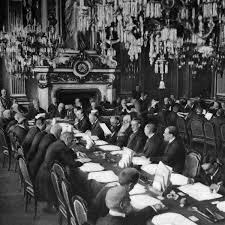
In 1919, on the 18th of January, some of the world’s most powerful leaders got together at the first Paris Peace Conference to sort out the logistics post World War 1. Leaders from France, Britain and the US began the long negotiations to sort out what would be done with Germany and their land, property and rights after apparently causing the 1st World War. In these major discussions, Germany had been excluded, not allowed to participate or be a part of the conference and not allowed to debate in the talks for their country’s future. The results had been seen as unjust in the German point of view which then led to them seeking revenge in the 2nd World War.
This day signifies…
By Misaki Tomiyama


18th January is Martin Luther King Jr. Day! Celebrated every year on the third Monday in January, Martin Luther King Jr. Day is the day where the achievements of Martin Luther King Jr. is honoured. Martin Luther King Jr. is widely known for his contributions to the American Civil Rights movement in the 1960s. He is known for his “I have a dream” speech and is a national icon in the history of America’s civil rights movement using nonviolent civil disobedience. Every year on this day, schools, businesses and government offices are usually closed, but many programs are held to teach students about America’s civil rights history.


Comments